Category

  • Get To Know a County: Carbon County

    By Bryan Spellman, with Photos by the Author
    Carbon County has sixty-six listings on the National Register of Historic Places, including eleven in Red Lodge. The county courthouse and the former Carbon County Hospital and Sanitorium are both part of the Red Lodge Historic Commercial District.
  • Haunted Hotels of Southwest Montana

    By Sherman Cahill
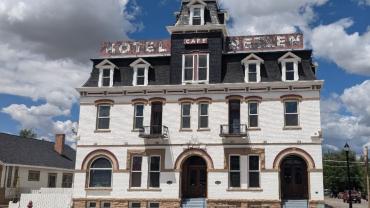
    Suddenly and without explanation, he discovered a solitary elk steak on the hallway floor. Then another here. Another couple there. It was 6 or 8 elk steaks all told, and Lee still can't figure out who, or what, is responsible for moving them.
  • For the Love Of... Chinook Horses

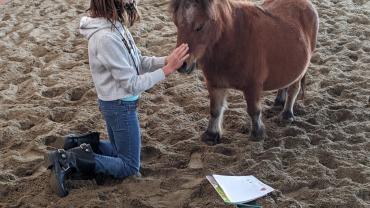
    The great American writer Herman Melville, author of Moby Dick, proved he knew horses nearly as well as whales when he said, "No philosophers so thoroughly comprehend us as dogs and horses." That comprehension shows itself in remarkable ways—horses will sidle up close, nuzzle you, even lovingly nip at you.
  • Bannack - Montana's Best Preserved Ghost Town

    By Doug Stevens
    The early history of Bannack is very “colorful” and reads like a Hollywood western. With Virginia City also booming to the north, there was an active stage line between the two gold towns.
  • Boomtown Saint

    By Christopher Muhlenfeld
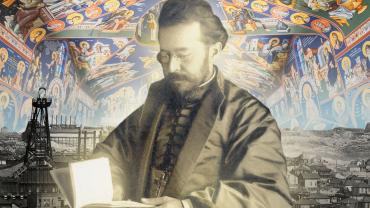
    One could be forgiven for thinking that a city so drenched in decadence wouldn't have hosted one of North America's earliest saints. Yet in the midst of this hedonism and chaos, an Orthodox Christian priest named Sebastian Dabovich played a significant role in Butte, and the fruits of his labors have endured for generations.
  • Our Interview With Author Gwen Florio

    By Lindsay Tran
    Distinctly Montana spoke with Florio about her favorite places in Montana, works-in-progress, what she’s reading, and eating camp stove ramen on book tours. It was a lively and funny conversation that underscored how much she has to offer readers who crave the fast-paced and gritty stories that she tells so well.
  • Get to Know Daniels County

    By Bryan Spellman
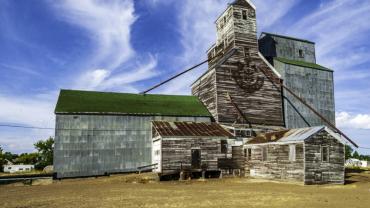
    On August 30, 1920, the Montana Legislature took the western part of Sheridan County and the northeastern portion of Valley County to create Daniels County. Named for local rancher Mansfield Daniels, the County covers 1,426 square miles, almost all that land.
  • Montana's Road Ghosts and Phantom Hitchhikers

    By Renee Carlson, Illustrated by Rob Rath
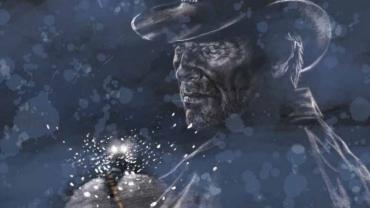
    Also referred to as vanishing hitchhikers, these are ghosts that haunt our roadways. Some seek to hitch a ride with the living and others simply drift through the thin veil between worlds to appear briefly on the side of the road.
  • Get To Know A County: Beaverhead

    By Bryan Spellman
    One of Montana’s nine original counties, Beaverhead is the state’s largest county in area. Excepting minor boundary changes with neighboring Madison County, Beaverhead is the same size and shape as when it was first created.
  • Wild West Words: "Pasty"

    By Chrysti the Wordsmith
    For centuries, the traditional meal of Cornish tin miners was the pasty. Made daily by wives and mothers, pasties were the perfect portable meal: a miscellany of vegetables and meat encased and baked in a D-shaped pastry shell. 
  • Get to Know a County: Mineral County

    By Bryan Spellman
    On August 7th, 1914, the Montana Legislature created Mineral County, taking the western end of Missoula County and placing the seat at Superior.
  • Not-to-be-Missed Day Trips to Five Montana Bridges

    By Jon Axline
    Old bridges are ubiquitous in the Montana landscape and are often taken for granted by motorists. Montana currently has a little over five thousand bridges on its Interstates and primary, secondary, and county roadways.
  • On the Trail with Sheepherders, Groundskeepers of the Land

    By Hallie Zolynski, with photos by the author
    The name Montana conjures up cowboys herding cattle on the open prairie, and gunfighters hiding out in canyons to hide from rope-swinging vigilantes. But does Montana summon images of the lone sheepherder tending his flock and enduring days of solitude, bitter cold and the intense summer heat?
  • The Near Grazing of Glacier

    By John Clayton
    Then, brooding at the hotel in East Glacier, he overheard the conversation about wildflowers. “It won’t look like this after the sheep are allowed to eat it all up for a sack of silver,” Albright told the men. Intrigued, they encouraged him to explain. One of them, it turned out, was Walter G. Hansen, owner of a meat-packing facility in Butte, Montana.
  • Unimpressed: Montana’s One-Star Reviews

    By Ednor Therriault
    “The pictographs are so faded or destroyed that you have to use your imagination. The best example is in the sorry excuse of a visitor’s center. So, save your $6 state park fee (if you live outside of Montana)."
  • Remembering John Quigley's Frontier Town

    By Joseph Shelton
    When someone ordered a whiskey ditch at the bar, the "ditch" part was almost literal: the water was collected from a small spring running through the scene in between small trees (cut from the very tops of junipers and then treated with glycerine and formaldehyde).
  • Park To Park: 7 Great Attractions Between Glacier and Yellowstone Parks

    By Doug Stevens
    The road between Yellowstone and Glacier offers the less rushed traveler ample opportunities to discover Montana’s renowned “big sky”, its beautiful mountains, blue-ribbon trout streams, as well as its rich cultural heritage, making the drive between the two parks a much more enjoyable and enriching experience.