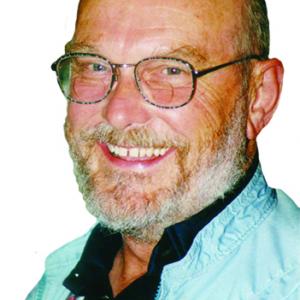
 Brian D'Ambrosio is a writer/editor living in Missoula, Montana. D'Ambrosio is the author of more than 300 articles and five books related to Montana history, people, and travel.
Dirk Benedict’s journey from a central Montana town of fewer than 1,000 to the thrill and hustle of Hollywood has been nothing short of splendid.
Born Dirk Niewoehner, in Helena, on March 1, 1945, he led a tranquil childhood of fishing, skiing, and grouse hunting in White Sulphur Springs, the county seat of Meagher County.
When he was sixteen, however, his parents divorced. And at age 18, his father, George, died.
“My dad always taught me that life wasn’t just about going through the motions,” said Benedict, 69. “He was interested with the discovery of what gave each life its real and unique qualities. That made such an impression.”
Football was among Dirk’s earliest interests – he spent summer evenings playing catch with George. He dreamed of playing college football until he auditioned “on a prank and a bet” for the spring musical at Whitman College, in Walla, Walla, Washington, and earned the lead in a production of Oscar Hammerstein II’s "Show Boat."
“Never once when I was stacking hay in the high mountain hayfields of Montana did I daydream about being any kind of celebrity,” said Benedict. “Even in my college years and beyond, I considered it playacting, fun, just sort of a hobby.”
He advanced his acting studies through a two-year apprentice program in Michigan and began appearing in repertory productions all over the country.
During this period, he adopted his stage surname – inspired by a breakfast of ‘Eggs Benedict’ with his agent. While looking down at the two halves of an English muffin, topped with ham, poached eggs, and Hollandaise sauce, he decided he would become ‘Dirk Benedict.’
‘Dirk Benedict’ made his Broadway debut in 1971 before launching his onscreen career with the little-known Swedish drama "Georgia, Georgia."
By 1973, he was splitting his time between Hollywood and Broadway. His first experience as a series regular came in 1974 with "Chopper One," a short-lived police drama on ABC.
That same year, Benedict was diagnosed with prostate cancer, but, he said, he cured the misfortune through a macrobiotic diet (all vegetarian, without refined or animal products).
He still touts the benefits of the macrobiotic diet that he has followed for more than 40 years. “Eating your way past generation upon generation of meat-eaters and a meat-eating mindset is no easy task,” said Benedict. “But the change is dramatic when you go from a diet that is based on animal protein, to one based entirely on grains, beans and vegetables, which I still practice now. What a difference on the body and mind. Macrobiotics was the compass to point me to a greater, longer life.”
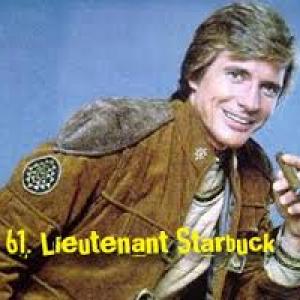
Benedict's breakthrough happened in 1978, at age 33, cast as Lt. Starbuck on producer Glen A. Larson's television space opera, "Battlestar Galactica," a $14 million, three-hour epic for ABC.
“It was the kind of fluffy, comedic, romantic character I had always loved playing. I was so glad I had a job – and was working. As far Universal and Glen Larson were concerned, I was their choice – their man for the part.”
A memorable scoundrel with a fondness for card games and the ladies, Starbuck was the most skilled pilot in the Galactica fleet. Benedict's good looks and self-belittling sense of humor made for a memorable character.
“Battlestar Galactica became an overnight success for me,” said Benedict. “I’d been supporting myself for eight years solely from whatever sums of money I barely made as an actor. It got me attention – the part. I learned quickly about the media’s manic desire for manufacturing celebrities.”
The show was cancelled in 1979.
After "Galactica," Benedict appeared in many forgettable features and programs before landing his most popular part as Templeton “Faceman” Peck on "The A-Team."
The show, which turned “Mr. T.” into a household consonant, was a cartoon-like action series about four Vietnam veterans who worked as honorable soldiers-for-hire.
“If the “A-Team” was about anything,” said Benedict, “it was about people standing up for themselves and having control of their own lives.”
Templeton Peck resembled Benedict’s earlier “Starbuck.” Both had appetites for the good life and were orphans. But Peck shunned the fights and shootouts that were part of the quartet's mode of operation; he preferred sophisticated plots, slick cons and his own smooth-talking dialogue.
"The A-Team" brought Benedict sizeable attention during its four-year run.
After "The A-Team" sank in the ratings in its fifth season, Benedict returned to episodic television. Since then he has made his big-screen directorial debut and participated in "Bring Back...The A-Team," a documentary that reacquainted the surviving members of the series. Benedict made a cameo in the action-comedy adaptation of "The A-Team" (2010), featuring Bradley Cooper as his former character. (Mr. T boycotted participating in the film because he felt that it did not live up to the original.)
These days, Benedict can be seen at comic book and collectibles shows from coast-to-coast. He lives a trouble-free life of frequent travel, good, healthy eating, and regular exercise.
“I look at it this variety of attitude,” said Benedict. “If you chew your rice, drink your tea, and wear your clothes, the rest will fall into place. I avoided the general excesses all of my contemporaries were enjoying.”
His intensely Montanan attitude to live simply has remained untouched by time and travel.
“I’ve been fortunate to have lived a marvelous life,” said Benedict, who splits his time between Kalispell, the West Coast, and visiting his mother who still lives in White Sulphur Springs. “Coming from Montana, it’s been a long, long, long journey. Miracles happen in funny ways.”
Brian D'Ambrosio's latest book, "Life in the Trenches," offers 37 narratives and stories of modern day trench warriors -- including Stephen King's favorite folksinger (James McMurtry); a Greco-Roman wrestler and MMA forefather from the Midwest (Dan "The Beast" Severn); entertainment wrestlers so convincing as villains that they repeatedly put their own lives in danger (Ivan Koloff, "Rowdy" Roddy Piper).