Photographing Tracks in the Snow

By Jenna Caplette

Jenna CapletteJenna Caplette migrated from California to Montana in the early 1970s, first living on the Crow Indian reservation, then moving to Bozeman where she owned a downtown retail anchor for eighteen years. These days she owns Bozeman BodyTalk & Energetic Healthcare, hosts a monthly movie night, teaches and writes about many topics.

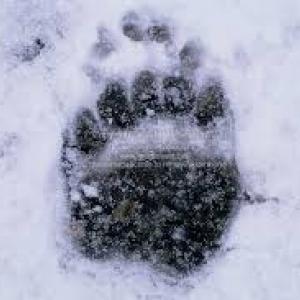
In winter’s snow, tracks become mysteries that invite exploration. Wander a hillside and find where deer slept, where they cleared snow to browse, where a mouse scurried for cover, maybe where a raptor captured it. Look for the passage of endangered or threatened species, animals you may never see, but whose tracks reveal their presence. Tracks can also tell you more about an animal you just saw. It’s wonderfully fun and mysterious to decipher the clues, to see what stories the tracks tell.

How you photograph tracks, the designs they create in the snow, their expression of movement over time, depends on your intended use of the image. Is it academic or artistic? Either way, the first rule of tracking is a good track gives good information, a bad one, little to none. Check 100 yards in either direction to study the details in each print. Look for clearly defined impressions of claws, toes and the inter-digital pad. You can find good tracks in any kind of snow but it can be harder to find a good track in deep powder because there’s little to no definition. Sometimes small animals leave the best tracks because they hurry along the snow’s surface.

When photographing tracks, you won’t need much in the way of specialized equipment. In fact, most tracks are big enough to photograph without a special lens pack. Do pack along a good guide book. “Scats and Tracks of the Rocky Mountains; A Field Guide to the Signs of Seventy Wildlife Species,” by Gardiner’s master tracker, James Halfpenny, is a concise and valuable guide that will easily fit in your camera bag or pack.

When making “academic” images of tracks, begin by taking an image of the track as you found it. The edges of the track define how big it is. Use something with a straight edge to “scale” the track. A ruler works best. Don’t use pennies, nickels, or a key chain as size markers for academic images. Definitive measures of size will help you determine what animal made the track. Be sure to shoot tracks straight on for identification, not from an angle. Take several pictures. Halfpenny, who teaches in and around Yellowstone, advises, “Shoot, shoot, shoot. We used to say its ‘just film,’ but now, with digital, I tell students, ‘Spend a few electrons.’ ”

Marsha Phllips of F-11 Phoitographic Supplies advises, “For artistic images of tracks, all photographic rules of composure and lighting apply. Try various angles including a long view. Be careful. A flash will blow out your detail. If you have to use one, try moving it off of the camera at a low power setting. Better still, bounce the flash off of something white like a pocket sized photo reflector. Low directional light is best to make a track standout. In harsh sunlight, you get such harsh contrast you can’t see the track. In soft light, there’s less detail.

“You can use a mirror or a flashlight to reflect light on to a track,” Philips adds. “Or, if there’s too much light, use someone’s shadow to shade.

The joy of digital photography and image editing software like Photoshop is that you can adjust the contrast of an image or sharpen the detail on a track. Don't rely on that fix, though. Remember the basic rule: you can’t make a good image from an indistinct track. As Jim Halfpenny phrases it, “Garbage in, garbage out.” Take the time to find the best track and take several images.

Enjoy and share the story of your winter discoveries.

Cabin Fever Can Lead to Snow Rage

cabin fever


Cabin fever isn’t a psychiatric diagnosis, but it does exist, says Josh Klapow, a clinical psychologist with a PhD at the school of public health at the University of Alabama at Birmingham. “Basically, it’s your mind’s way of telling you that the environment you are in is less than optimal for normal functioning,” he says. “It’s when you’re in a space of restricted freedom for a period of time that you can no longer tolerate.”

Before you get full on “snow rage” — a term the media has coined for the extreme angst people are feeling about the weather — and pull a shotgun on a snow plow driver, here’s how you can recognize when you’re getting too stir crazy and how you can cope.

You probably are getting cabin fever if any of the following are true:

  1. You’re feeling cooped up
  2. You’re having difficulty concentrating on what’s in front of you
  3. You feel lethargic, or simply feel unmotivated to do anything
  4. You are feeling irritated and on edge for no apparent reason


The best way to get yourself out of your slump and in a happier mood is to get moving, find natural sunlight, and do anything that can engage your cognitive activity. The more ambitious snowed-in people can  go for a run around the bloc, start a home improvement project or read a book by window. Those feeling a little less motivated can at least make a snow angel for 10 minutes, sketch out projects they will take on once it’s sunny again, or at least pull up the blinds and play a brain-teasing app like QuizUp. Anything but watching marathons of TV on the couch. Sorry, House of Cards fans, but unless your body and brain are active you are likely to become listless and depressed.

Also, avoid foods that will only make you feel more sluggish or more irritated. “We have a tendency, particularly in this country, of shoving ourselves full of high-carb and high-fat foods when we have nothing else to do. That’s not good because they create lethargy,” says Klapow. “The other thing we do is sit around and drink coffee, which is also bad because that feeds agitation.”

For some, it’s not just a matter of motivating themselves to cheer up but also motivating kids who have been stuck inside during a series of snow days. ”I can say as someone whose kids have been home for the last four days, you get to a point where you’re turning around and being like, ‘Are you still here?’” jokes Klapow.

Though having children home for days at a time during the school week can be tough, solving their cabin fever is even easier than solving yours. “Kids are going display their cabin fever in a more obvious sort of way. They’re going to pick on each other or they’re going to jump up and down,” says Klapow. “But we can tell them to go bundle up and run around outside for 15 minutes, whereas its harder to motivate ourselves to do the same as adults. You can control what they’re eating, even though its harder for us to regulate our own food intake. But helping your kids get energized with games and the right eating habits can help you alleviate your cabin fever too.”

It’s important, he says, to find ways to up our mood before we reach our tipping point. “Snow rage is not a clinical diagnosis,” Klapow says. “But you can think of it as the point where individuals have lost their ability to control their emotions, and the results are actions that are harmful to others — like yelling at a spouse or hitting your neighbor with a snow shovel.”

Let’s hope the snow ends soon so it doesn’t come to that.

MORE>><Time.com
 

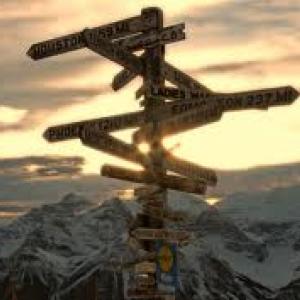
Crossroads

By Angela Jamison

angela jamisonAngela Jamison is a native Montanan and she grew up in beautiful Bozeman. I'm the mother of two girls and write a blog about our life here and taking in the simple pleasures of family and food. http://www.rdeliciouslife.blogspot.com/
Angela Jamison is a native Montanan and she grew up in beautiful Bozeman.  I'm the mother of two girls and write a blog about our life here and taking in the simple pleasures of family and food.  http://www.rdeliciouslife.blogspot.com/ - See more at: http://www.distinctlymontana.com/blog/winter-angela#sthash.Uvwd7ZX8.dpufAngela Jamison is a native Montanan and she grew up in beautiful Bozeman. I'm the mother of two girls and write a blog about our life here and taking in the simple pleasures of family and food. http://www.rdeliciouslife.blogspot.com/ - See more at: http://www.distinctlymontana.com/blog/winter-angela#sthash.Uvwd7ZX8.dpuf
I never imagined I would be in my home town raising my daughters in the same valley where I grew up.  Sure, I knew I wanted a family one day but always thought it would be somewhere far away from these mountains.  Recently I was reading an article about how Bozeman made it on another "Best of" list.  It seems to be a frequent occurrence.  The Best Place to raise a family, the Best Place for skiing, The Best Place to reboot your life, and on and on.  I get mixed feelings when reading these articles.  On one side I feel proud and fortunate to live here and as I read someone else writing about how amazing it is, I smile and think it really is.  But, then the other part of me wants to keep Bozeman a secret.  Anyways…the most recent one I read was the Best Place to Raise an Outdoor Child.   It was this one that got me thinking about raising my kids here.  It feels very safe and comfortable.  I know they are at a good school and I don't ever worry about going to the wrong part of town.  I know the parts of town, I know which neighborhoods have a more hippie vibe and which have a pretentious one.  I know what areas have more college student rentals and which are more family friendly.  I know these things because I grew up here.  Often fear comes from the unknown, so I get a strong sense of feeling safe here because I know Bozeman like the back of my hand.  Lately we have had talks of leaving again in a couple of years when my husband finishes school.  This both excites and terrifies me.  How will we ever find a place that can be as safe and wonderful as Bozeman?  I wonder…do I believe these things because they are actually true or because it's all I know?  Has the comfort of being in the same town become too comfortable and I can hide behind the idea that it is so fantastic because some survey says Montana really is the last best place?  Hmmm. I do believe Bozeman is one of the "best" places to raise an outdoor kid, or any kid for that matter.  A place where our family spends the majority of our time out in the fresh air.  Hiking our mountains, camping all summer long and sledding throughout the winter.  We've been to every park in this town and done every monkey bar.  I try to instill a love of the outdoors in them and the community we live in helps this concept thrive.  I go back to the comfort thing and wonder if I feel content with this because it is what I've always known.  I take them to swim at Bogart Pool where I spent many a summer day in my youth.  We camp up in the Elkhorns and I get a feeling of nostalgia from running along Crow Creek with my sisters and now see my girls do the same.  I think this is awesome, but also…how could it be different if I pushed myself out of my comfort zone?  I loved my Montana childhood, but could leaving the last best place be a chance for something new and exciting?  Would anyone who gets to live in this place that is coveted by many be crazy enough to leave it?  Have I instilled enough of the Bozeman goodness into my daughters that if we leave will they always consider themselves Montana girls or will they become something totally different?  And if they do, is that a bad thing? My biggest fear for leaving beautiful Bozeman would be regret.  If we took the chance to leave and raise our daughters someplace different and it wasn't all we thought, would we feel regretful?  In our early twenties we moved from one coast to the other with a brief stop back in Bozeman in the middle.  During those years the moves seemed as easy as moving across town.  I do believe it would be different now as we've added two kids, a dog and a fish to the family.  And, I'm pretty sure the cat would not survive another move…poor thing was a part of those early travels.  It would be hard to find a place that meets my Bozeman standards of excellent schools, wide open spaces, friendly community and safe neighborhoods.  If they didn't meet those standards would I long to come back?  Would it simply be impossible for any other place to bring me that comfort because Bozeman has held most of my 35 years?  The thing is….regret is always a two-way street.  We could stay right here, raising our girls as the next generation of Montanans, them having a childhood that so similarly parallels my own and regret could just as easily creep in.  Regret of letting fear make our decisions.  Regret of letting comfort and contentment hold us back from something different.  I try to remember the values I carry as a woman are part because of where I grew up and part because of my family.  I have to give Montana credit for giving me the desire to be a good, kind person and live a simple, happy life and want this for my own children.  I also know these values will translate across state lines, because no matter where I end up you can't change where I began.  And if I end up raising beach babies instead of ski bunnies, I know my roots and values will be instilled in them.  No one knows where life will take us.  I just want to make sure whatever road we travel, it will not be a road of regret.  And whether we kiss the mountains good-bye or stay here forever, it will always be my home.  

Tips for Organizing Your Photos This Winter

By Jenna Caplette


Jenna Caplette migrated from California to Montana in the early 1970s, first living on the Crow Indian reservation, then moving to Bozeman where she owned a downtown retail anchor for eighteen years. These days she owns Bozeman BodyTalk & Energetic Healthcare, hosts a monthly movie night, teaches and writes about many topics. 

* * * * * * *

Where are most of your photos right now? Stockpiled on your camera’s memory card? On your phone? Stored in boxes stacked in a closet? Don’t let your family images languish when you could be enjoying them. 

The long dark of winter night offers a perfect opportunity to organize your images. The essentials of the process are as simple as the ABC's: A is for Album -- your very best images that you want to have in an album or book; B is for Backing up (more on that in a moment); C is for Can -- toss it or delete it. There is one more: S is for Story. If an image is part of a larger story, you need to keep it whether it's a great image or not.

Get moving on your photo projects. A motivating question for yourself might be, what photo album do you wish you had to look at, but don’t? Or, what photo gift do you wish you could give to someone, but only have a print of the image you want to use.

If negatives are not available, get the prints themselves scanned. With F-11 Photo’s “Shoebox Scanning Kit” fill the box with as many as 2000 pictures and they are scanned for only $159.99. The scanned images are high resolution and can be used to make new pictures larger than the original prints. Imagine the time you save by letting someone else scan those images, even if you did have a scanner this good at home. The scanned digital pictures on DVD can be used to back up your photo collection and make all of the creative photo product options available to digital photographers. Get duplicate DVDs to share the entire photo collection with family members. 

Next, make sure your prints are properly stored. PrintFile offers archival storage boxes for photographs that will extend the life of a print and allow you to organize at the same time.

To make an off-computer back up of digital images (essential!), try the Picture Keeper Photo Backup. Plug the Picture Keeper into the USB port on your computer and let it do the work of searching photo files and creating backup copies. For just under $30, the 4GB model holds up to 4,000 photos. That should serve your storage needs for just a little while. When you fill one, it’s small enough to store in a safety deposit box; and it is a great choice if you want to use those images on a photo kiosk to make prints.

There is also a Picture Keeper app for your phone. It sends uncompressed images to a folder on the computer desktop to be backed up with the rest of your pictures. If you have an iPhone, be sure to turn on iCloud as another means of backup and sharing.

Investing a few hours this winter means you’ll be able to create a year’s worth of 100% personalized gifts in 2014.

—- PS: Marsha from Bozeman's F-11 Photographic Supplies says that family movies can be transferred to DVD as well. Video tape has a short life compared to still photos. A correctly stored video tape loses 20% of its upper end video signal in a relatively short 10 - 25 years. How old are the video tapes in your closet?

~