
This Was Life at Bella Vista: Italian Internment at Fort Missoula
In 2009, Missoula mourned the loss of a beloved resident. Umberto "Bert" Benedetti passed days before turning 98. From Vasto, Abruzzo, Italy, he was a regular on the University of Montana campus. There, he gained his master's in education at 68 and worked several years at its print shop. With a purposeful stride, he walked all over town, a few inches over five feet in a Griz cap, sometimes a beret. Benedetti stayed busy painting, writing, and researching—edifying himself into his nineties.
The year before, Missoula bid farewell to another local treasure. Venetian Alfredo Cipolato beamed in the tenor section of the Mendelssohn Club men's choir and Missoula Symphony Chorale. He would sing "O Sole Mio" at Bonner Park with the City Band. With his wife Ann, he ran the Broadway Market. A cell-phone store now stands on the site of the Cipolatos grocery, known for its Parmesan wheel and iconic grating machine, barrel of bulbous pickles, and counter of delectable cured meats and pungent cheeses.
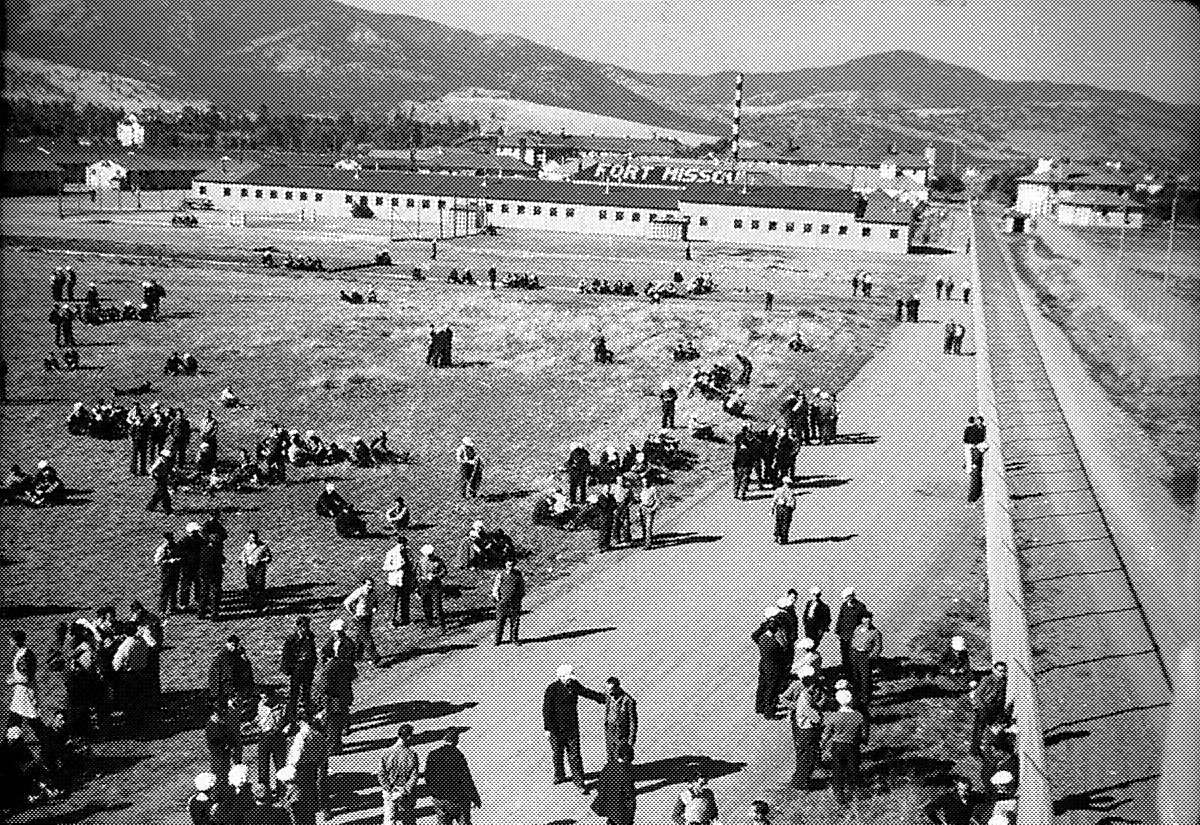
Beyond Italian births and upbringings, Benedetti and Cipolato shared another biographical chapter. Both were held captive at Fort Missoula during World War II. Built as an Indian Wars outpost in 1877, Fort Missoula had housed various units before 1941, when the Department of War loaned the site to the Federal Immigration and Naturalization Service. They sought an internment camp. The government liked remote areas, away from the coast. In places like California, conspiratorial transactions with enemy nations could flourish, they worried. Landlocked, Fort Missoula had infrastructure. It even came with a hospital.
The U.S. wasn't yet at war, but the government had been toiling to assist against the Axis Powers. In March 1941, the U.S. seized ships from Germany, Italy, and Nazi-occupied Denmark in U.S. waters. Among the vessels, Il Conte Biancamano, stuck in the Panama Canal. Il Conte Biancamano, like others captured, was a non-military merchant ship. Still, the U.S. forbade return to Italy. At home, sailors might join in the fight to grow Mussolini's forces. From the Panama Canal, authorities took the luxury liner crew, whose visas expired, to Ellis Island.
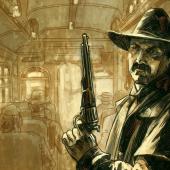
Then these Italians boarded their train to Missoula, Montana. At Ellis Island, Military Police crammed detainees in bunk houses. The Missoula-bound train, holding Conte Biancamano crewmen like ship's carpenter Benedetti, proved a prison on wheels. Bars fortified windows. Guards patrolled aisles. The ride took days.
 In May, when birds sing, and the river resounds with a swift burble, the first detainees arrived at Fort Missoula. Its vast acres of lawn and lines of white buildings, tidy, utilitarian, and official, gave way to enveloping conifers, their swath of green needles, and stately mountains still imprinted by lake strandlines from the Ice Age. They appreciated this mountainous, verdant scenery. They liked it enough to dub their holdings "Bella Vista," meaning "beautiful view."
To start and end each day at the fort, Border Patrol guards in charge took roll call. The Missoulian described the ritual's first instance: "Each stepped up snappily. Some grinned. Others came to attention and gave the Fascist salute. Some carried musical instruments. One happy fellow, glad to have his feet on the ground, was strumming a guitar as he answered."
The rest of Il Conte Biancamano's several hundred crewmen arrived at Fort Missoula a few days later. So did many other Italians thereafter. The majority came from other captured ships. Some, though, came from New York's World Fair. Authorities interned waiters, like Cipolato, and other workers from the exhibition's Italian Pavilion.
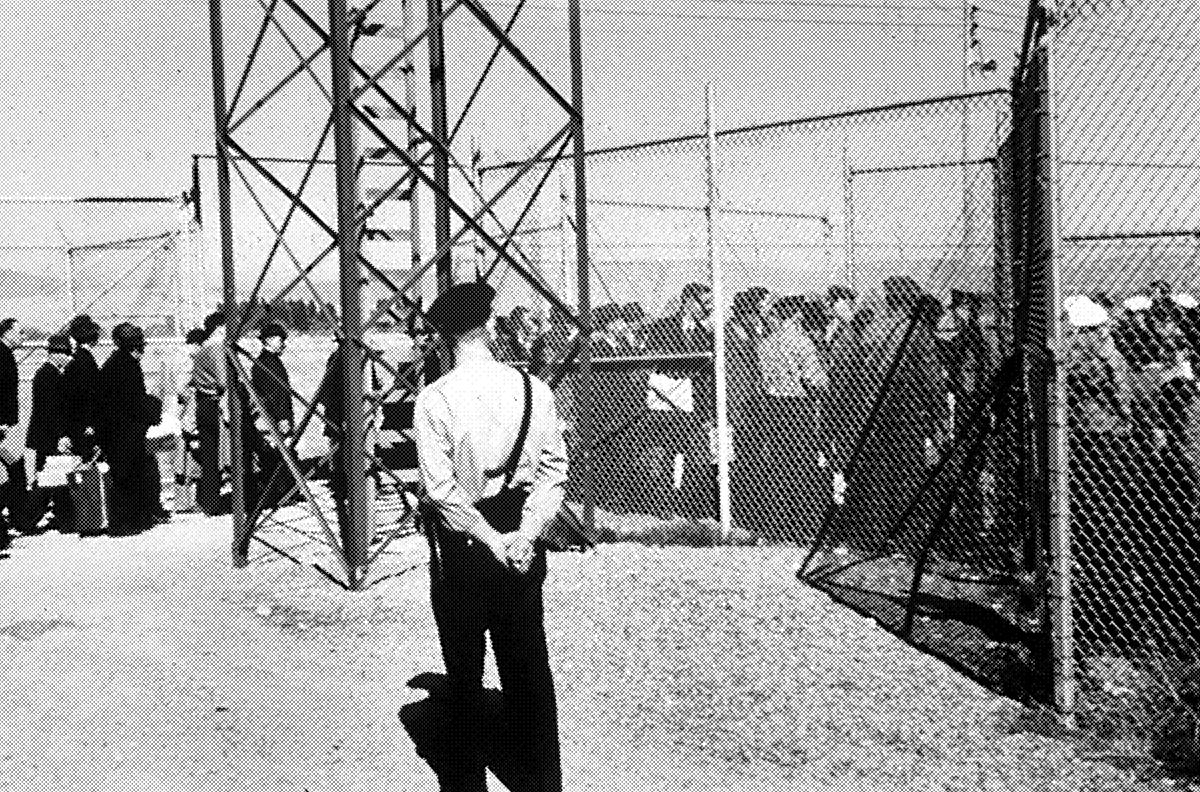
With considerable talent among Fort Missoula's over 1,000 Italian detainees, concerts became a centerpiece of the microcosmic civilization, confined by a ten-foot-high, barbed-wire-topped fence, and lookout towers sentried by guards. The ships' chain of command transferred to the camp, rendering its own quasi-government. Austin Haney of the Fort Missoula Historical Museum explains that many feared presiding ship's officers more than guards.
They organized educational programs. Detainees included figures like Father Alfredo Bruno. So, they held mass. They worked, building new barracks to confront overcrowding. Others worked in the laundry, tailor, shoe shop, or bakery. And "two roly-poly, good natured, moustached gentlemen operating the camp's barber shop are always busy," wrote reporter Nick Mariana in 1941. They bought cigarettes and stamps at the camp store. They published a newsletter, wrote and staged drama, played calcio and bocce, befriended feral cats, and ate ample pasta.
"They was eating a lot better than I was at the time I was working there," former guard Lyle Slade told UM student Julie Kenfield in a 1979 interview. Guards like Slade held to wartime meat and sugar rationing, he said, while Italians ate the luxury liners' food. "Some of these guys is eating big round steaks, and I can't even get a hamburger." Slade commended their capacity to entertain. "They'd put on stage plays, and some of them would be dressed up like women, and you couldn't tell they weren't women, either. And they'd make all their own costumes, you know, and they had a lot of good musicians."
On the Bitterroot River, guards supervised detainees fishing from camp-made boats they named the Venezia and Trieste. Guards took trucks of them to Blue Mountain for hiking. Guards might take them downtown, where they could buy goods. Guard John Moe entitled the only startling incident he observed the "Olive Oil Rebellion." He believed certain Italians to be unsatisfied with the cooking oil provided, but no border patrolman spoke the language.
One afternoon, Moe slept after working the graveyard shift. A fellow guard awoke Moe, who the Missoulian quoted in 2001: "He comes over to my house with a siren blowing and a Border Patrol car loaded with Thompson submachine guns and tear gas. He said, 'Get in, John, we've got a riot going.' Behind the main gate were some 500 Italians, waving their arms. We didn't understand what they were talking about." In the bedlam, Moe's co-worker set off tear gas in their car before a lookout tower guard shot himself in the foot. That diffused the situation.
Initially, authorities prohibited locals from gathering near the fort to gawk. But by the summer of '41, security relaxed. Missoulians could flock to the fort's rec hall for concerts. One featured Verdi and Brahms pieces performed by detained violinists. According to the Missoulian, pianist Vittorio Beccaria led a white-sport-coat-decked jazz band. He then conducted a 30-piece military band that played Wagner. Sleight-of-hand tricks by detained juggler Giorgio Rocarro followed. Proceeds went to Missoula's purchase of an iron lung.
Haney likens ships like Il Conte Biancamano to the Titanic. They had the same caliber of musicians and entertainment aboard, he says. However, Haney cautions against viewing Bella Vista as a summer camp. He emphasizes balancing pleasantness with enormity. It could have felt purgatorial. Depressing. Infuriating. They had committed no crime, yet could not know when they would see their families again. Model ships covered horizontal surfaces. With scarcely a woman in sight, they were held against their will. They were homesick—bored. But many endeavored to make the most of the long detention.
"I think he was incredibly brave," says Alfredo Cipolato's daughter Eletra Vandeberg about her father. Living conditions could be cramped with dozens of bunks lined in small barracks: breeding grounds for illness. Stepping into one today, robust insulation is no striking feature. Sometimes you'd build a painstaking model from twenty thousand toothpicks just to pass the time.
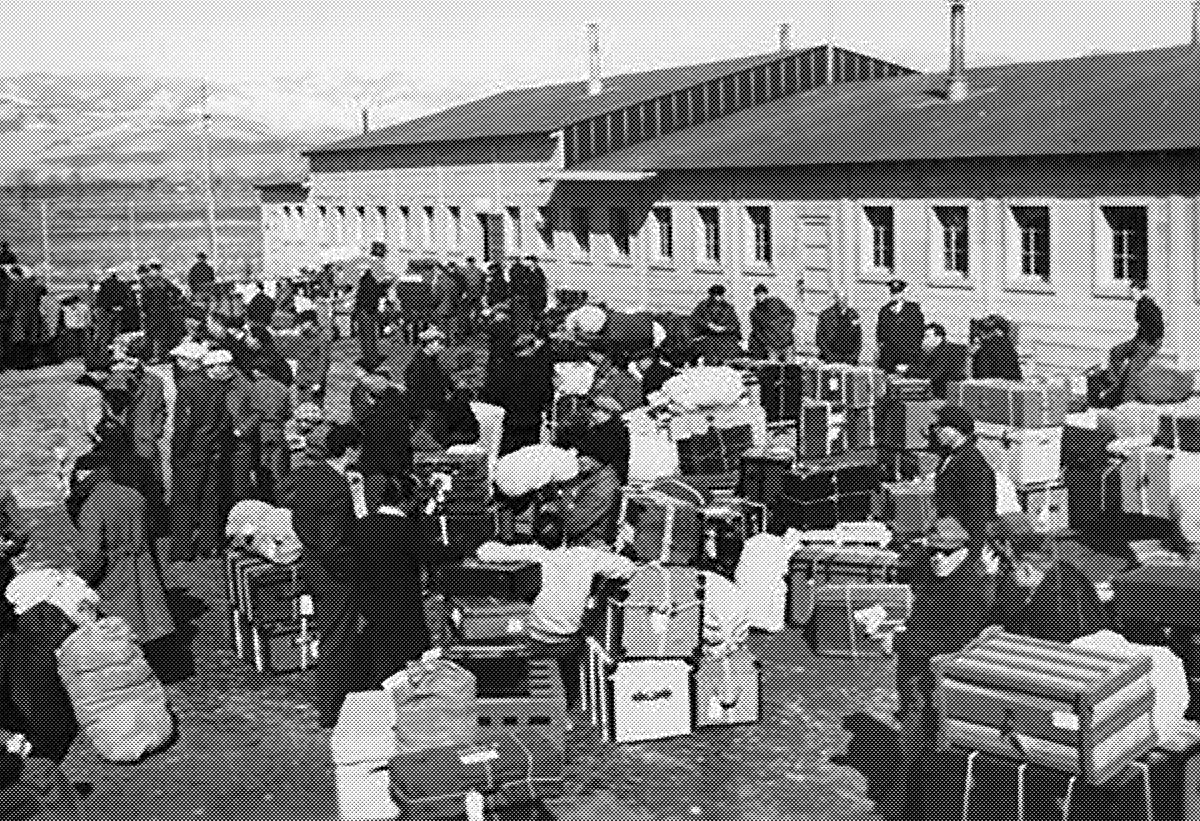
By 1942, the war effort needed Montana's agricultural products, timber, and other resources. Labor, though, lacked to meet demands. Close to 10% of all Montanans left to serve in World War II. Montana's population, moreover, had shrunk since the end of World War I. Detainees at Fort Missoula grew conspicuous as untapped labor. Authorities began clearing the camp's Italians for off-campus work. They reported for jobs with the railroad, Forest Service, logging camps, sugar beet farms in places like the Bitterroot, and others. Some worked locally, at places like St. Patrick's Hospital.
With both its chef and sous chef at war, Missoula's Florence Hotel gained an Italian passenger ship's kitchen workers, the then-manager Mary Bell told UM student Susan Buchel in a 1979 interview. Cipolato harvested sugar beets in Gold Creek. Benedetti worked at the Columbus Hospital in Great Falls.
After Italy surrendered in September 1943, many of the fort's Italians hung around Missoula awaiting return home. Judging by local press of the time, band leader Vittorio Beccaria played piano across town in this interim. Father Alfredo Bruno assisted in religious capacities. In An Alien Place, Carol Van Valkenburg notes the romances that blossomed at this time. "In May 1945," she writes, "dozens of women stood on the Northern Pacific platform and wept as a train left for New York, carrying the remaining Italians from Fort Missoula who were being repatriated back to Italy."
Some fought in the war for the Allies. Some received American citizenship. A very small fraction stuck around Montana. Benedetti gained citizenship before serving in the Korean War. On the G.I. Bill, he attended college in California. He taught high school art and languages in Miles City. Then he returned to Missoula in 1970, where he remained. He wrote several books across different genres. Among them: Italian Boys at Fort Missoula, Montana 1941-1943.
In July 1944, Fort Missoula closed its internment camp. Some Italians returned home. Others started new lives in America. A handful stayed in Montana. Eletra Vandeberg says her father, Alfredo Cipolato, met her mother, Ann D'Orazi, while singing in St. Francis Xavier's church choir in Missoula. They married in 1943. In the 1950s, Ann and Alfredo first leased the Broadway Market from Ann's uncle. The Broadway Market became a Missoula institution. Into his nineties, Cipolato worked at the store and stayed active with Missoula musical organizations. Irises they planted over eighty years ago still emerge in the springtime.
Enjoyed this story?
Montana has more layers than most people ever see.
Distinctly Montana finds them, four times a year. Subscribe and get every issue.




















Best Italian restaurant in Missoula?
- Reply
Permalink