
The Ballad of George Bruffey
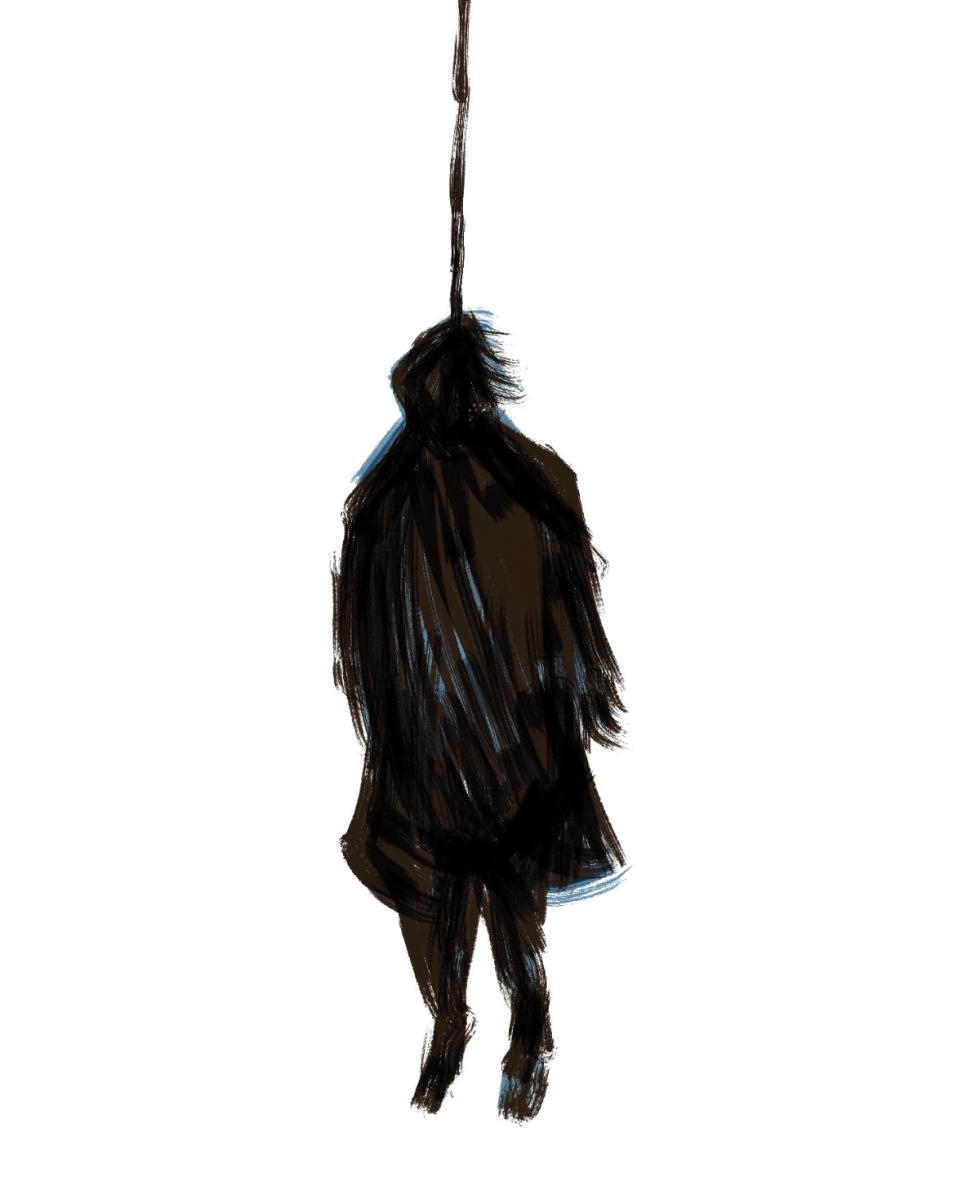
Out of curiosity, not bloodlust, twenty-one-year-old George Bruffey stood with the Nevada City mob. Townsfolk had turned the wood frame of an under-construction store into gallows. The officers, so-called, let George Ives, convicted of mule theft and murder, read a letter to his friends. Such officers tied his hands behind his back. They stood him on a tall, wooden box and cinched the hemp, fibrous and coarse, tight around his neck. Six others held a twenty-foot cord package-lashed to the box on which he teetered.
Bruffey had just met Ives at a dinner table near the Beaverhead River. They ate beef and Bitterroot Valley cabbage. They talked of growing vegetables. Ives found it foolish to cultivate in this region, citing frosts.
They yanked the box from his feet. Ives plunged. Like a fish on a line, he thrashed. Then he did not. And "the crowd," wrote Bruffey, "about four hundred people, surged up the hill. All was over, and he was decently buried."
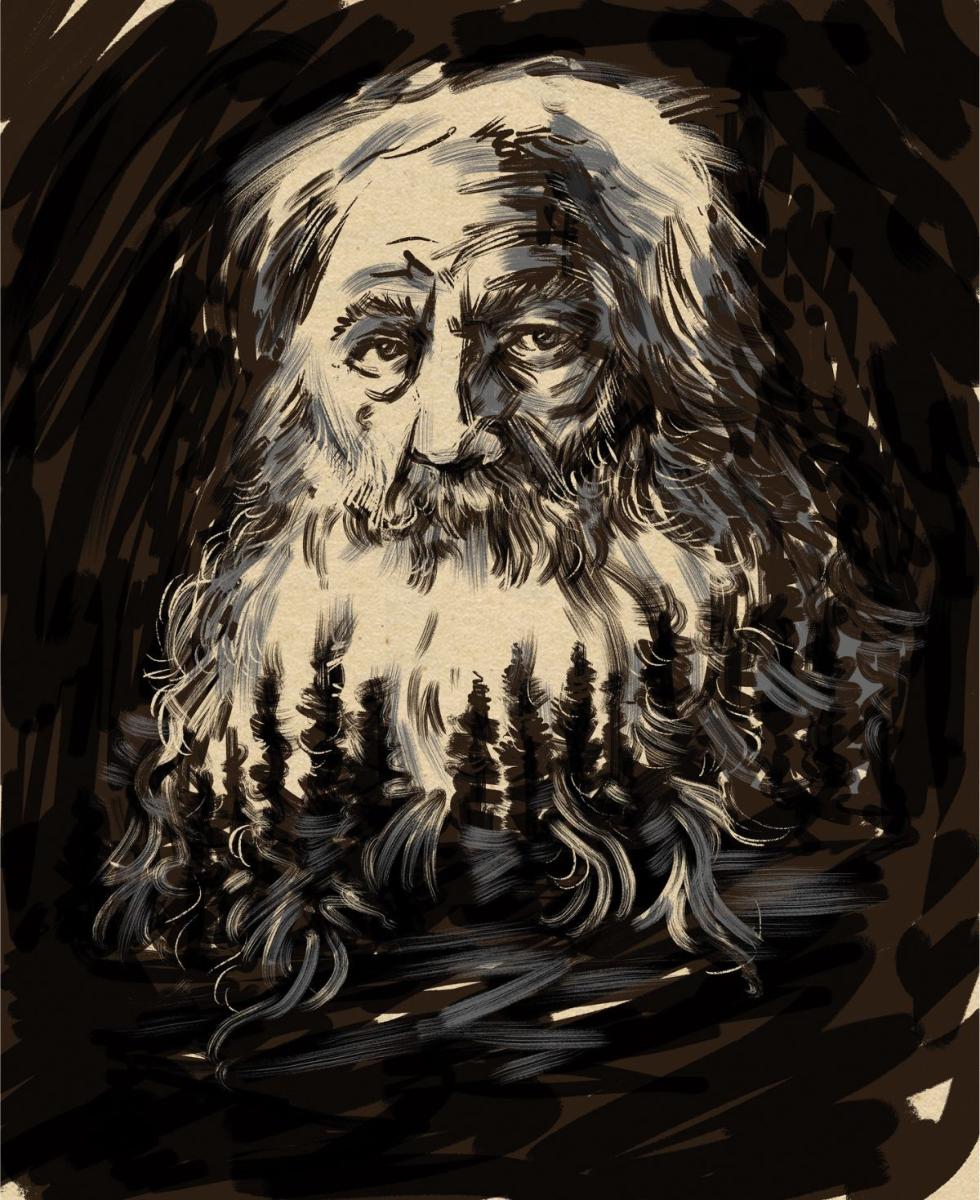
A century ago, George Bruffey's name was much less obscure to Montanans. Indeed, he witnessed and recorded memories of George Ives's execution. This incident famously gave birth to the Vigilantes. But he's far more than one eyewitness to that episode.
He built the first road from Butte to Helena. He served in a territorial and state legislature, despite distaste for "too many rules of order" and "too much superfluity." From the vantage of Frank Worden's store near present-day Missoula, he watched tribal hunting parties of 1,000 men, women, and children with 2,000 head of horses fork off toward the Judith Basin, Sun River, and Shields Valley.
Bruffey took travel advice from John Bozeman. He ate boiled elk and roasted antelope with Bob Dempsey and the Bannocks with whom Dempsey lived. Bruffey defended Jim Bridger against rumors of polygamy. More namesakes of streets, creeks, peaks, towns, and counties populate his memoir, Eighty-One Years in the West.
The book came out in the 1920s, shortly before Bruffey died from injuries sustained while walking the 25 miles from Livingston to Bozeman. He was 86. Every paper in the state published his obituary.
Eighty-One Years in the West is a fusty, crinkled, hundred-years-out-of-print collector's item. It gives an insider's look at big moments in Montana history. Even better, it shows how average pioneers, not copper kings, business titans, or governors, lived. You learn of the tools, transportation, ailments and remedies, clothing and shelter. Reading Bruffey, you can almost taste his gritty, bitter campfire coffee.
George A. Bruffey was born in Pocahontas County, West Virginia, in 1842, the youngest of six. His father worked as a wagon maker. Fleeing smallpox, malaria, and cholera, the Bruffeys moved to Missouri, then Iowa, then back to Missouri. There, his parents opened an inn patronized by cattle drivers returning from the West. Young George found their stories enticing.
He remembered a country on the brink of civil war, too. Feeling no desire to die for the Confederate or Union cause, he pursued the only other option.
Bruffey went first to Nebraska. By 1862, he reached Denver. From there, he joined a wagon train bound for the Salmon River in the Idaho Territory.
Along their way, his travel party heard that a place called Alder Gulch held superior gold.
By the time he reached Alder Gulch, Bruffey had been a rancher and farmer, oxen driver, logger, timber yard owner, and brick maker. He next learned to mine in these camps near Virginia City, which, in 1863, consisted of "twenty log cabins and many bush shacks." His minimalism neglected the grime and rubble, street muck they called gumbo, and the rich aroma of stock animals and deficient sanitation.
He had barely been in the Gulch long enough to acquaint himself with saloon keeper Bill Palmer and fellow hunters when they rode into town with the corpse of Nicolas Tiebolt, George Ives's victim. "They told us he had been dragged to where they had found him with a rope tied around his neck. He had been badly picked under the shoulders by magpies."
Bruffey got his first lesson in the region's do-it-yourself criminal justice system. As Ellen Baumler notes in Dark Spaces, a history of the Montana prison, the nearest federal penitentiary was in Detroit. No sanctioned law enforcement existed. And it's hard to enforce laws when, for all intents and purposes, there are none.
At George Ives's outdoor, December trial, with a bonfire warming the buffalo-robed "jury," Bruffey saw locals like Wilbur Sanders and Don Byam become prosecutors and judges.
In a few days, Sanders and Byam, along with 22 others, would sign their Vigilante Oath. In the coming months, the Vigilantes would lynch over 20 men. Bruffey saw them hang Jack Slade, a stagecoach driver he met coming west, condemned as a cruel, trigger-happy drunk.
One of the fascinating aspects of Eighty-One Years: the food. A mess of trout, fried on hot stones. Cabbage, turnips, and carrots bought from "renegade Mormons." He called frying pan bread and bacon a "satisfying supper." His diet consisted largely of bacon and other pork products, beans, corn, wild game, butter, and flour—vital in mining camps.
For flour, Alder Gulch relied on wagons from Salt Lake City. Because of onerous freighting, prices were already high. By March 1865, the Gulch's flour supply dwindled. Wagon teams from Salt Lake lost all their oxen passing mountains of snow and ice in a bad, lingering winter. Bruffey saw stores price-gouge what little flour remained. 100-pound sacks cost $100 (around $2,000 today).
One April day, he stood amid his gravel and mining tools. Ten men brandishing guns passed. One waved an empty flour sack tied to a flagpole. "Flour or Blood," it read. Moments later, 200 or more clopped by, likewise armed.
Bruffey hurried to his hut to fetch firearms.
They divided themselves into six squads. They appointed "lieutenants." They put Bruffey in charge of the left rear unit.
When they reached Virginia City, an upright citizen stopped them. "Go on," he said, "take all of the flour, rice, and beans that you can find, but be men, not fiends. Don't burn the town."
With that, they scoured every store, cabin, and cellar for flour. They seized sacks from under oats, in barrels, and haystacks. They marched off with over 80 bags to hand to their "flour committee," responsible for parceling it out to those without.
Virginia City's Montana Post wrote, "The whole proceeding was of a novel character."
The flour riot, which occurred soon after the U.S.'s admission of the Montana Territory, says much about life under new territorial governance. Law and order purportedly came, but not enough to stop 480 men from committing armed robbery.
Like most Gold Rush prospectors, Bruffey eventually went broke. Often, placer miners shoveled and sifted earth and debris by the ton. They ransacked ligaments, walked stiffly, and looked gaunt. They faced the outdoors' unique miseries and could perhaps purchase some butter. According to the Montana Historical Society, placer miners yielded over $90 million between 1862-1866. That's over $1 billion today. But it was scarcely a tidy division of wealth.
Before his last $2.50 ran out, Bruffey left his Alder Gulch claim to herd cattle near the Jefferson River. "We killed beeves and sold meat to prospectors, freighters and immigrants."
Agriculture afforded better job security, but Bruffey loved the sport of mining. He couldn't wait to strike up his pick, pan, and shovel again. But he first needed to earn money to do so again.
During his hiatus as a cowboy, tolled throughways came to the Jefferson River. One farmer, Crawford, ran a competing toll bridge against another, Parson. For passage, they charged five dollars per wagon plus an extra fifty cents per unhitched ax.
In the springtime, the mud-brown Jefferson roared with mountain runoff. Its surging maw swallowed and swept away Crawford's toll bridge like a low-hanging branch. Parson lost his the following week.
Crawford had given Bruffey and a fellow ranch hand urgent instruction. Find a certain tree. Eight miles into the mountains. Somehow, they found it. Crawford's son confirmed it at dusk. He'd brought help, tools, and food. Then came a professional boat builder to supervise. A bonfire glowed, giant and spark-belching. By its pale light they forced the crosscut to and fro. The teeth honked against the timber.
By morning, the great tree they felled stood in two pieces. They cut twelve-foot sticks to line the bottom. They retrieved bags of pine sap for sealant. After four days, the parts lay by the river ready for assembly. A tremendous line of wagons waiting to cross helped. Then came the rope pulley system. After a few test crossings, Bruffey and company ferried one hundred wagons every 24 hours for the next several days.
But Crawford hired a ferryman, green to the job, who fouled the ropes. He sent the boat barreling over broadside. It crashed on a bank miles away. An Irishman, one of four tossed into the abyss, narrowly swam to shore. He said, "Well, boys, I gave myself up to God, but He sent me back. Have you got any whiskey?"
With the help of twenty oxen, the boat returned to its station. Once repaired, the toll business resumed on the Jefferson.
In 1867, after working on a construction crew for a Butte stamp mill, Bruffey finally had the means. He assembled his team to dig again.
Of the hundreds of gold camps now in the Montana Territory, he first tried those near Deer Lodge. ("We found gold in all of those creeks but nothing permanent.") Then he went to Cable, now long abandoned, in present-day Granite County. ("It yielded much gold but small profits.") Finally, he mined in camps near Butte like Rocker and Silver Bow. ("In June the ground paid but little more than expenses and July was poor.")
Like many whites in the West, Bruffey and crew sold their claim to Chinese miners when it stopped paying. According to historian Michael Malone, the 1870 Butte census listed 98 Chinese among the 241 population—an indication that the Silver Bow Creek gold boom was going bust. Chinese miners had followed gold rushes since California. The law forbade them from staking any claims other than those whites had first deemed worked-over. Malone notes that, at one time, Chinese miners predominated in Rocker, which they knew as Foochow.
Bruffey wanted to keep mining, but on his first Christmas visit home in nearly a decade, he married his childhood sweetheart Matilda. He brought her back to Fish Creek near present-day Whitehall. They started a family. This necessitated steadier work.
He first drove wagons of Jefferson Valley cheese to the Butte-area gold camps. From there, his merchandising grew into a storefront on his Fish Creek ranch. The stage station and post office came to his property. He served as Fish Creek's postmaster and built a blacksmith shop. He sold Buckeye agricultural mowers, hardware, clothing, food, hides, pelts, ores, harnesses, saddles, toys, wagons, and buggies. Wisely, "I sold no whiskey, allowed no card playing."
Bruffey's name and Fish Creek grew inseparable. "The little burg looks pleasing," wrote a visiting Butte journalist, "and George presides over it with the dignity and bearing of a duke. His store, too, is the centre of attraction...."
The 1870s and '80s brought industrialization, urbanization, and railways. These factors changed Montana Territory consumerism. Butte or Helena stores, like Sands Brothers, Raleigh and Clark, and Van Wart & Co., had huge product varieties and seven-digit annual revenues. Slick, urban stores like these displaced 1860s-style trading posts like Bruffey's.
Struggles to compete in business and 1888, a devastating crop year, forced Bruffey to move his wife and 11 children. Judging by his writing, he stayed calm through misfortune. Inconveniences and calamities were rules, not exceptions in Bruffey's life. He had been forced to reinvent himself over and over for more than 40 years.
The Bruffeys became prominent in Mission Creek near Livingston, where George never retired from ranching. His granddaughter, Elinor, relayed a typical day at Mission Creek: He rose at 4:00 or 5:00 to shovel manure from barnyard stalls and feed horses, pigs, and cows. Then he filled a bucket with milk. From its cream, Matilda made butter, a currency in town. After breakfast, Bruffey plowed, harrowed, tackled, or performed other laborious tasks with only horses and hand tools until dark. Elinor wrote, "He doesn't complain for this is his life." A perfect utterance.
Bruffey led an extraordinary life, but for his time and place, a typical one. Survival defined his story, like his peers. And survival in historic Montana led to remarkable activities indeed. This would-be folk hero and his autobiography are mostly forgotten, but Bruffey, assuredly, made his mark on Montana.




Leave a Comment Here