Juneberries in July

By Jenna Caplette

Jenna Caplette migrated from California to Montana in the early 1970s, first living on the Crow Indian reservation, then moving to Bozeman where she owned a downtown retail anchor for eighteen years. These days she owns Bozeman BodyTalk & Energetic Healthcare, hosts a monthly movie night, teaches and writes about many topics. 

*********

Sarvis berries. Serviceberries.  Juneberries.  They grow wild on hillsides and in gullies around Montana.  Mostly, they ripen in July.   

Seasonal past-times like berry picking are so completely about how people have lived and made a living here, that they root us to our heritage of living off and with the land.  For myself, picking juneberries roots me to my own Montana history.    

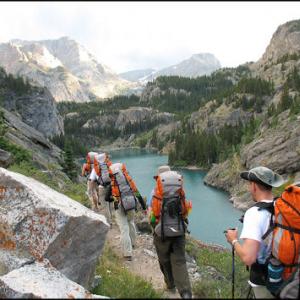
In the summer of 1974 I was a junior at UC Santa Cruz, cruising out West in my VW Beetle, ready to work for the Crow 4-H program in Eastern Montana.  Within two days of arriving on the reservation, I was sent to Black Canyon Youth Camp up in the Big Horn Mountains.

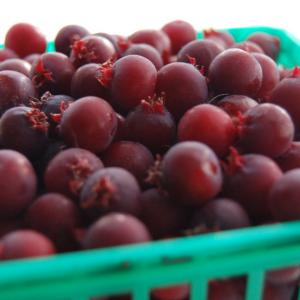
There were only three of us working at the camp who didn’t speak Crow, and Crow was the primary language spoken.  I was new to the reservation, young, overwhelmed.  The language barrier was a challenge I hadn’t expected.  Then one morning when I was out jogging (such a California thing to be doing forty years ago, up in the mountains, on the reservation), I found some berries that someone introduced to me as juneberries.  Drier than blueberries and not so sweet as a huckleberry, juneberries are filled with grainy, edible seeds.  Fresh off the bush, I loved them from the first bite.

I picked enough berries to bake two pies. Sharing the kitchen with the women who cooked for the camp, laughing as we worked, the language barrier softened and I felt less an outsider.

Later, I listened to stories about Juneberry picking from my ex-husband who is Crow.  He spent his childhood summers camped in the Big Horn Mountains with his grandmother and other relations. He says his grandmother taught  him to make a circle of juneberry juice around his belly button to keep from getting a stomach ache after feasting on berries. 

A mixed-blood elder from Roy loved to tell how she would head out with other women to pick, loading supplies and a picnic in her old chevy pickup. She glowed when she told berry picking stories and she told them often.

When my daughter, who has Down Syndrome,  turned two and began to walk it was something to celebrate.  My husband told me it is a Crow tradition to have a walking party and that the traditional food for that celebration is juneberry pudding.  I used berries I had canned the previous summer and made the “pudding” with a mix of berries, water, sugar, and cornstarch, heated just enough to make the sauce thicken.  Scoop that pudding with fresh fry bread and life tastes pretty good. These years later, my daughter won't eat juneberries unless I make them in to Indian pudding.

Every summer, I still pick. Sometimes right in Bozeman city limits. Sometimes I feast my way up and down favorite trails with joggers and hikers passing, oblivious to the bounty- or maybe, like my daughter, they just prefer the taste of blueberries.

That's good with me. I love that juneberries are mostly ignored. It leaves more for birds, bears -- and me!

Where’s Waldo’s bear-proof trash can?

By Kathleen Clary Miller

Kathleen Clary Miller has written 300+ columns and stories for periodicals both local and national, and has authored three books (www.amazon.com/author/millerkathleenclary). She lives in the woods of the Ninemile Valley, thirty miles west of Missoula.

********

A friendly brown bear strolls through the woods just off our back patio once or twice a week, I’d say.  In the soft light of a summer evening, she emerges, sometimes with one or both of “her twins,” as my neighbor refers to her offspring. 

We’ve done everything right to instill fear of human habitat.  Despite the irresistible temptation to encourage her visits so we can watch typical bear behavior from the comfort of our picture window, we issue Cody, our German shepherd, the command to chase her into the woods.  He stops on a dime when we order it, after we see her disappear in a mad rush.  I dig down deep and muster great discipline to dissuade her since there is nothing more adorable to me than a big fluffy bear acting like a human.  It must hearken to my stuffed-animal childhood.

The only sign of her refusal to entirely call it a day and try her luck elsewhere is evidenced by her few attempted break-ins—and failures to succeed—on our “bear resistant” trash container. 

“Bear resistant” would be an understatement.  Trust me, this container turned out to be the best investment we ever made.  I could film a commercial for this baby where trucks run over it, robots hurl it over a bridge, and King Kong himself drops it from atop the Empire State Building.  Covered with claw marks and scratched and dinged it still stands (some mornings we find it lying on its side) never farther from its designated spot by the garage than the patch of gravel that abuts said spot.  Gravel is obviously a rough road to travel when you’re a bear either wheeling or rolling a week’s worth of kitchen bags filled with trash secured in a very, very heavy bin.

Against all odds, the small pincher latches remain closed, anchored to the receptacle by steel cables.  The tires are intact.  The metal rim around the lid may be a wee bit bent out of shape, but that lends it the character of a courageous battle-scarred survivor.  

This morning I opened the back door to walk out to the garage and immediately noticed a certain lack of something.  The bare spot on the breezeway.  The bear.  The trusty trash container was missing from the view—missing in action, as a matter of fact, as I scanned the woods in search of what I determined may have finally lost the battle. 

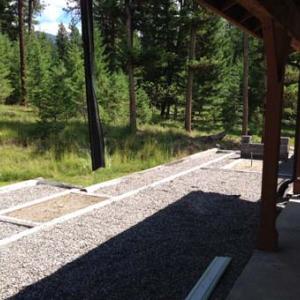
I snapped a picture and sent it to my daughters, instructing them to imagine they are back in the dentist’s office reading “Highlights” magazine, the page where you have to discern the hidden pictures.  Find Waldo’s trashcan.  It took me as long as it is taking you, to spot it.

Hint:  It’s green.

Craig Johnson and a Desire For Books

By Jenna Caplette

Jenna Caplette migrated from California to Montana in the early 1970s, first living on the Crow Indian reservation, then moving to Bozeman where she owned a downtown retail anchor for eighteen years. These days she owns Bozeman BodyTalk & Energetic Healthcare, hosts a monthly movie night, teaches and writes about many topics. 

*********


My daughter and I have a joke when we’re traveling. I’ll drive or walk by a bookstore, say, “Look, a bookstore! “ And she says, after at least twelve years of this joke,

“No Mom. No more books, You don’t need any more books.”

Need? No. Desire? Yes.  

When I visit local, independent bookstores, maybe it is also somewhat about hope, the “What if?” of my own languishing novel. As if I might magically find it on the local authors shelf in one of the bookstores I visit and discover that in a parallel life I got myself moving and revised it one more time and . . .

Anyway, it was in a small bookstore in Red Lodge that I first found a novel by Wyoming author Craig Johnson, The Cold Dish. I noticed it because it had a “local author” sticker. I purchased it because it sounded like it would have a Western flavor I might enjoy -- the protagonist is the Absaroka County Sheriff. His best friend is Northern Cheyenne.  

I enjoyed The Cold Dish. Eager to share it, I happily wrapped and sent it to my dad, who lives in the San Francisco Bay Area. For years I had shared Tony Hillerman mysteries with my him but we’d run through the series and now when a new book did come out, one of my sisters often beat me to the purchase.

Neither of my sisters beat me to The Cold Dish, or Death Without Company, or No Kindness Goes Unpunished, nor any of the rest of the Walt Longmire series as it grew. 

Last summer I noticed that Johnson would be hosted by the County Bookshelf in Bozeman. It was a sure bet I’d be going. Couldn’t wait to tell my dad about it. I found Johnson funny, insightful and articulate. My reading of his mysteries had been a private daughter-father thing for me, so it startled me to discover he had a following.

Even more surprising was the Longmire TV series based on his novels. I had no idea. I loved that Johnson was on a motorcycle tour of smaller, independent bookstores. A lot of authors get sent on book tour by publishers but only hit larger communities. Ariana Paliobagis of Bozeman’s Country Bookshelf, says that Johnson’s first visit was so much fun, as soon as they knew he had a new book coming out, they invited him back. “He has a big fan base here.”

So Johnson returned to Bozeman at the end of June. Book signings, says Paliobagis, are something that brick and mortar book stores can do that online sellers cannot. The signings build excitement and a sense of community.

Its clear many of those attending this signing are eager to share with Johnson their love of his stories and characters.

As it turns out, this was more of a pickup-truck book tour.  When Johnson had gotten ready to hit the road, his motorcycle wouldn’t start. He couldn’t take the time to sort out the problem. And maybe that was a good thing because he says it has been raining since he left his home in Ucross Wyoming.

The catalyst for mystery number nine, A Serpent’s Tooth, came from a news piece.  Many of his novels do. Johnson saves articles from Wyoming, Montana and South Dakota newspapers. He says he’s a “burr under a saddle-blanket writer.” The burr is a social issue he wants to take on. He matches the social issue with one of his on-reserve articles and goes from there, often spending a year in research.

He says the most outrageous stories in his books come from Sheriffs he’s visited with. He catalogues and files those away like he does the newspaper articles. Johnson found the newspaper article that inspired A Serpent’s Tooth in a South Dakota newspaper. The storyline includes a Mormon ‘lost boy.‘  Johnson says that until now he has avoided the topic of religion. With friends on the Northern Cheyenne and Crow reservations, he says in the past twenty years he has spent more time in Sweat Lodges than churches. His novels have not ducked spirituality.He says that the Northern Cheyenne and Crow have been here a couple thousand years. We newcomers to the Northern Plains, a couple hundred. He says maybe they know stuff we don’t.

Or that’s what I heard because as he talks I’m drifting and thinking how much I appreciate how he does handle that spirituality. It’s a big part of why I’ve kept reading his work. Married to a member of the Crow Nation for fifteen years, that spirituality is a big part of who I am too.

Johnson says that when he reads from his work at a book signing like this one, he’s editing, sometimes changing what is printed on the page. There’s always something that could have been different, better.

Yeah. I’ll feel that way too, as soon as I submit this piece to the Distinctly Montana Blog, think “Should have said, the point really was, and . . .”.

I remember what it was like when I was immersed in the world of my own novel. What it was like to be around authors more often, to listen to them with an intent to refine my own craft. To think of myself in any way as a novelist.

Johnson says he put The Cold Dish in a drawer for ten years. It would be a lot of work to resurrect Eagle Dreams, my historical novel. It’s languished almost as long as Johnson’s mystery did.  

Maybe its time.

In the meanwhile, time to catch up on my reading. I’m still haven’t read Johnson’s Hell is Empty.

Photographing The Big Sky

By Jenna Caplette


Jenna Caplette migrated from California to Montana in the early 1970s, first living on the Crow Indian reservation, then moving to Bozeman where she owned a downtown retail anchor for eighteen years. These days she owns Bozeman BodyTalk & Energetic Healthcare, hosts a monthly movie night, teaches and writes about many topics. 

*********

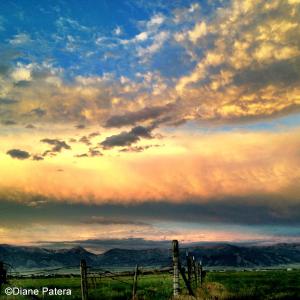
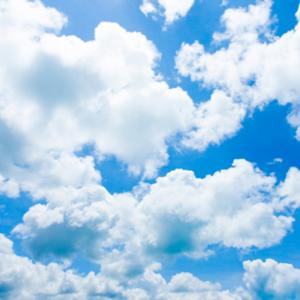
A couple weeks ago, hiking outside Red Lodge, a cloud stopped me in my tracks, as if I’d completely forgotten how amazing Montana summer clouds can be. I guess I had. I grabbed my trusty iPhone and captured the image, awe inspiring as the mountain peaks beneath it.

It helps when photographing sky, and a particular cloud in that sky, to think of it as if you were photographing a person and frame the photograph to best express the cloud’s essence. To create an effective image of a wider cloud pattern, consider what you should exclude from it rather than what to include. Taking several photographs may be the best way to train your eye. Study each to learn what you do or don’t like about your results. Make notes.

To best capture the presence and drama of sky in a photograph, you can choose a focal point in the sky itself – like a cloud -- or place something in the foreground of your shot with angles and visual interest, like the silhouette of a mountain, the reach of a sunflower’s head, or the architectural form of a barn.

With a digital single reflex lens camera, a 28mm equivalent or wider lens will capture the broad reach of sky above a harvest-gold wheat field. As you plan your shot, keep in mind that when you use a wide-angle lens, the sun and moon, or the barn in the foreground, will seem smaller in relationship to the rest of the photograph. Use a telephoto on that same scene and you can zoom in on a particular cloud making it your subject, or on a clump of river grass contrasted with the sky, or the great, fiery ball the sun becomes when it sets in a sky hazed with particles from forest fires. When photographing a skyscape that includes the sun, remember to take precautions to protect both your eyes and your camera's sensor. Use the LCD on your camera to check the picture and make adjustments from there. Don't leave your camera pointed directly at the sun.

On a bright day, a split or graduated neutral density filter allows you to reduce the amount of light reaching a specific part of your picture. This brings the range between highlights and shadows closer together so you can capture both the character of the sky and the details of landscape.  They are one of the few tools available to help control a bright white waterfall in your picture's foreground.  Check one out at a full service camera store and have the staff person show you how it works.

A polarizing filter can “pop” the blues of mountain skies, increasing a picture's color saturation, making all the colors brighter. You won't need one when the sun is directly overhead or when the light is naturally polarized at sunrise and sunset. Because polarizing filters absorb about two stops of light, removing them in low light conditions conserves precious light resources during the golden hours of the day.

A tripod comes in handy for images captured at sunrise, sunset, through a smoky haze, or during the drama of a thunderstorm. After sunset, it becomes essential. If you want to photograph the night sky, attach your camera to an extra-sturdy tripod to insure your camera stays absolutely motionless and remove the filter from the lens. Avoid artificial light like yard lights, headlights, and the glow of city lights

Centering your camera on the North Star and using “Time” or “Bulb” exposure allows you to document the rotation of stars around that still point. Or, you can do the same as you would during the day, and find a solid focal point to contrast against night sky – like a dark mountain ridge. You’ll do best on nights with little to no moonlight, unless you want to photograph the moon itself.

To learn about night sky events, like meteor showers, planet viewing, or to plan ahead for a particular kind of moonlight, check out websites like www.stardate.org. If you get a clear night, grab your equipment and go because the next night may be cloudy, or smoky. Be sure to pack along a flashlight to orient yourself to your surroundings when you set up for a night sky shoot.

The essence of photography is the exploration of interesting light. Opportunity abounds. Few places offer a sky as  expressive and seemingly infinite as ours in Montana.

- I wrote this tip with the expert assistance of F-11 Photographic Supplies in downtown Bozeman.  

 

A Sky of Surprises

By Kathleen Clary Miller

Kathleen Clary Miller has written 300+ columns and stories for periodicals both local and national, and has authored three books (www.amazon.com/author/millerkathleenclary). She lives in the woods of the Ninemile Valley, thirty miles west of Missoula.

********

       For the past three days, I’ve watched the lightning storms blow across the Ninemile Valley and onto my front porch where I like to sit and feel the thunder.  In my limited meteorology experience (I hail from Southern California where weather isn’t a vocabulary word) such drama is played out in films or on news reports.  Here, I get it live—and up to the minute.

            One never knows when turning off the lights and pulling up the bed covers what weather patterns may emerge come morning.  There are forecasts, to be sure, but at best they can predict the basics—the usual snow, sleet or sunshine.  Variables are best prepared for on your property as well as on your person.  Cover, cover, cover.  Layer, layer, layer.  No wonder Montana weather forecasts are detailed by the hour.  This sky is full of surprise.

            Hence, after three days of everything under the sun (rain, hail, sleet, lightning, thunder) but alas, not the sun itself, when I awoke this morning to the proverbial “big sky,” it felt like Christmas morning (without the snow, thank God). 

            I dashed and danced through breakfast and mandatory exercise routine in order to get out in it.  My walk is dessert, the reward for the predictable stretches and bends I have to but don’t want to do to stay flexible and avert back pain.  Fresh air is calisthenics for the soul.

            Montana’s sky really is bigger than any other I’ve laid eyes on.  I suppose it’s a combination of the clean air, the spacious landscape, and the mountains in the distance?  I’ve spent an entire lifetime living at the seashore, yet even though the expansive Pacific Ocean ends in a straight line of horizon, this sky is bigger.  How can that be?

            Today I sinfully broke my dermatologist’s rules and raised the brim of my UVA/UVB protective sunhat to revel in it.  The white clouds puffed in sharp definition, utterly three-dimensional, their etched edges sharply contrasted against a backdrop of deep blue that goes on and on for, well, ever.  It was all I could do to keep from lying on my back in my neighbor’s field of tall green grass so I could fashion farm animals in the sky.

            After several more steps I stopped to watch them glide, ever so slowly, their edges shifting and shaping until finally, I surrendered and climbed the corral fence.  Once over it, I spread out flat and tipped back my hat to create my sky story.  There’s a lobster claw!  A sea monster emerging from the frothy white seawater foam!  

            No doubt I could have scripted an entire cast of cloud characters, were it not for the fact that they closed in and darkened before my very eyes.  In that same instant, the wind howled and gusted through the pine trees.  By the time I was back over the fence, the first raindrop fell. 

            I’d best scurry back to my front porch and see what sky tomorrow brings.