The Pilot Who Split the Spires
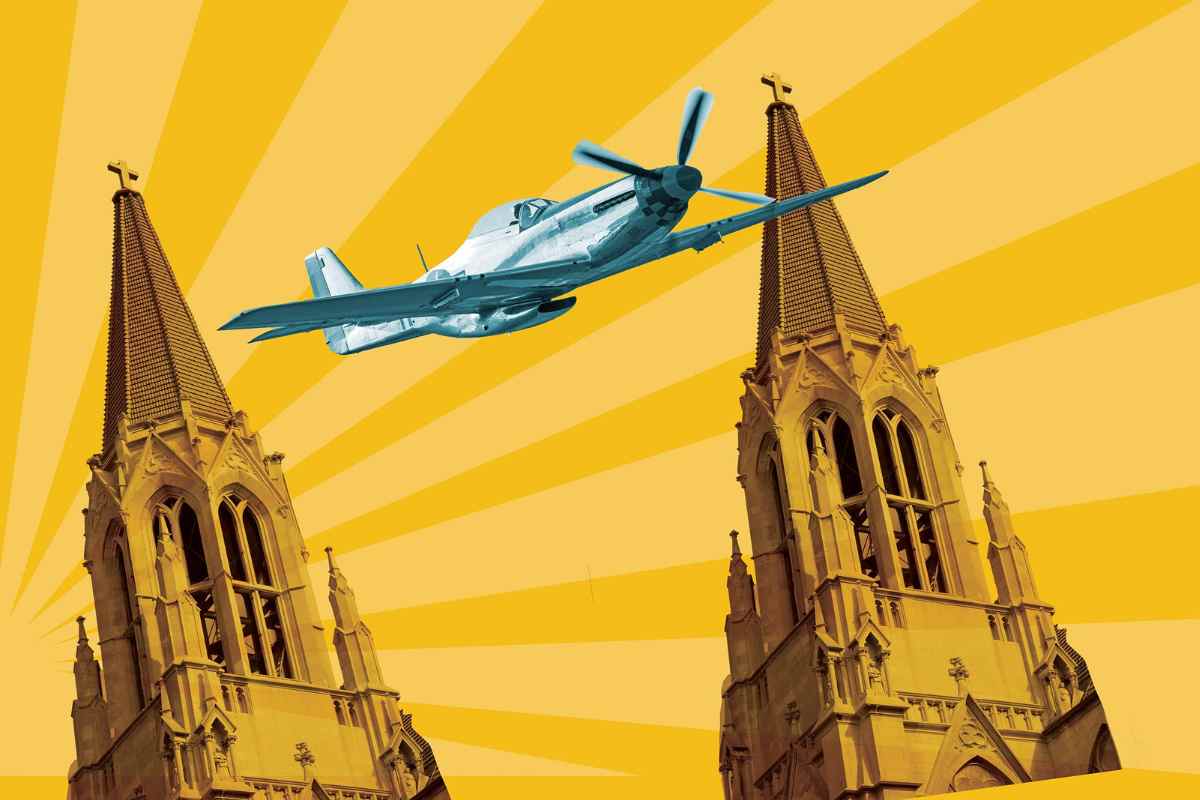
If there's a prettier capital city in the West than Helena, I haven't been there. Spread across a rise surrounded by mountains in the picturesque Helena Valley, the Queen City of the Rockies is loaded with impressive architecture that reflects the city's deep history. From the Neoclassic majesty of the Capitol building to the impressive mix of beauty and strength of the Masonic Temple, Helena's cityscape has plenty to brag about. There's one structure that rises above them all, visible from across the valley, one of the most striking buildings in Montana: The Cathedral of Saint Helena.
Built between 1908 and 1924 for $645,000, its gothic revival style was based on the Votivekirche of Vienna, Austria. Fifty-nine stained glass windows grace the ornate walls, but the cathedral's dominant feature is the pair of spires rising 230 feet over the city, an immediately recognizable landmark.
Most Helenans know the history of the elegant structure, but longtime residents also have spent decades speculating on an outlandish urban legend concerning the beloved cathedral. Many versions of the story have been handed down for generations, and the details change with the telling. The main thrust is that a pilot flew his aircraft between the spires in a daring stunt. There is no photographic evidence nor eyewitness accounts to support the claim, and many historians have dismissed the story as apocryphal.
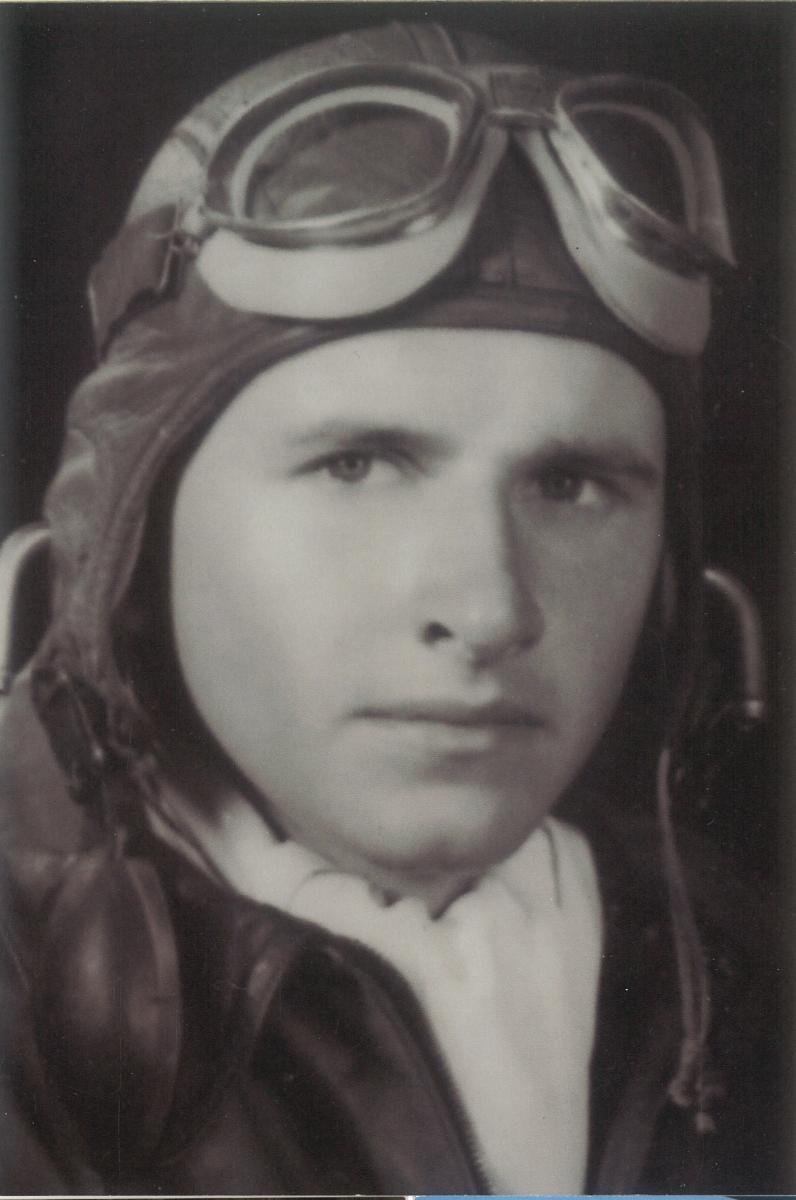
But when unexplained mysteries hang around long enough, sometimes an explanation appears. For almost 70 years, the culprit kept his secret while the legend grew. Shortly before he died, he decided to come clean. We now know who claimed to have split the spires.
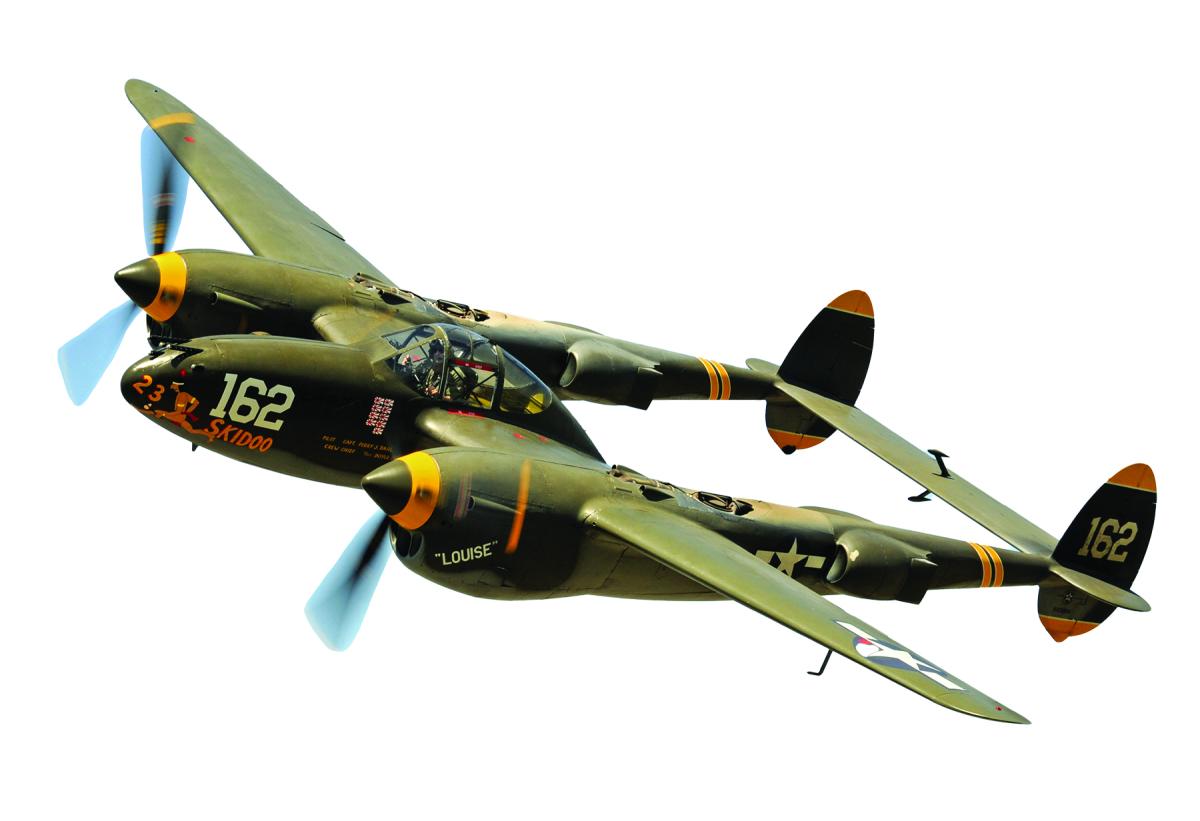
Raynor Harve Roberts was born in Miles City in 1920, and grew up in Helena, where his family lived near Carroll College in a small house at 211 West Lyndale Ave. Don't bother looking for the house now, it's long gone. Like his brothers, Sam and Jack, Raynor enlisted in the Army Air Corps after high school. He began flight training after Pearl Harbor drew the U.S. into the war, learning to fly the P-38 Lightning, a twin-engine, two-fuselage fighter plane with a single-seat cockpit.
The unique aircraft was highly capable, used mostly to escort B-17 Flying Fortress and B-24 Liberator bombers in the European theater. As part of the 474th Fighter Group, Raynor flew more than 70 missions during his time in the war. The odd-looking P-38 was highly maneuverable, yet big enough to carry a bomb. Cocky, brave and intelligent, Raynor was a born fighter jock and soon distinguished himself as one of the best fighter pilots in the Air Corps as he engaged in multiple dogfights, shooting down several enemy aircraft and always returning to base, gung-ho to get wheels up for the next mission. One of his favorite stories was of the time he landed after his plane had been hit by enemy fire, and he climbed out of the cockpit and stuck his head through a hole in the wing.
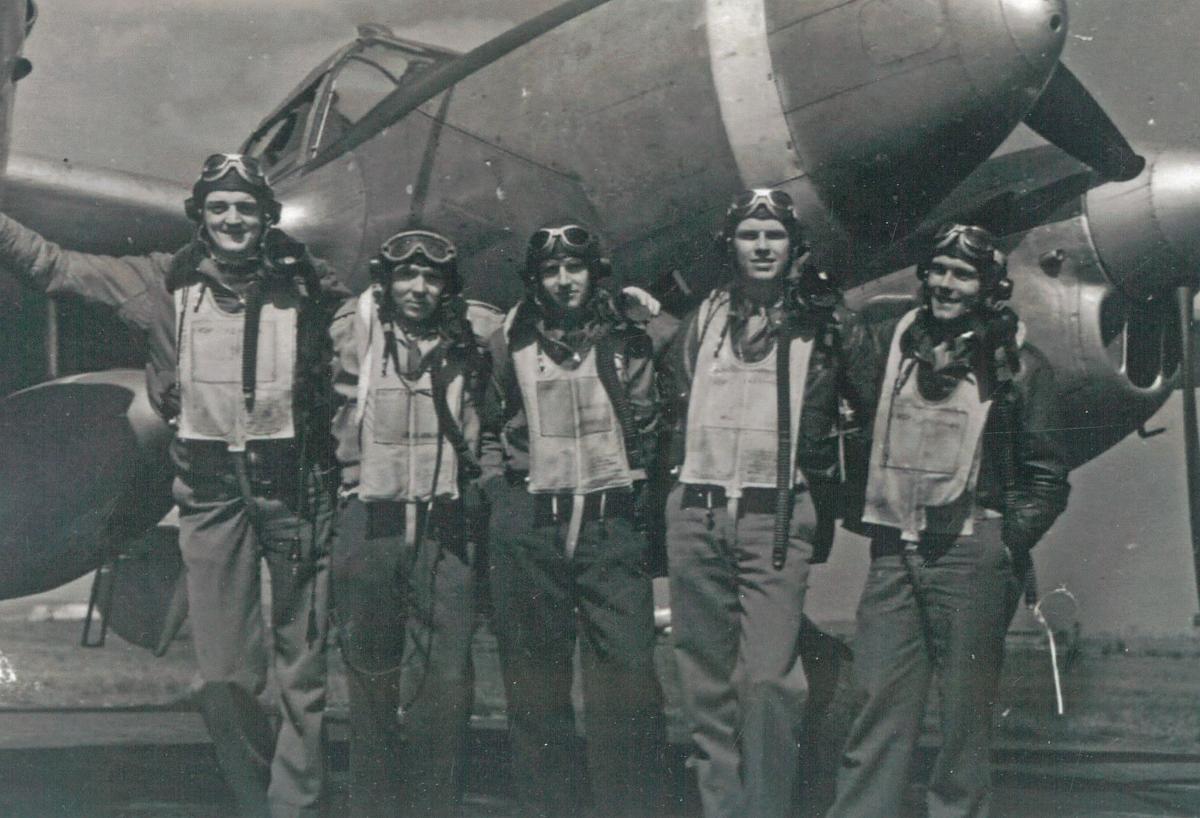
By the time he completed his tour and returned home, Roberts, now a captain, was one of the most highly decorated Army Air Corps pilots in the European war effort. For example, Capt. Roberts was awarded the military's highest honor for aerial achievement, the Distinguished Flying Cross. A bronze oak leaf is occasionally added to the medal for extraordinary valor. Raynor's DFC had eleven oak leaves.
As the war was winding down, Raynor was stationed at Luke Air Force Base in Arizona, where he underwent training in a new fighter plane, the Mustang P-51. If you've seen Maverick, the Top Gun sequel, the vintage aircraft Tom Cruise is working on is a P-51. It's one of the most iconic WWII-era aircraft, the end product of decades of development. With its sleek styling, powerful Rolls Royce engine, hot rod handling and increased range, the P-51 is frequently called "the airplane that helped win the war." Perhaps its most distinctive feature is the plexiglass bubble over the cockpit that affords the pilot a near-360 degree view. It's been called by many the greatest aircraft ever built. Naturally, Raynor took to it immediately.
In early 1945 Roberts was assigned a mission to fly from Luke AFB to Malmstrom in Great Falls, accompanied by fellow pilot Mac McAdams flying tandem in a second P-51. At the Mustang's cruising speed of 275 mph, this would have been about four hours of routine flight. For this adventurous Montana boy, routine was anathema. Raynor had other ideas.
His mother, Gladys, still lived at their house on Lyndale, and that day she was surprised to hear the persistent buzz of an aircraft flying around over Helena. It swooped around over the valley, performing aerial maneuvers. At one point the plane went into a dive straight down behind Mount Helena toward an apparent crash. The crafty pilot performed a "split-S" maneuver and the plane emerged, unscathed. A few minutes later when Gladys heard the dish-rattling roar of the warplane flying directly over her house—inverted, no less—she had no doubt who the pilot was. It had to be Raynor, saying, "Hi, Mom."
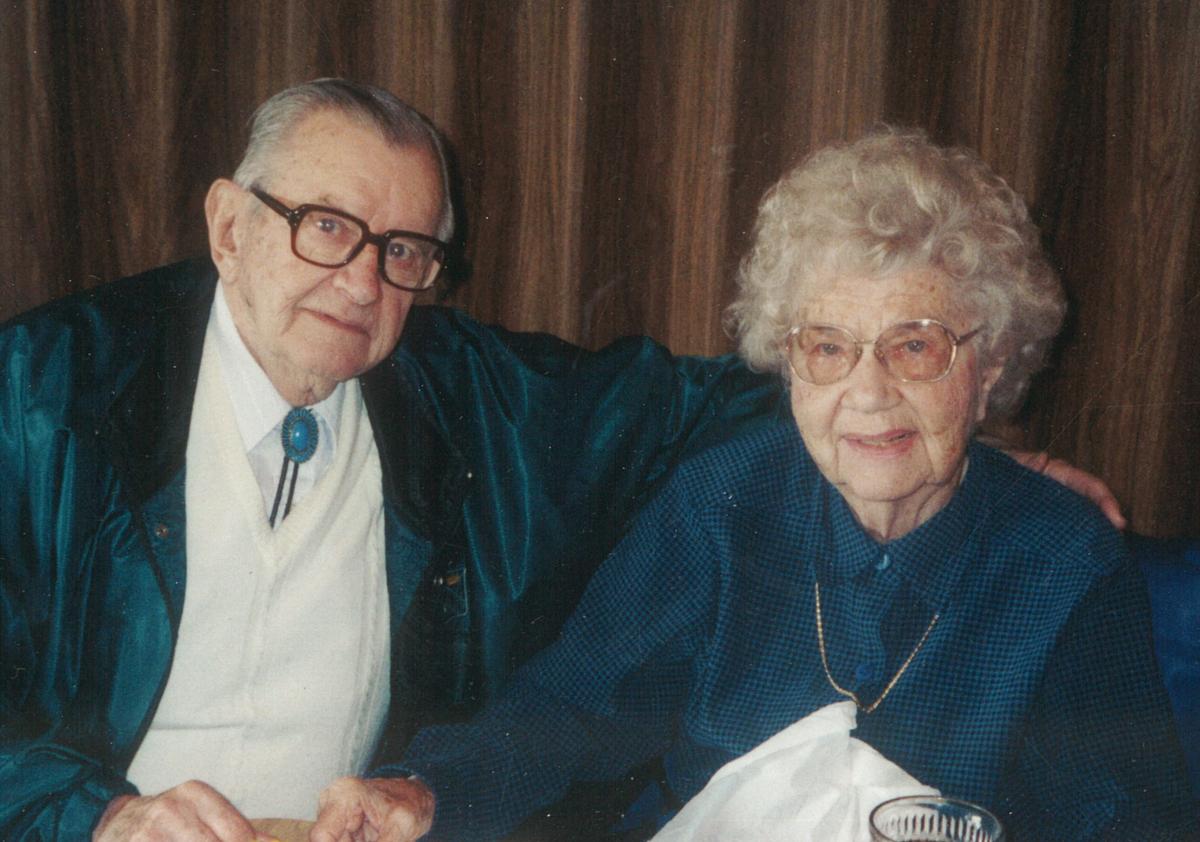
He always insisted that what happened next was completely spontaneous, and he could never explain why he did it. Having grown up practically in the shadow of the cathedral spires where he attended countless church services as a boy, he couldn't resist the urge to fly between them before high-tailing it to Great Falls. Like any good aviator, Raynor flew his plane like it was an extension of his body, and he knew intimately the aircraft's dimensions and its position in space.
Would he fit? The two gold crosses that top the spires are 60 feet apart, and the P-51 Mustang has a wingspan of 37 feet. Surely he could see that he didn't have to turn his plane sideways to fit between the spires. He did it anyway.
After he retired from his celebrated aviation career, Raynor settled on a horse ranch in the Bitterroot Valley, where he became good friends with Ed Greef, among others. Greef was a Montana state representative from 2011 to 2019, and during his first term brought his buddy Raynor into the Capitol to join him on the House floor during a session, an extremely rare honor.
After he introduced the war hero to the legislative body, Greef's wife, Sharon, accompanied Raynor to the Cathedral of St. Helena where he met with the bishop and some members of the diocese. It was then that Raynor revealed to the group that the old Helena legend was true. It was he who had flown his plane between the spires in 1945. He related the story to a docent, who typed it up and shared it with the diocese.
By then Raynor was pushing 90, and had led a remarkable life worthy of a Hollywood movie. Even before the cathedral stunt, Raynor had pulled off a couple of bad-boy capers that should have gotten him grounded. In 1943, he flew his plane underneath the Bay Bridge in San Francisco. On New Year's Day in 1944, he buzzed the Rose Bowl. During the game.
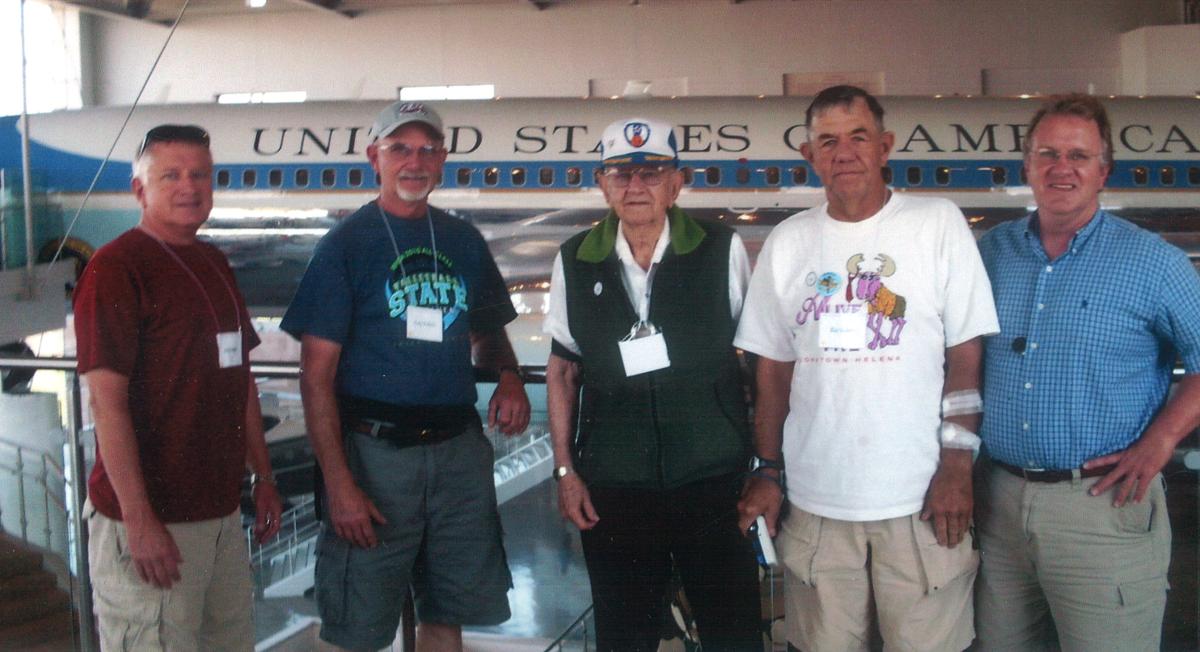
After leaving the Air Force he became the flight team director for Air Force One, one of the most prestigious assignments in the military. Raynor was in charge of the detail that flew President Kennedy's Boeing 707 to Dallas on that fateful November day in 1963. Air Force One returned to Washington the next day carrying JFK's body while Lyndon Johnson was aboard, being sworn in as President.
After retiring, Raynor had cultivated a large circle of friends in the Bitterroot, and met up with his buddies nearly every morning at Glen's Café for coffee and chatter. He was by all accounts a witty, larger-than-life character, an irresistible raconteur who loved to regale people with his outlandish stories from his wartime exploits, his post-war adventures, and his world travels. One of his four sons, Gary, recalled his brother Ken being born in Japan. "Dad wanted to have the phrase 'Made in Japan' tattooed on Ken's butt," he says. "He was dead serious." Fortunately for Ken, Gladys put the kibosh on that idea. Gary swears his dad would have gone through with it.
Raynor was a man of faith, active in his church right up to the end. Online you can find a YouTube video of Raynor playing some lively harmonica during a church function at age 93. He died shortly after that in December, 2014, at age 94, barely three years after blowing his own cover in the cathedral stunt, one of Helena history's biggest mysteries.
Although he'd spoken of splitting the spires for decades, he didn't want it to become public knowledge, probably in fear of reprisal. But on that afternoon in Helena, he decided to come clean, starting with the members of the very church where the shocking incident took place.
Why did he spill the beans after guarding the secret for most of his life?
"If there was some statute of limitations on that crime," he said in an interview shortly before he died, tongue firmly in cheek, "it surely expired by now."
Enjoyed this story?
Montana has more layers than most people ever see.
Distinctly Montana finds them, four times a year. Subscribe and get every issue.





- Reply
Permalink