Jenna Caplette migrated from California to Montana in the early 1970s, first living on the Crow Indian reservation, then moving to Bozeman where she owned a downtown retail anchor for eighteen years. These days she owns Bozeman BodyTalk & Energetic Healthcare, hosts a monthly movie night, teaches and writes about many topics.
*********
“If you hold your knowledge of self and world wholeheartedly, your heart will at times get broken by loss, failure, defeat, betrayal, or death . . . If it breaks open into greater capacity to hold complexities and contradictions of human experience, the result may be new life. The heart is what makes us human . .”
-- Parker Palmer, Healing the Heart of Democracy.
I attended a “Circle of Trust” retreat focusing on the work of Parker Palmer, learned about the power of the “broken open heart,” and came home to my cat of fifteen years whose body suddenly felt like a sack of bones. The change was so profound in the two days I had been away, I couldn’t take in what I felt when I held him. A week later he died with his head craddled in my hand and my heart broke. If there is power in that, I don’t feel it. I don’t know if my heart broke open or simply broke. His death is perhaps too recent, the experience of loss still too profound. What I do feel is an empty yearning for his presence, wonderful, annoying, compelling, and comforting, a gift to my mornings when he would walk over and around me, or simply sit and stare until I got up and let him and Conner-the-dog outdoors.
Now Conner learns that waking me is his job. I watch him as he explores how to live in our household without Max.
Max’ presence rewarded me at the end of the day when I felt my efforts since morning had been inconsequential, invisible. His presence rewarded me on days that had been rich and full, when I came home spent and weary and retreated to our couch where he settled his full-bodied warmth on to me, anchoring me, and then all my effort seemed worthwhile.
He came to us a kitten, adopted from the Humane Society, a kitten who immediately filled our household with Presence. He was never afraid of Timber, our 100 pound German Shepherd. She was surprised by his gutsy playfulness. Timber had carried the weight of our household, the responsibility for our safety, for nine years. When four years later she died at thirteen, Max naturally and gracefully assumed that responsibility.
“‘Heart’ comes from the Latin, cor, the core of self, that centerplace where all of our ways of knowing converge . . .”
Max moved in with us just as a business I had grown and nourished died at eighteen. I would return home every day from that process absolutely heart-broken, heart-sick with loss, failure, defeat, betrayal and death, and Max would charm me back in to the world with his wild pleasure, exploring every centimeter of the household, finding the most mundane items endlessly fascinating and entertaining.
He stayed like that, curious, engaged and full-out alive. Gorgeously grey, he was a solid and supple twenty pounds. Dominant in every sense of the word, he ran the household, patrolled the yard, yet came running when friends visited, was often there at the gate waiting when I came home at the end of the day.
When I was studying to become a BodyTalk practitioner and offering in-home practice sessions, friends would come for their session, we’d start, and then suddenly there was Max from wherever else he had been in the house or yard. He wanted to lie on them during their session, or under the table, or on the couch nearby. I never was certain if he was offering healing, receiving healing, or both.
These last two years I had used my training in BodyTalk for Animals with him, focusing on helping him to live to fifteen. Now I wonder what stopped me from imagining a healthy-hale seventeen year old cat.
Since his death, I have spoken with others, with both old and new friends, about cherished four-leggeds who were so much more than “pet,” neither surrogate son nor daughter, but full-on companion and friend. Animals you were incredibly gifted to know and live with, sharing time and space, and yes, love.
For years, I’d gotten ahead of myself, afraid as Max aged, savoring the time, watching it as if it truly was the sand in an hour glass running out, wishing I could add more sand, hedge the inevitable. I knew however much time we had, it wasn’t enough.
I couldn’t imagine my life without him, living without him. And now, I am.
“There are some human experiences that only the heart can comprehend and only heart-talk can convey.”
My daughter picked Max from his litter mates, something I have thanked her for so many, many years. I thank her now again for the amazing gift to our lives of his full-out presence.
We all have deaths we chronicle, deaths that form and shape and unalterably change, define us.
I am changed. Our household, changed. Our hearts, changed. Broken open or apart? I don’t yet know. What good may come of it, I don’t yet know. A hug with my daughter, shared tears, shared stories, cherished memories bring us close. We watch Conner-the-dog adjust, watch as he expands his presence, trying to figure out who he is after eleven years of having his life shaped by Maxwell the Maximum Cat.
The leaves from the raspberry bushes that shaded Max as he lounged under them this past summer still clung to the plants as he died, dark and red and dying themselves. We gathered them along with lavender and sage to honor and protect him on his journey, wrapped his body in towels and in love and appreciation.
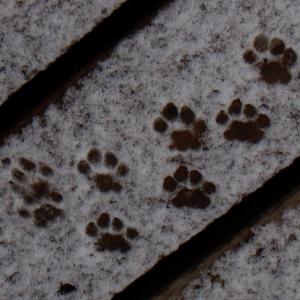
Always a full-bore sensualist, Max would have reveled in these recent magical days of November, redolent with sunshine and warmth. The cold, long days of winter, he simply endured -- the coming long days of winter, empty of his footsteps in the snow.
~ Thanks to Parker Palmer’s “Healing the Heart of Democracy,” and to non-profit Hopa Mountain for hosting the retreat that introduced me to his work. And, always, thanks to Max.
-