Keeping the Rails Clear
Nearly two centuries ago, the first American railroads crept off the eastern seaboard and into the Appalachian Mountains. Just getting into the mountains proved challenging for the infant technology. The first railroad ever built was in England, but it mainly crossed open, rolling hills. American railroads had to deal with much tougher terrain, requiring deep rock cuts, tunnels, and tall bridges. The steep grades challenged even the most determined railroad builder and operator.
And then winter came. Ice and deep snow challenged the early railroads, and the elements only grew more difficult the farther west the railroads built, especially as they reached the Great Plains and Rocky Mountains toward the end of the 19th century. While the locomotives became more powerful each year, even those fire-breathing machines of iron and steel could be hampered by deep snow.
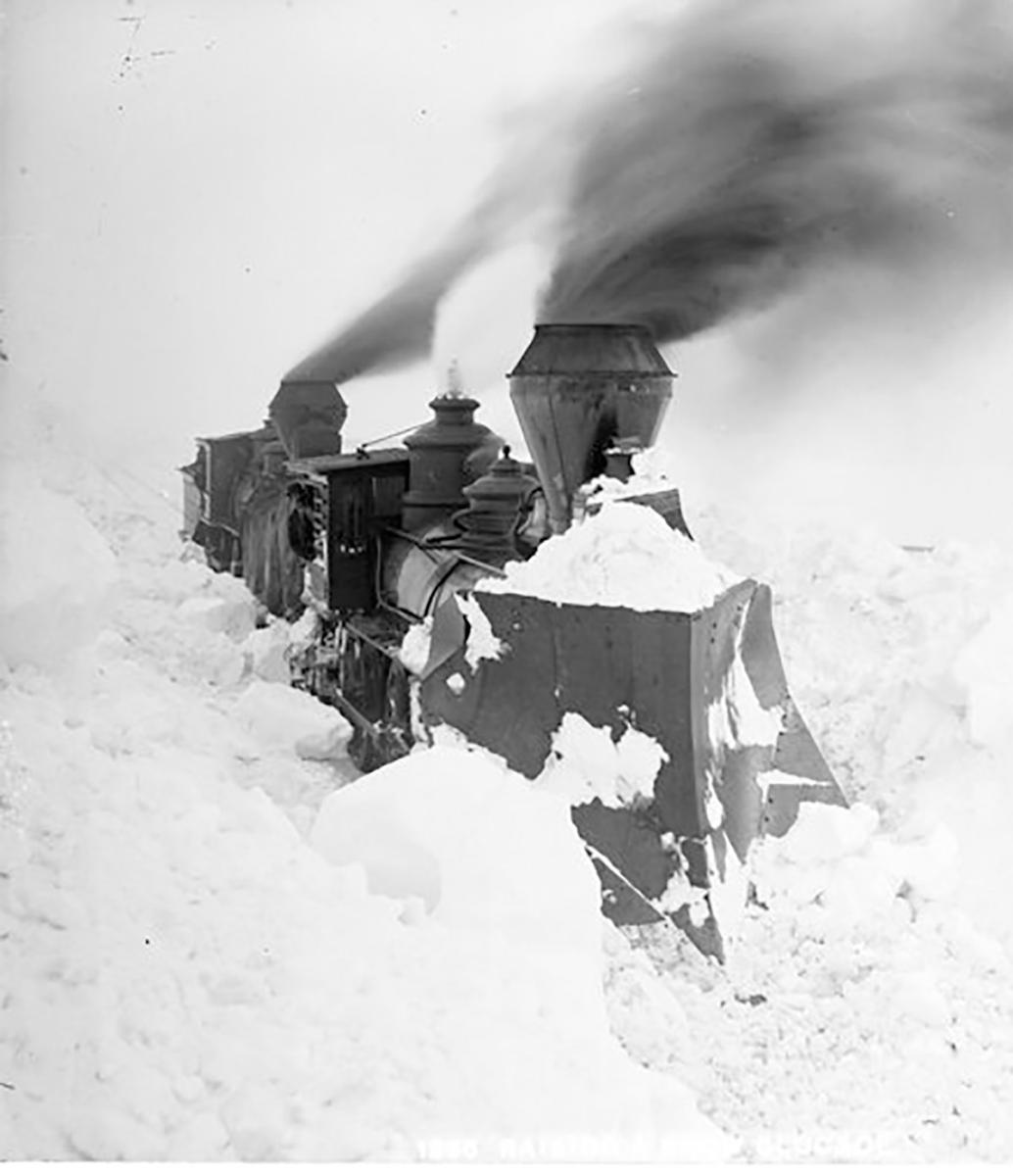
During the early years, the simplest way to clear a railroad was to couple one or more locomotives together, put a plow on the front, and then ram the drifts. But it wasn't easy work—nor was it always effective, the Anaconda Standard reported in 1900.
"It was a matter of sheer force; a mere question of forcing the big steel wedge that was attached to the front of the locomotive through the hard bank of snow that opposed progress," the newspaper reported. "One locomotive was not enough, and frequently a line of five or more would be coupled up to drive the wedge plow through the drifts. It was difficult and dangerous. Steaming ahead at full speed, the engine dashed at the wall of solid, icy snow before them. Engineers and firemen knew what would happen when that white wall was struck, and each braced the best he could to meet the force of the shock. Even then, they would probably be thrown to the floor of their cabs or perhaps tumbled forward through the windows. It was perilous work and the old engineers who used to be compelled to take part in it shake their heads solemnly when they think of it nowadays".
When simply ramming the drifts with locomotives didn't get the job done, railroads would have to turn to shovel-wielding men to clear the path ahead and often help dig out the train that had tried and failed to clear the path earlier. Shoveling out the tracks was an incredibly time-consuming process, leaving people and freight stranded for days until the job was finished. Because of that, railroads were constantly looking for better ways to clear their tracks.
In 1869, a Canadian dentist, Dr. J. W. Elliot, invented the rotary snowplow. Using revolving blades, Elliot thought that a rotary plow could chew through the snow ahead and then throw it off to the side of the right-of-way. Elliot patented the concept, but he could never find any investors. Eventually, he gave up on the idea.
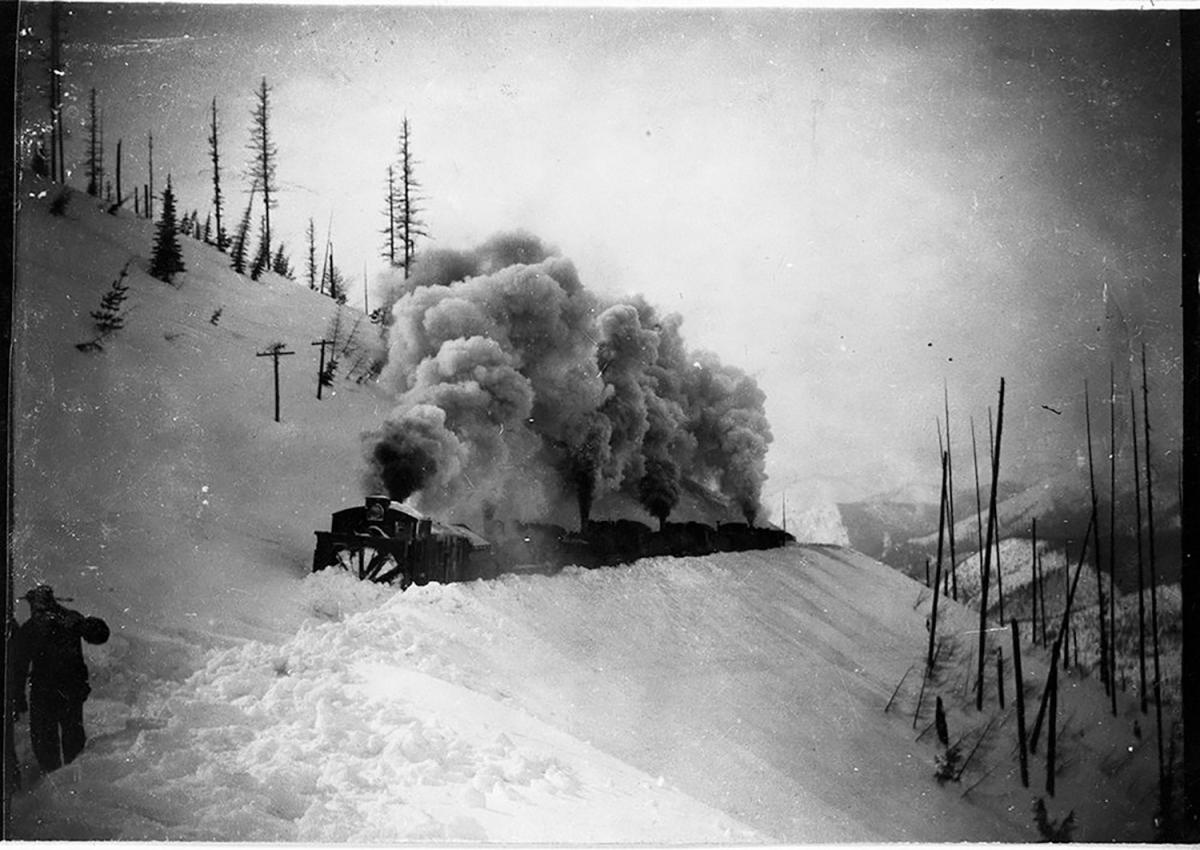
More than a decade later, however, a man named Orange Jull found the plans and improved upon them. A prototype was built and proved successful. The rights to the rotary plow were then purchased by a New Jersey company, which quickly began building enormous railroad rotaries (some of which resemble the snowblower you might have at home). Among the earliest buyers was the Northern Pacific in Montana. According to the Anaconda Standard, the railroad brought a rotary to Missoula in 1892, and that winter used it to keep the line over Lookout Pass open. Located along the Montana-Idaho border, it wasn't unusual in that era for the snow to be 20 to 30 feet deep in some places. While in previous years it wasn't uncommon for rail lines to close during deep snowfalls, the rotary kept the route open through the winter, the newspaper reported.
"The operation of the rotary plow is most interesting. Seated in a snug cab that is built strong enough to withstand the shock of falling snow and the strain of bucking drifts, the engineer controls the movement of the blades of the plow that revolve on the front end of the machine and that are moved by the engine in the cab. These blades cut into drifts, and, as they slice off the snow, they discharge it through a hopper that directs the course of the flying stream of solid white. The force of the blades is sufficient distance to prevent any of it from falling back into the cut, and when it is once removed, it is off the track to stay. This machine accomplishes with a small crew the work that would have required a small army of men to do under the old system. And it does it in a remarkably short time. Modern railroading owes much to the rotary plow".
But not every trip with the rotary was a walk in the park (or in this case, a walk in the snow). In January 1912, a rotary plow clearing snow over Marias Pass on the Great Northern Railway was struck by an avalanche. The snow slide missed the locomotive pushing the plow, and so the engineer and fireman were able to climb down the embankment and help dig out the men who had ridden the rotary down the steep embankment. Five of the seven people aboard the rotary survived, but two more remained missing under the wreckage for days. Newspapers as far as Tacoma and Albuquerque reported on the frantic rescue effort. A few days later, the two men's bodies were recovered from the icy wreckage. In a particularly gruesome detail, the Columbia Falls newspaper reported that the tips of one of the men's fingers had been worn off from "clawing in the snow and dirt trying to effect his release".
Few pieces of railroad in Montana are as challenging to keep open in winter as Marias Pass near Glacier National Park. One reason is that it runs right through what is called "Avalanche Alley," just east of Essex. Every few years, a major avalanche will come down the steep slopes above the rail line. Sometimes the snow stops short of the tracks, but other times it reaches the right-of-way. To protect areas that are particularly prone to avalanche activity, the Great Northern Railway built "snowsheds" over the tracks. Great Northern's successor, BNSF Railway, also employs avalanche forecasters who help predict when snow slides could occur, allowing the railroad to stop trains before an accident.
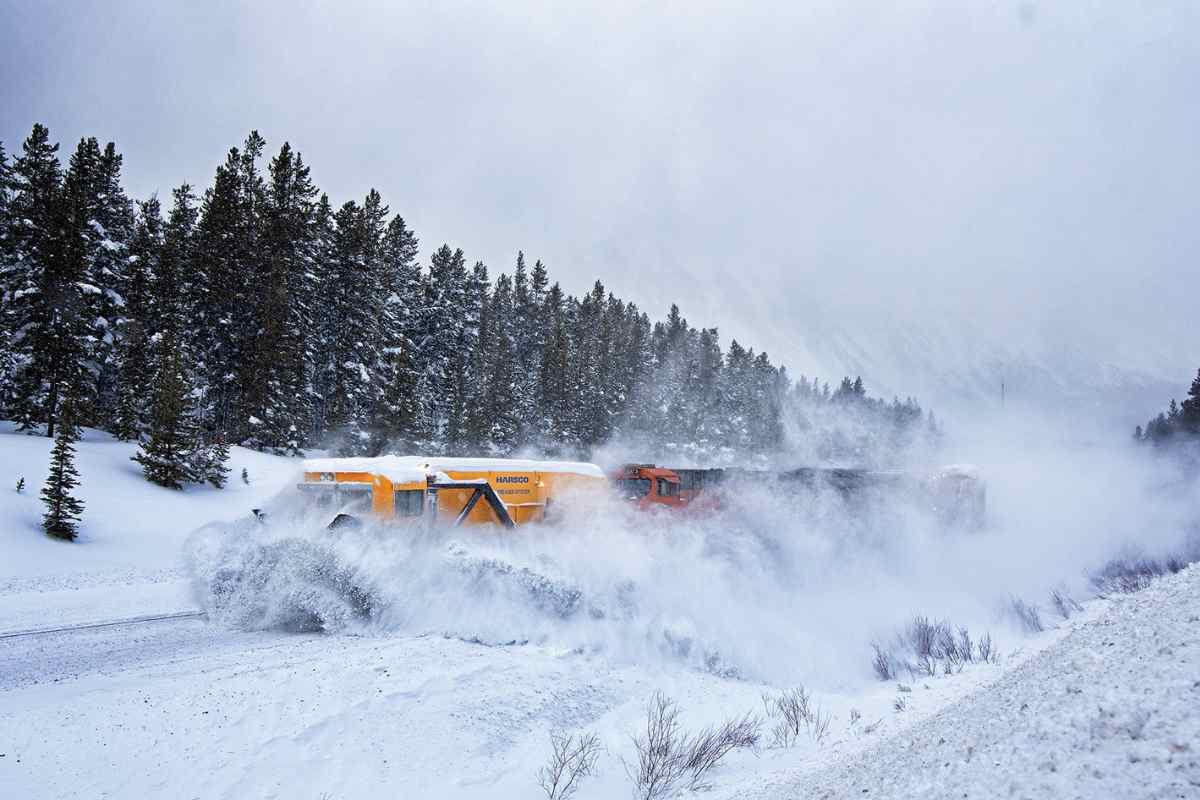
Today, Essex is the base of operations for BNSF's battle against snow in Montana. The railroad uses several tools to keep the tracks clear. The most common is a plow attached to a piece of maintenance-of-way equipment, which can be operated by one person early in the season when the snow isn't that deep. When the white stuff starts to pile up, the railroad will deploy what's called a flanger. The car is pulled behind a locomotive and has a blade that drops down between the rails to throw snow on either side. On the Great Northern, this piece of equipment was called a "dozer," but today's railroaders call them "Flyers". When that equipment is overwhelmed, BNSF will dispatch a Jordan Spreader to clear snow. The spreader is pushed by a locomotive and has a plow in front and huge wings on either side to push the snow back even farther than the flanger. This also clears areas along the tracks, just in case employees need to walk along and inspect a train.
BNSF and a few other railroads still have rotary plows, although they are rarely used, and it's been many years since one was used in Montana or on Marias Pass.
Two centuries after the first railroads began crossing the continent, the technology that moves trains has advanced by leaps and bounds. But in places like Montana, the elements can still call the shots. When they do, railroads are forced to turn to technology as old as the industry itself.





Leave a Comment Here