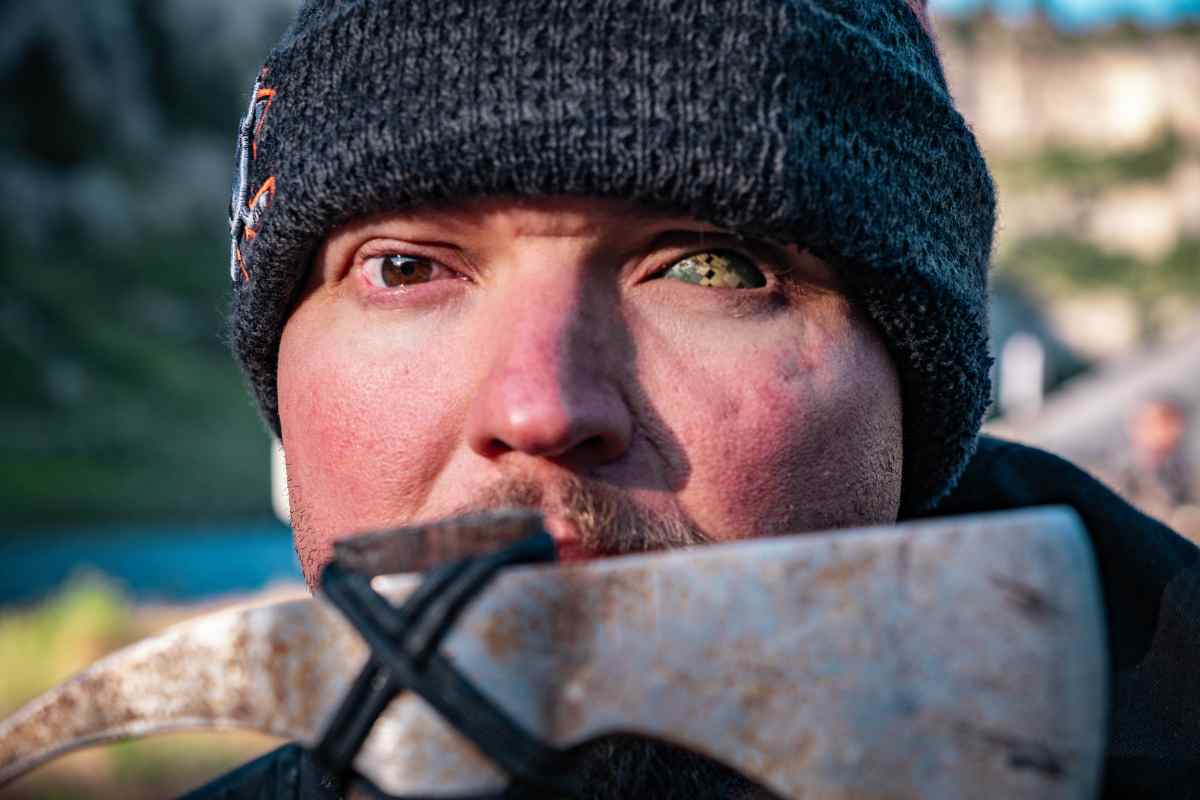
Durian Gardner holds his axe at Smith River camp during VLTAT 25-2—firewood, warmth, and the steady rhythm of shared work.
The air is noticeably thin above 9,500 feet, tinged with exhilarating scents of fresh pine and decomposing timber that leave a muted tingle in your throat and nostrils. Lactic acid burns through your muscles like slowly-flowing lava due to miles of steady uphill climbing, and you become acutely aware of your oxygen-deprived lungs' rhythmic objective to maximize the effectiveness of each inhale. The straps of your heavy pack gouge your shoulders, its dead weight seduced by the relentless pull of gravity, while your heart beats frantically against your ribs, issuing a desperate plea for you stop and surrender. Yet, you forge ahead, decomposed granite crunching hypnotically beneath your boots, while you somehow muster feelings of determination and comfort with each step. And as the ground finally levels off, the horizon falls beneath you into an infinite sea of snow-capped, jagged peaks that rise up from a thick blanket of swaying pines. There is something miraculous that happens in moments like these, standing beneath the cloudless cerulean of Montana's Big Sky, staring out into the vastness. Amid the juxtaposition of total physical exhaustion and indescribable natural beauty, the mental noise is finally silenced. Though the weight on your shoulders is still just as heavy, the weight in your chest has eased. The crisp mountain air swirls and plummets down into the forest, leaving you with the primal reminder that you are not broken. You are just learning to suffer well.
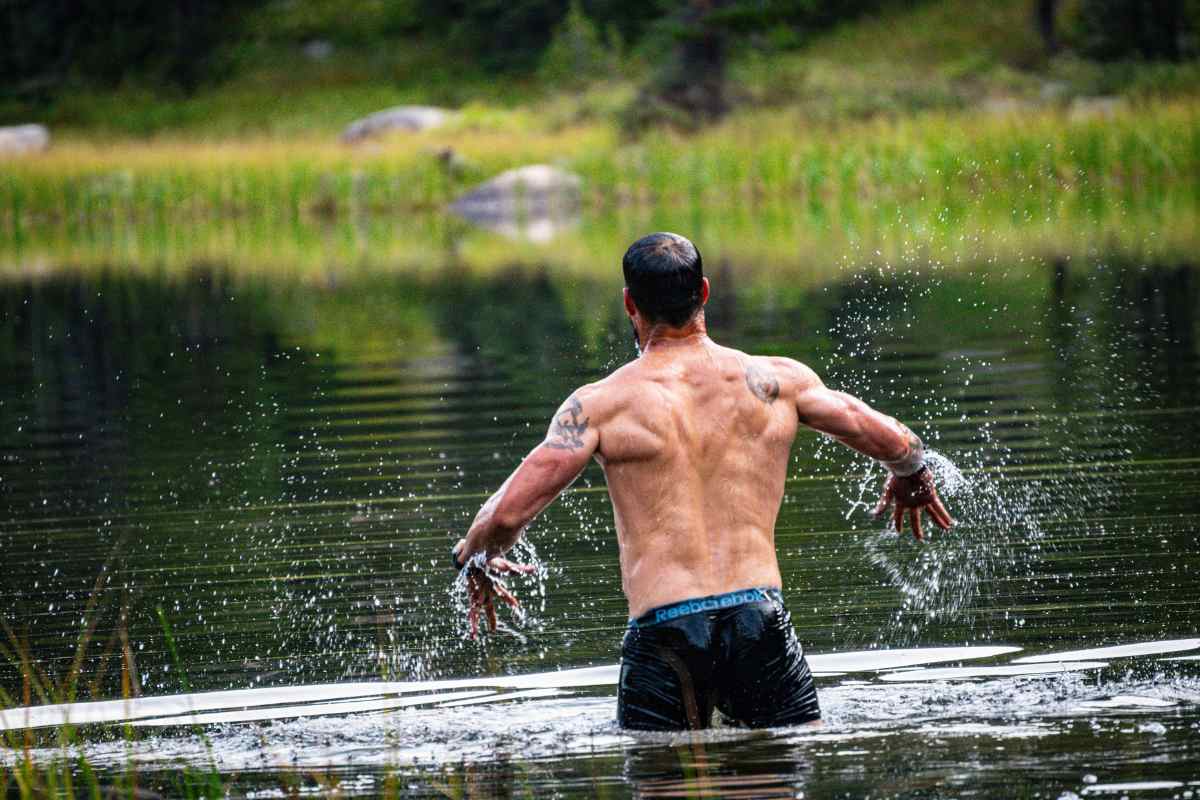
Cameron Martinez strides out of an unnamed lake in the Beartooth Wilderness during cold water immersion on VLTAT 25-4.
THE LONG ROAD HOME
For many of our nation's military veterans, returning to life at home after experiencing war is far less idyllic than most civilians can comprehend. Transitioning from the high-stakes adrenaline of a combat zone to the quiet safety of a living room couch isn't just a lifestyle change—it is often the catalyst of a biological and spiritual crisis.
"I know it is applicable, but I'm not a big fan of the word 'trauma,'" says Luke Urick, U.S. Marine Corps scout sniper and co-founder of the Montana Vet Program (MVP). "That term really does become an issue for big, macho guys and gals who have been told their whole lives not to show weakness, and now they come home with this conflict and guilt and rage and a slew of other emotions that they don't know what to do with."
Urick, a Belt native, served from 2003 to 2012, completing three combat tours. When he returned home to Montana to pursue his bachelor's degree in psychology, he found himself working at a veterans' center during a period when veteran suicide rates were skyrocketing.
"I saw the inner workings of how the VA was tackling mental health," Urick recalls. "I've had probably four or five counselors in my time, and never once did they ask me what my diet, sleep, or physical training routine was like. They never gave me a tangible exercise to turn off my fight-or-flight response."
Along with fellow USMC scout snipers Joe Miller and Scott Moss, Urick founded MVP in 2016 on the premise that mental health is but a component of overall wellness, and that veterans have all the tools they need to heal themselves. Instead of being treated like patients, veterans need to be treated as warriors who haven't yet learned how to find their mission at home.
"Veterans aren't killing themselves because they have a broken arm. They're killing themselves because they have a broken heart," Urick says. "They feel they are a burden to their family, and they believe that by taking their own life, they can relieve their loved ones of that burden."
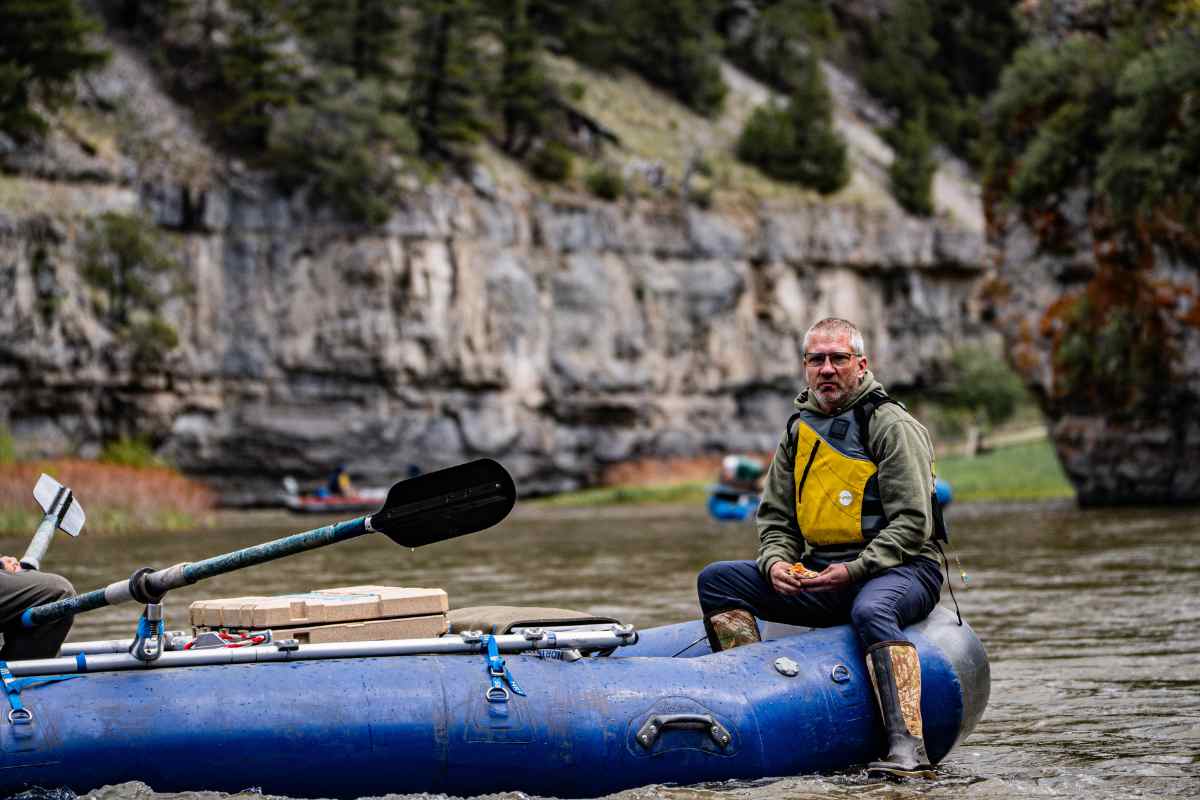
Veteran participant Ben Vandyke eats lunch on the front of the raft during VLTAT 25-1 on Montana’s Smith River.
STRENGTH IS FORGED WHERE COMFORT ENDS
MVP's approach to achieving wellness isn't through the eradication of hardship and struggles. In fact, the organization defines its motto, "Suffer Well," as "the gracious acceptance of the day's pain and the dignified willingness to endure it."
To achieve this goal, MVP leads small groups of veterans on multi-day Veteran-Led Therapeutic Adventure Trips (VLTATs) into the Montana backcountry, offering a rugged, unconventional, and deeply effective program to help them reclaim their lives by pushing them to their limits.
These co-ed trips take veterans into the most remote parts of Montana—the Bob Marshall Wilderness, the Beartooths, the Crazies, and the Little Belts, to name a few. For non-ambulatory veterans or those with significant physical disabilities, MVP utilizes the idyllic Smith River.
Participants might cover miles of blowdown trees and dozens of creek crossings in the rain. "By day two, everyone is exhausted and wet," Urick says, recounting one recent trek. "But that's where the magic happens. They realize they can 'suffer well' and that this experience was exactly what they needed."
"There is a fear component in the brutality of nature," he adds. "You can't have courage if you don't have fear—if you don't have an obstacle to overcome. And you can't feel accomplished without overcoming that obstacle."
VLTATs are generally comprised of five team leaders and ten participants who cover around twenty or thirty miles within approximately four days. The programs are designed to promote healing through camaraderie, physical activity, adventure, and tough-minded healing.
"This isn't Kumbaya shit," Urick says. "If you want to feel better, you have to take your life back. You have to learn to turn off the rage and guilt through foundational wellness: breathwork, cold water immersion, and intense physical exercise."
Humor is also key. "One of the most powerful things that occurs on our trips is laughter," Urick says. "There's a common language, and they can feel comfortable because this group understands them. For them to be able to be out there laughing and letting go is something they haven't gotten to do in a long time."
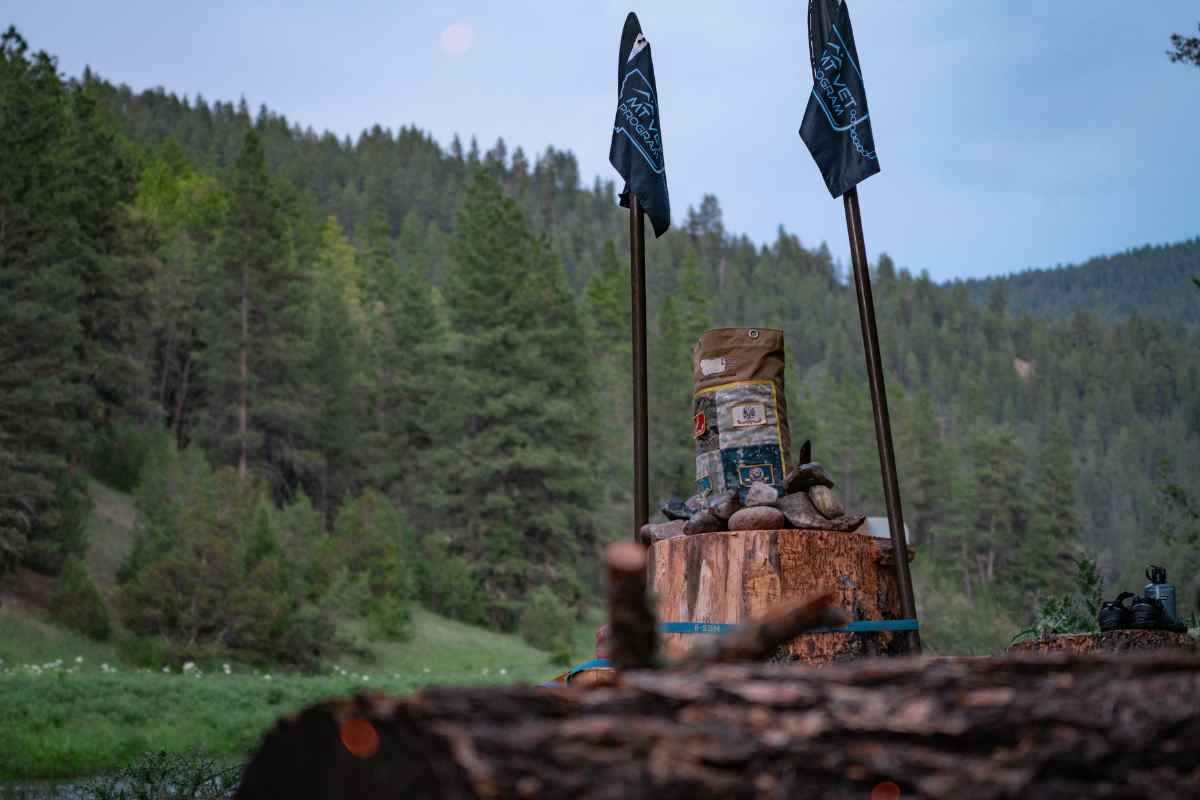
The Pig Egg and guidons are set each night on the Smith River as MVP’s memorial—filled with 7,054 dog tags honoring those lost in Iraq and Afghanistan.
THE PIG EGG: CARRYING THE FALLEN
Perhaps the most iconic element of the MVP trips is the Pig Egg. In the scout sniper community, a Professionally Instructed Gunman (Pig) must earn their way to becoming a Hunter of Gunmen (Hog). During training, Pigs are tasked with carrying a 30- to 50-pound Pig Egg—usually a sandbag—to prove their grit and weed out the weak. Only the strongest Pigs will become Hogs.
Drawing from the storied tradition, Moss transformed the grueling training ritual into a sacred centerpiece of each mission. But instead of a simple sandbag, MVP's Pig Egg is a 75-pound walking memorial filled with 7,054 dog tags, each representing a service member killed in Iraq or Afghanistan.
Participants are each tasked with carrying a portion of the larger Pig Egg with them as they trek through the Montana backcountry, the names, ages, and hometowns engraved on those tags serving as a visceral reminder that while the burden of memory is heavy, it is a load no veteran has to carry alone.
"When you try to carry that Pig Egg by yourself, it's brutal. It's heavy—just like the emotions that come back with you from Iraq, Afghanistan, or any other theater," Urick explains. "But when you share that load with the team, when you open up and talk, the weight lightens. It's a reminder that you are still alive, and there are 7,000 men and women who would love to be where you are."
LEGACY HUNTS: A PROMISE KEPT
While many of MVP's programs focus on the veteran's personal journey, the organization recognizes the wounds of war often impact entire families. For the past four years, MVP has expanded its mission to include Legacy Elk Hunts, a program specifically designed for the children of veterans and those who have lost a parent to combat.
"I've seen veterans turn to alcohol and drugs and sedentary lives, and it destroys their children's lives," Urick says. "We need these vets to be the best parents and spouses they can be. We need them to find their voices again. If we're truly patriots, if we care about the direction of this country, then we had better care about the direction of our nation's children."
The Legacy Hunts were born from a vow the MVP team made during the funeral of a friend who was killed in Afghanistan. "We made a promise to his wife and the two little boys he left behind that we would stay in their lives and provide the masculine nurturing and mentorship those boys would require as they grew up," Urick recalls.
These hunts are far more than a weekend in the woods—they are opportunities for mentorship, connection, and personal growth. The MVP team also emphasizes the ethical components of Montana's hunting traditions, including the critical importance of marksmanship, the sacredness of taking a life for food, training your body, and the enduring responsibility of conservation.
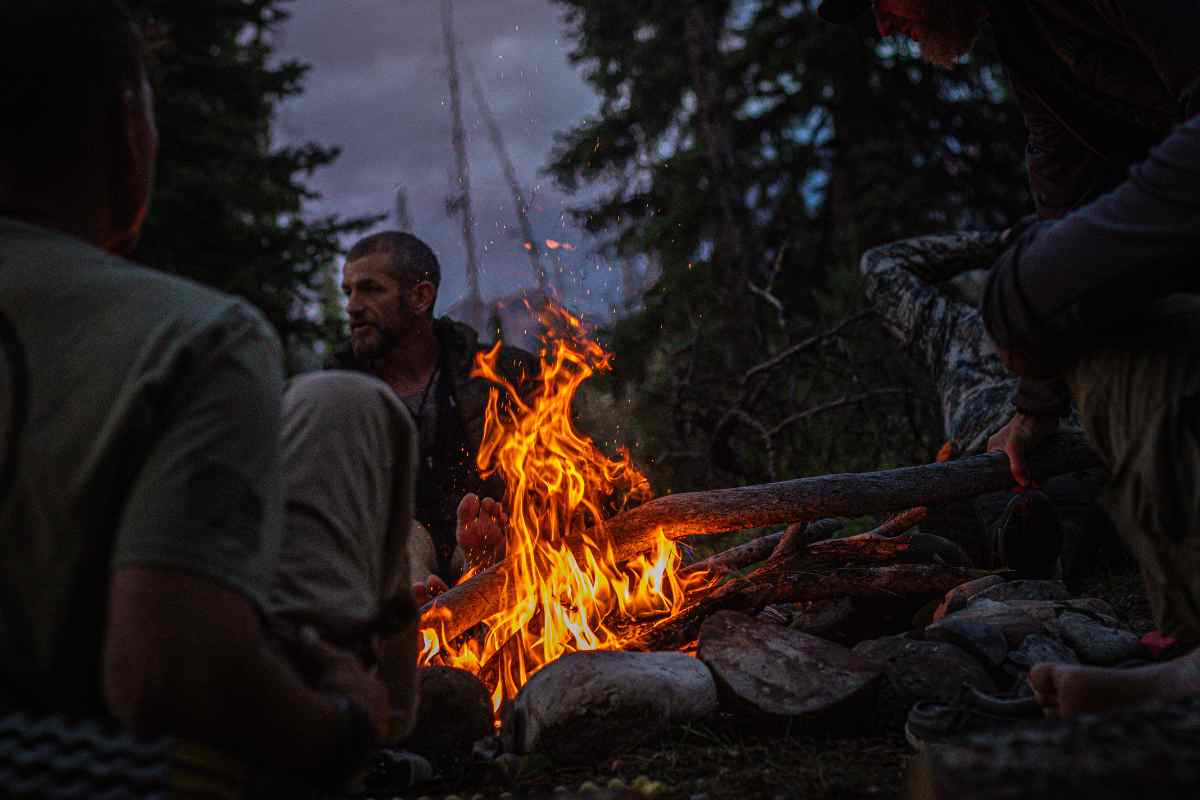
Team Leader Joe Miller talks with veterans around the final-night campfire on VLTAT 23-4—where stories land, and the pace finally slows.
MVP’S CONSERVATION MISSION
Through their VLTATs along the Smith River, MVP has found a powerful way to protect and improve this scenic waterway for generations to come. Over the past seven years, veterans have reclaimed a sense of purpose by volunteering their time and labor to restore and preserve the river. These efforts include engineering barriers to strengthen fragile banks, reclaiming ground lost to erosion, and constructing rock and log stairs to improve accessibility at several boat camps.
This work does more than just maintain the landscape—it provides veterans with an opportunity to channel their skills into a tangible legacy of stewardship.
"Veterans have been trained to believe that fighting for our country is the only important thing they can ever do, so when they are no longer serving, it is difficult for them to figure out their purpose," explains MVP's deputy director, Bryon Gustafson, an Army infantry veteran who served two tours in Iraq.
"Montana Fish, Wildlife, and Parks has realized that when MVP goes out somewhere, a lot of work tends to get done, so they keep bringing us on board for more projects," Gustafson laughs. "It's a partnership that helps provide us with a great sense of purpose."
To date, MVP has supplied nearly $100,000 toward conservation efforts on the Smith River, earning them the title, "Friends of the Smith."
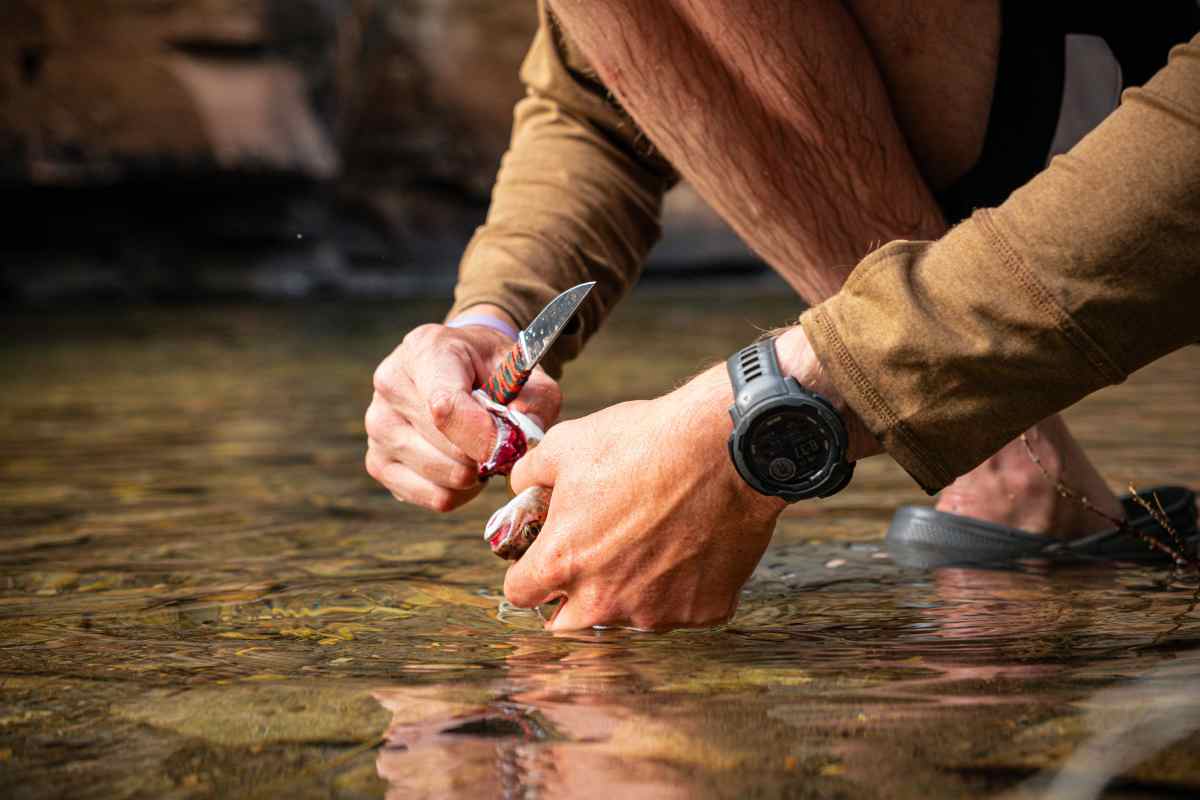
Koby Owens cleans a brook trout in the shallows during Backcountry Immersion (July 2025), turning a catch into a meal and a skill into confidence.
JOIN THE MISSION
Given the enormity of their mission and the complexity of the VLTATs MVP organizes, the fact that their entire 40-member team is comprised solely of volunteers is nothing shy of remarkable. Nearly all of them have families and full-time jobs.
The healing adventures they provide are free of charge for veterans to attend from the moment they arrive. "We tell veterans to get themselves to Great Falls and we'll take care of the rest," Gustafson notes. "We provide everything they need."
As the organization's deputy director, Gustafson manages MVP's website, social media, and donor relations. He works tirelessly to ensure that MVP remains free for every veteran who participates. "My passion is building relationships with veterans and the partners who want to help us," he says.
In addition to generous corporate sponsors, MVP depends on donors and fundraisers to support its mission. One such fundraiser is the Backcountry Immersion program, which provides civilians with an opportunity to develop and practice survival skills during a four-day backcountry excursion led by skilled veterans, wilderness skills experts, and survival instructors.
MVP hopes to gain the support of 150 donors willing to contribute $20 per month this year—a goal that will provide them with enough consistent support to secure a physical office space where they can serve veterans by providing higher capacity, streamlined logistics, and an even stronger follow-through.
PREPARING FOR THE NEXT GENERATION OF WARRIORS
As the program looks toward its 2026 season, its mission remains as vital as ever.
"Unfortunately, there's a good chance there's going to be a war again, because humans aren't very good at peace," Urick says. "When that next generation comes home from war, we will be here, ready to support them."
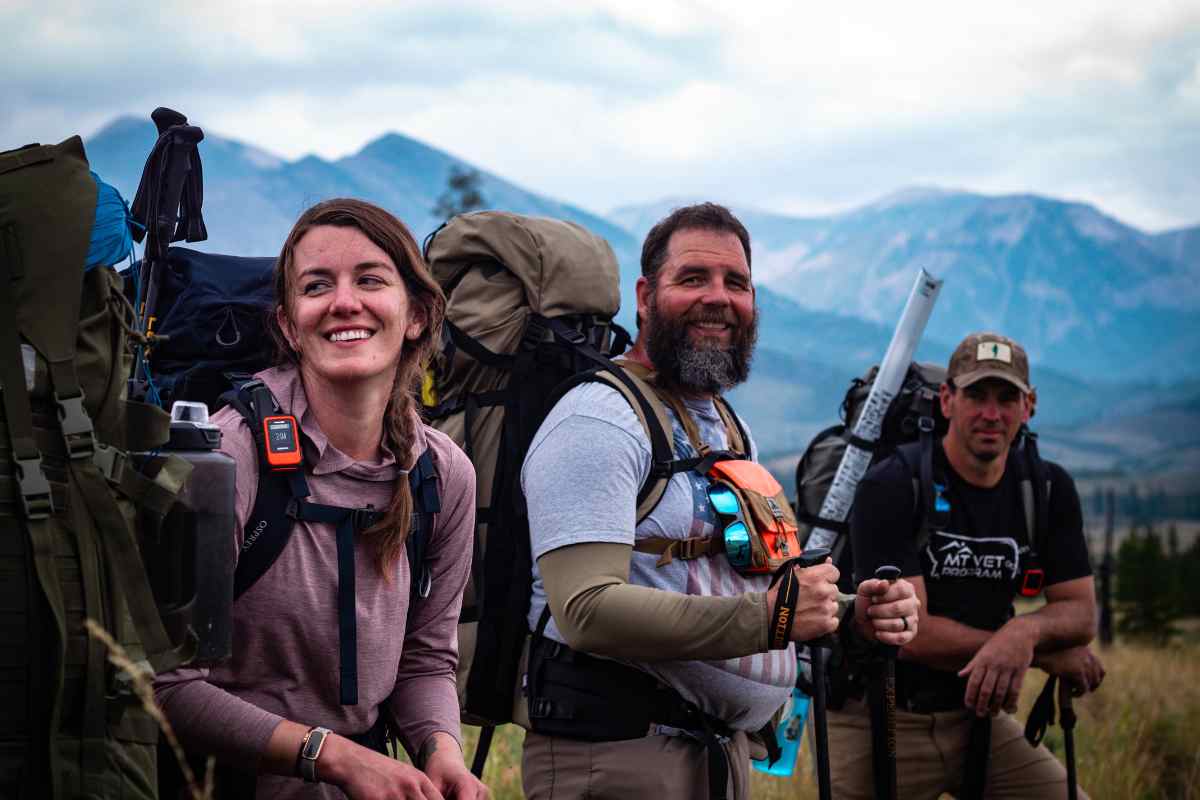
Kaitlyn Stevenson (team leader), Thomas Carlson (participant), and Chris Whitley (team leader) share a laugh during a hiking break on VLTAT 24-3 in the Bob Marshall Wilderness.
Leave a Comment Here
Semper Fi brother. Outstandfuckingstanding work!!!










- Reply
Permalink