
A Homecoming for Edmonia and Samuel Lewis at Tinworks
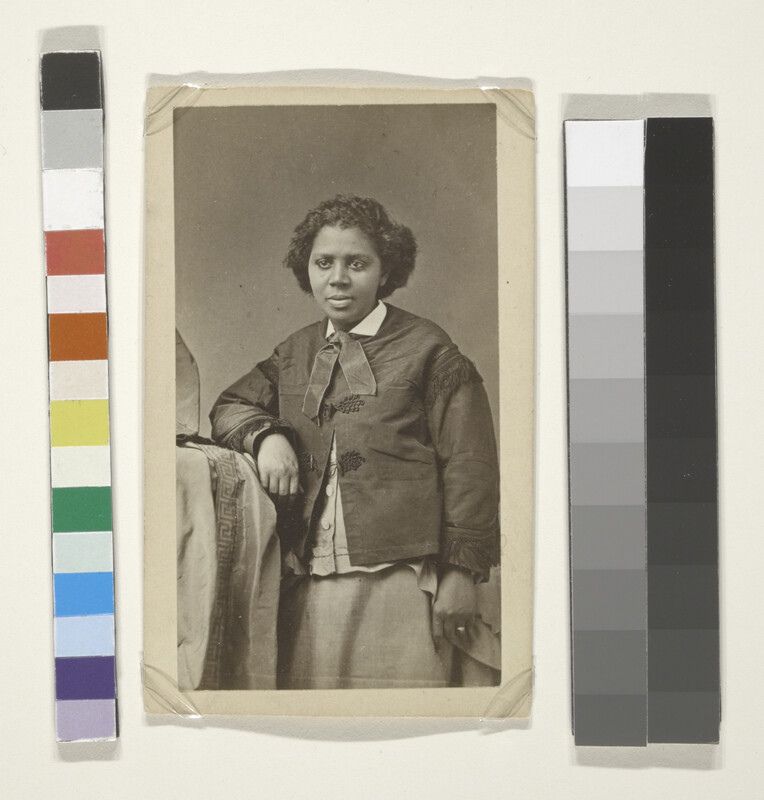
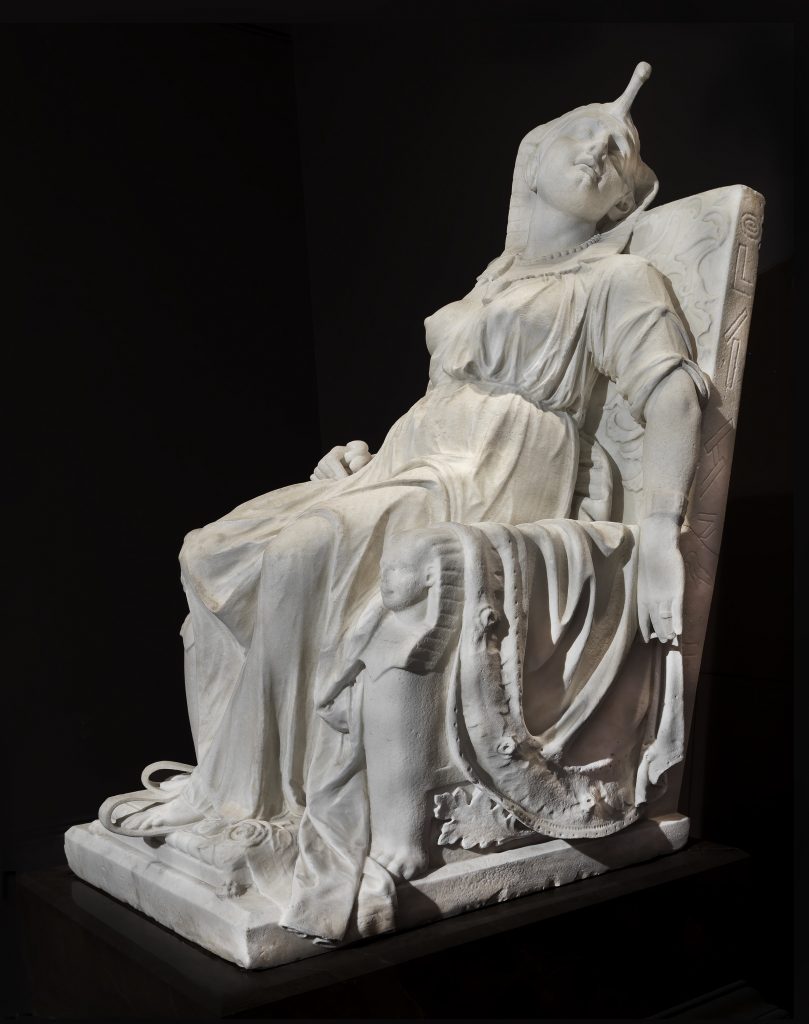
Edmonia Lewis was a remarkable woman—a woman of Afro-Caribbean and Indigenous descent working in the late 19th century, she was able to overcome the prejudices of her time to become one of the most celebrated neo-Classical artists. Her The Death of Cleopatra debuted with a shock, sending waves of controversy through the art world for what was considered its ghastly realism. Cumbersome to ship from Rome to the US, its shipping was paid for by a windfall left to Lewis by Bozeman resident Lizzie Williams.
Displayed at the 1876 Philadelphia Centennial Exhibition, it received wide acclaim, but didn't sell. It fell into obscurity, at one point marking the grave of a Chicago racehorse named Cleopatra, before being discovered in the 1980s and restored to a place of honor at the Smithsonian American Art Museum in 1994. Her other subjects ranged from the biblical Hagar and scenes from Longfellow's Song of Hiawatha to abolitionist themes like portrait busts of Abraham Lincoln and John Brown.
Her life and success are as unlikely as they were hard-won, but she couldn't have done it without her older brother Samuel, who was, among other things, a trained magician (learning the art of sleight-of-hand from a professor in Paris), actor, minstrel-show performer, miner, circus artist, and barber. It was the latter profession he would practice at his tonsorial parlors in San Francisco, Helena, and finally Bozeman, Montana. He loved and took pride in his little sister, writing her frequent letters as she opened a new studio in Rome as well as funding her schooling, her Boston studio, and her 1865 passage abroad before leaving her his whole bank account at his death. The text of one ad for his Helena barber shop proudly likens his work to hers: "The work of the sister and that of the brother, may be said to be one and the same, with this slight exception, that in cutting a shapely 'phiz' [face] one has a knack in using the chisel while the other deftly applies the razor."
For all that pride, Samuel would spend the next century as a footnote to the sister whose career he helped fund. And now, an exhibition at the Tinworks in Bozeman borrows that image for the title of its new exhibition in three acts: "Chisel & Razor: The Artistic Legacies of Edmonia and Samuel Lewis."
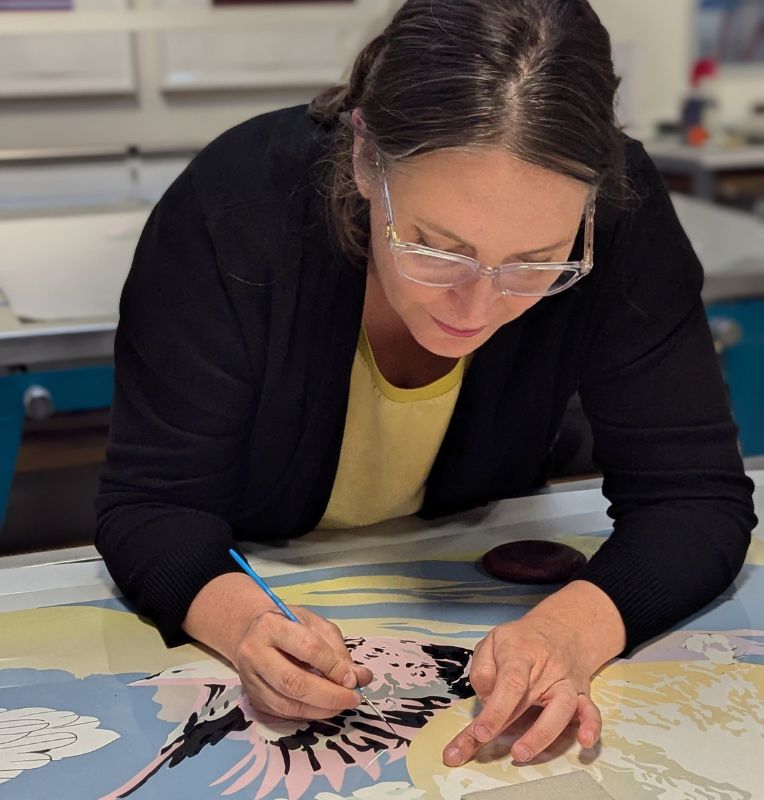
It is the first show to reunite them, assembled by curator Dr. Melissa Ragain, an art historian at Montana State University and one of Tinworks founding curators, whose catalogue essays piece the entwined histories back together from scattered and often incomplete records. Much of that archival groundwork was laid with her colleague Dr. Regina Gee and MSU graduate student Quest Dovky. MFA graduate students Naji Haska and Quinn Ward played important roles in creating the physical exhibition. As Ragain puts it: "There is no Edmonia without Samuel, no Samuel without Edmonia."
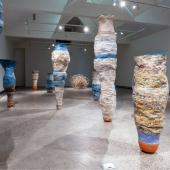
Act I, which opened on June 19th and will continue through October 25, centers on Samuel Lewis's Bozeman, the years 1868 to 1896, during which he lived and made his home there. It features a recreation of the Italianate music room he built in his fashionable home, complete with a beautifully ornate painting on the ceiling and a stained-glass window as well as a wall made of his home's original roof shingles. It also features contemporary pieces by Sonya Clark, Edgar Arceneaux and Nate Young and the late Maud Sulter. Celebrated throughout is the tight-knit and vibrant community of Black settlers, some formerly enslaved and some freeborn, that settled in post-Civil War Bozeman.
Act II, opening October 11 and running through April 4, 2027, focuses on Edmonia's world and ancient artistic influences, including Egyptian, Mediterranean, and Anishinaabe art, by imagining Edmonia undertaking a journey to visit Samuel's Bozeman home. Sadly, Edmonia was unable to make such a visit in her lifetime.
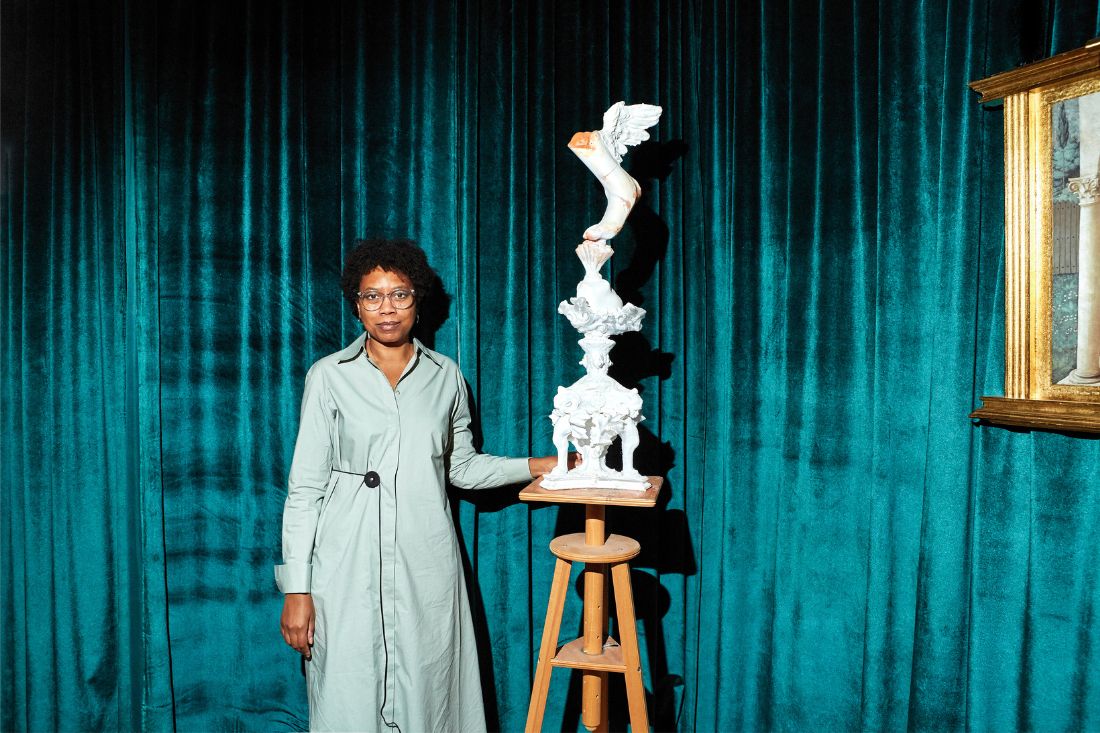
Opening in the newly renovated Mill Building, the centerpiece of Act II is Edmonia Triumphalis, a large-scale work featuring a triumphal arch made of local rammed earth alongside a monumental fountain by Auriea Harvey, whose status as a Black, Catholic sculptor living in Rome recalls Edmonia's own biography.
Act II will also see an homage to Lewis's Minnehaha and Hiawatha by Grand Portage Ojibwe artist Andrea Carlson, a large carving based on Lewis's copy of Michelangelo's Moses by interdisciplinary artist Sanford Biggers, and a beautiful piece called Niagara (Edge of the Earth) by Húnkpapha Lakota/Keweenaw Bay Ojibwe artist Athena LaTocha that recalls the place where Edmonia lived as a child. Finally, black ash basketry and copper weaving from Match-e-be-nash-she-wish Potawatomi and Ottawa artist Kelly Church demonstrate some of the sculptural techniques and cultural values that Edmonia Lewis would have learned among her mother's people.
In addition, a life-size 3D-printed replica of The Death of Cleopatra (produced by MSU researchers and Montana Tech engineering students based on Smithsonian scans) will be on display alongside Lewis family artifacts never before exhibited in Montana at a companion show hosted at the Museum of the Rockies to be called "Act III: Chisel & Razor: Art, Entrepreneurship and the Lewis Family" (October 17, 2026–September 12, 2027).
Tinworks Art takes its name from the building that started it: a former sheet-metal business that was located in the warehouse at 719 North Ida Avenue, where the organization began mounting contemporary art shows in 2019. Its mission is to contribute to the cultural development of the greater Bozeman by exhibiting immersive, inclusive, contemporary, and historical work in nontraditional spaces, with the old industrial bones of the Ida campus reimagined as galleries. Until now it has run seasonally, but the restoration of its historic Mill Building, which Act II of "Chisel & Razor" inaugurates, will make it a year-round venue. Though rooted in Bozeman, Tinworks works on a national scale: "Chisel & Razor" draws support from the VIA Art Fund and the Andy Warhol Foundation for the Visual Arts, and is mounted with Montana State University's College of Arts and Architecture as a citywide project.
Art lovers, history wonks, and Montana-philes in general will do well not to miss "Chisel & Razor: The Artistic Legacies of Edmonia and Samuel Lewis." For Bozeman and for Montana, Acts I and II are the kind of remarkable marriage of art, culture and history that can only occur in the New West. And, for Edmonia and Samuel, who never met again in their lifetimes, Tinworks hopes that it might serve as both a homecoming and a reunion.
















Leave a Comment Here