Nick Mitchell lives with his wife and two children in Kalispell and has always been interested in Montana and Western history. He loves a good book, a tasty brew, and his family, though not in that order. He's only recently started writing, so he'd like it if you'd be easy on him.
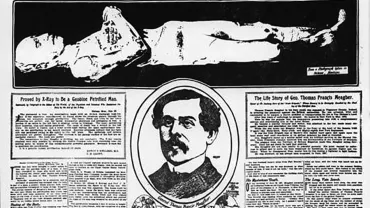
So, amid the larger profusion of oddities like two-headed animals, conjoined piglets, Fiji mermaids, ancient Viking runestones found buried in midwestern fields, bearded ladies, pickled punks, "savages", and other bizarre traveling attractions, there emerged a very specific and surprisingly popular variety: the petrified man.
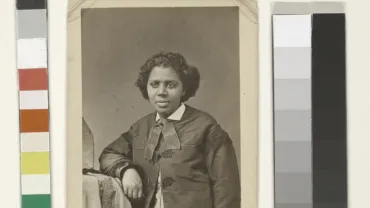
For all that pride, Samuel would spend the next century as a footnote to the sister whose career he helped fund. And now, an exhibition at the Tinworks in Bozeman borrows that image for the title of its new exhibition in three acts: "Chisel & Razor: The Artistic Legacies of Edmonia and Samuel Lewis."
The war between the Thunder Birds and the Water Monsters involved ranged warfare; they fired missiles at one another which the Sioux called kangi tame, or the blackened remains of lightning bolts.
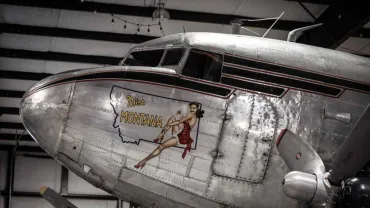
The museum has a number of other remarkable planes, including a 1929 Travel Air 6000 on loan from founder Dick Komberec (one of only six still-flying Travel Airs in the world), a Bell 47G helicopter, and an A-26 Invader prominently featured in Steven Spielberg's supernatural smokejumper romance Always (1989), which was filmed in Montana.
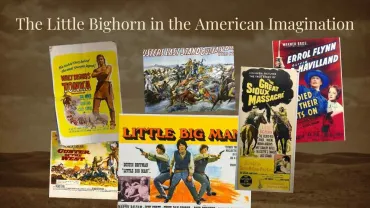
1955 Chief Crazy Horse, starring Victor Mature, is released to a largely tepid reception. It is, however, notable for taking a withering view of Custer's command. He is revealed, by the end, to have been incompetent. The first hints of sympathy for the Native American combatants sneaks into the narrative.
So Hogan didn't exactly hijack the train with his band of pirates. He did the next best thing, meeting with the mayor and county commissioners and asking them to help him enlist the support of the Northern Pacific, which was itself bankrupt and in receivership.
Try and imagine, for a moment, just how arduous it would be to beat several thousand sheep to death. How long does each swing of the club take from wind up to connection? What if the blow is only glancing, and the sheep is dazed but not dead?
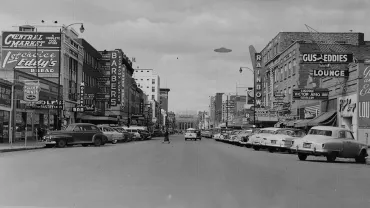
He whipped the camera into place, sighted the craft through the viewfinder, and began shooting. He managed to follow them as they passed behind a water tower, losing sight of them after they went behind the tower and into the blue sky to the southeast. He produced about 16 seconds of footage.
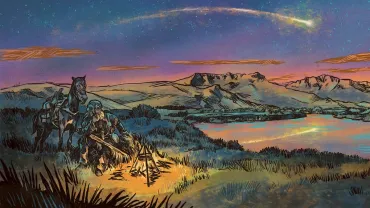
Could it be that an aging fur trader really found something from another world planted in a mountain located,"in the neighborhood of the Cadotte Pass?" And if so, could it possibly still be there, undiscovered?
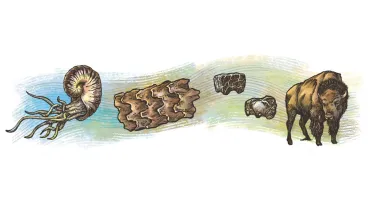
The sky turns slate as thick, billowing clouds gather darkly in the east, blowing in from the Panthalassic Sea. The insects hush, suddenly, moments before sheets of warm rain begin to fall, dappling the leaves and disturbing the surface of the waters.
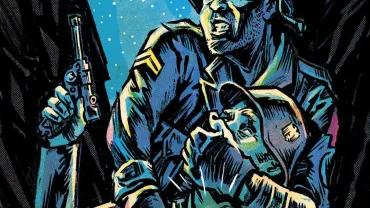
The knives were stiletto-thin, able to slide between an enemy combatant’s ribs with appalling ease. But unlike traditional stilettos, sharpened only at the point, the V-42, as it was eventually named, was edged on all sides, so that it would pull through a Nazi’s throat as easily as it could pierce his steel helmet.
As blood cooled in the darkening snow around him, maybe he could only make sense of what was happening to him through the lens of poetry: all poems end on a note of regret, melancholy, and, hopefully, some measure of beauty. And the best ones end with a bang.
Sliding, he picked up speed. Snow that had frozen, melted, and refrozen into shards tore at his skin while rocks, jutting out of the snow like land mines, struck his head and body, leaving large gashes but failing to slow his descent
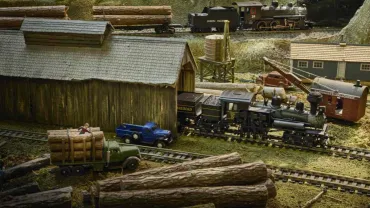
For in the basement of a building on the Steamboat Block, they labor on a project as heroic as it is quixotic: nothing less than a model of the roads and tracks connecting the heart of Montana's railroad corridor, including Great Falls, Livingston, and Butte, with many smaller towns in between.
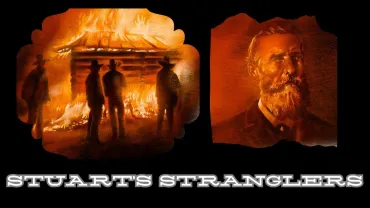
A cabal of rich cattlemen met in Helena in 1883 to discuss what was to be done. There were plenty who had reason to want the horse thieves taken care of—among them Granville Stuart, cattle baron, politician, and sometime vigilante.