The Little Bighorn in the American Imagination
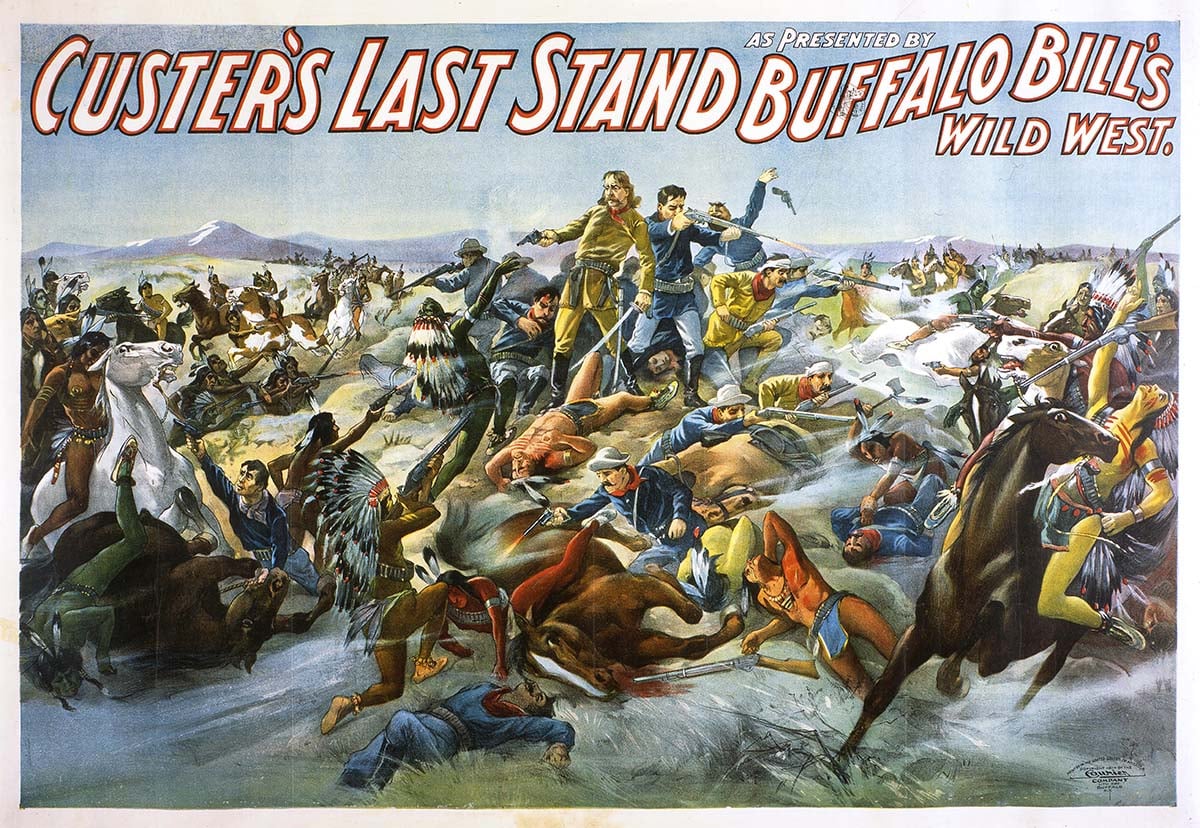
1876 Within months of the battle itself, Buffalo Bill begins performing "The Red Right Hand, or The First Scalp for Custer," which told the story of the battle as well as the tale, possibly apocryphal, of Buffalo Bill scalping Yellow Hair (sometimes Yellow Hand) as an act of vengeance for the death of Custer. The reenactment of the Battle of the Little Bighorn remains a mainstay of his show for decades.
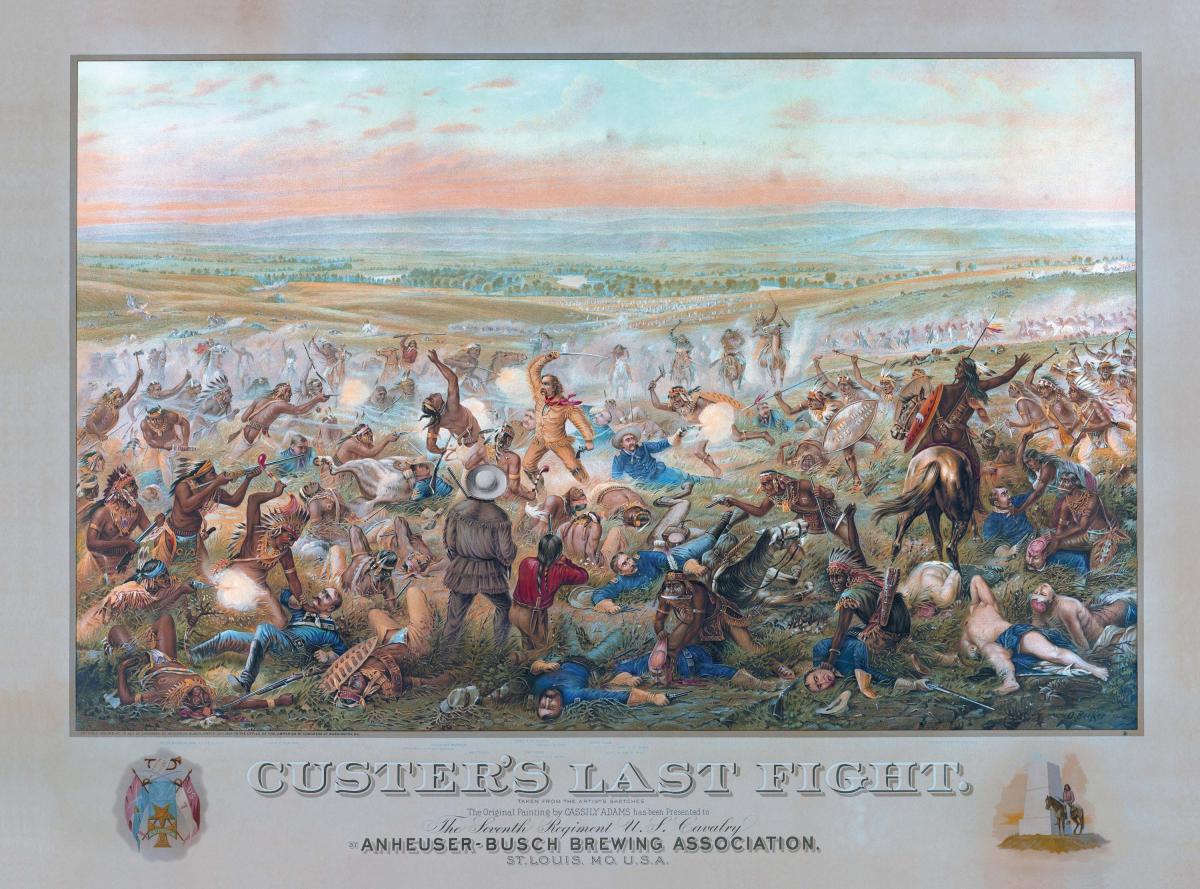
1884–1896 Cassilly Adams paints a 9.5 by 16.5 feet scene of the battle to be toured around the country. Though that venture did not find success, the painting is later bought by Anheuser-Busch, who mass-produced it and distributed it to thousands of bars. In Hemingway's For Whom the Bell Tolls, protagonist Robert Jordan remembers "his grandfather...felt resentment that any one should speak against that figure in the buckskin shirt, the yellow curls blowing, that stood on the hill holding a service revolver as the Sioux closed in around him in the old Anheuser-Busch lithograph that hung on the poolroom wall in Red Lodge."
1909 The first film adaptation of the event is made, entitled On the Little Big Horn, or Custer's Last Stand.
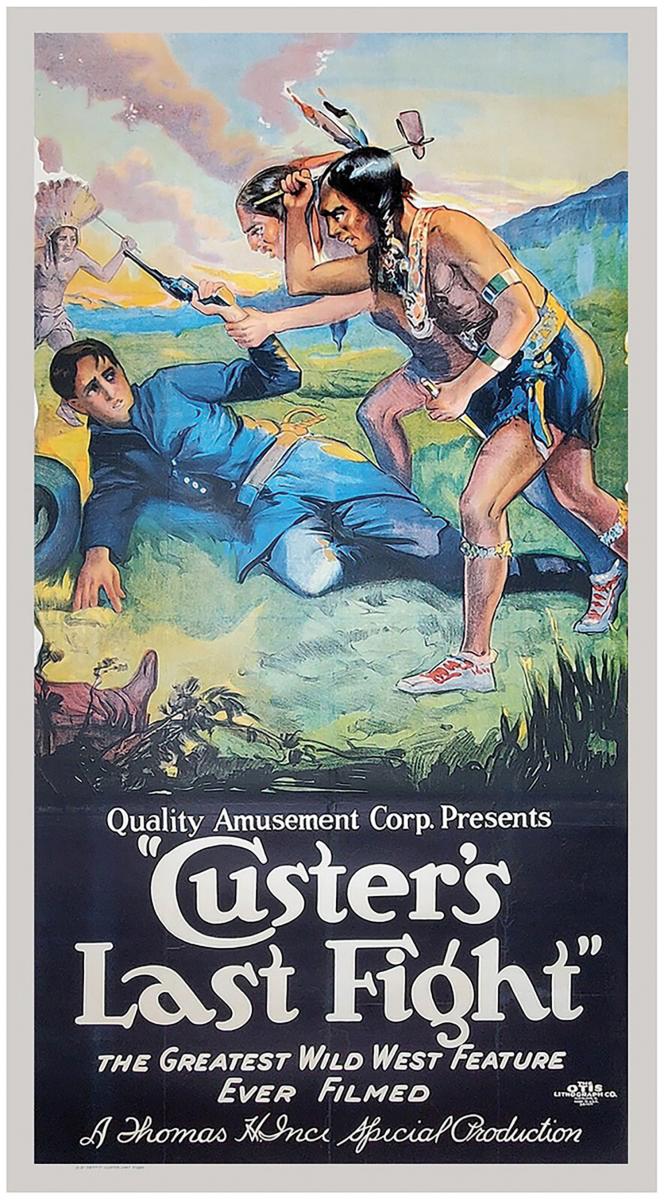
1912 Another film, Custer's Last Fight, directed by and starring Francis Ford (the brother of legendary Western director John Ford) as Custer and William Eagle Shirt as Sitting Bull. It ran for two reels, or a scant 30 minutes.
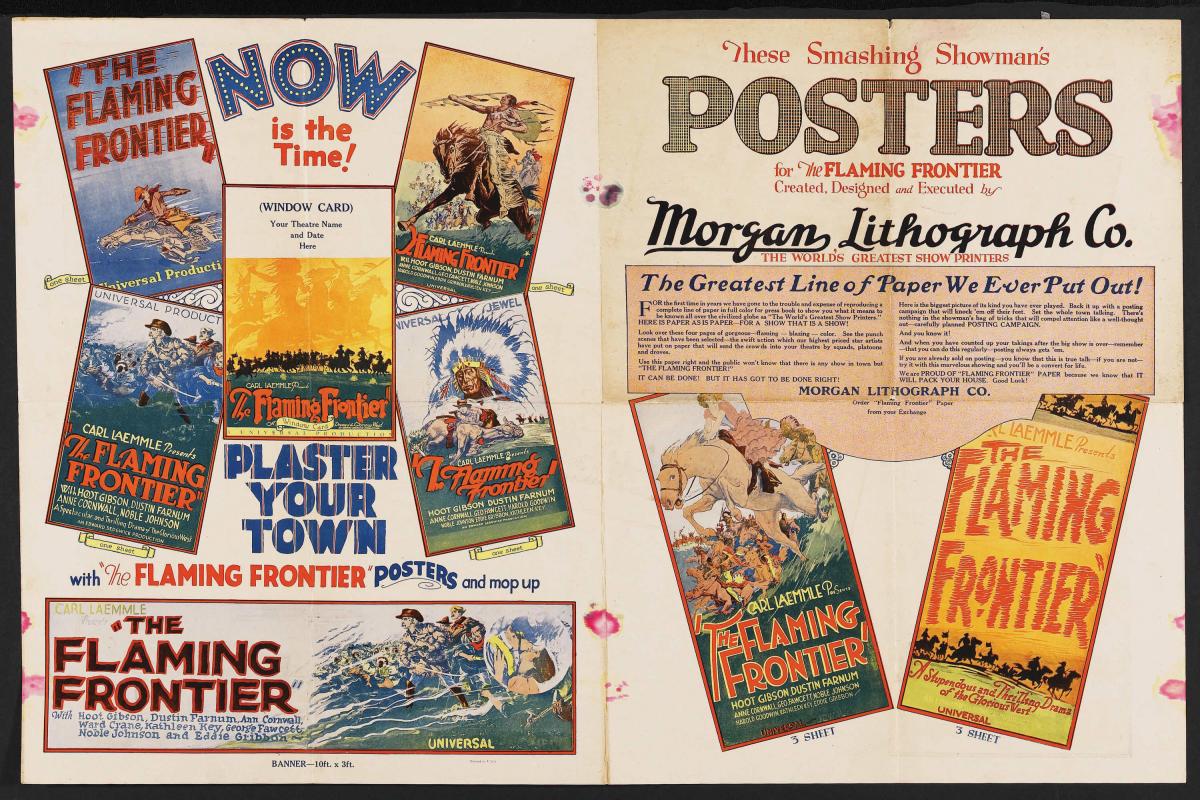
1926 The 50th anniversary of the battle brings two new silent films: General Custer at the Little Big Horn and The Flaming Frontier. The latter cost $400,000 and premiered in New York City. Eighty-five-year-old Brigadier General Edward Godfrey attends, while Custer's widow, Elizabeth, declines.
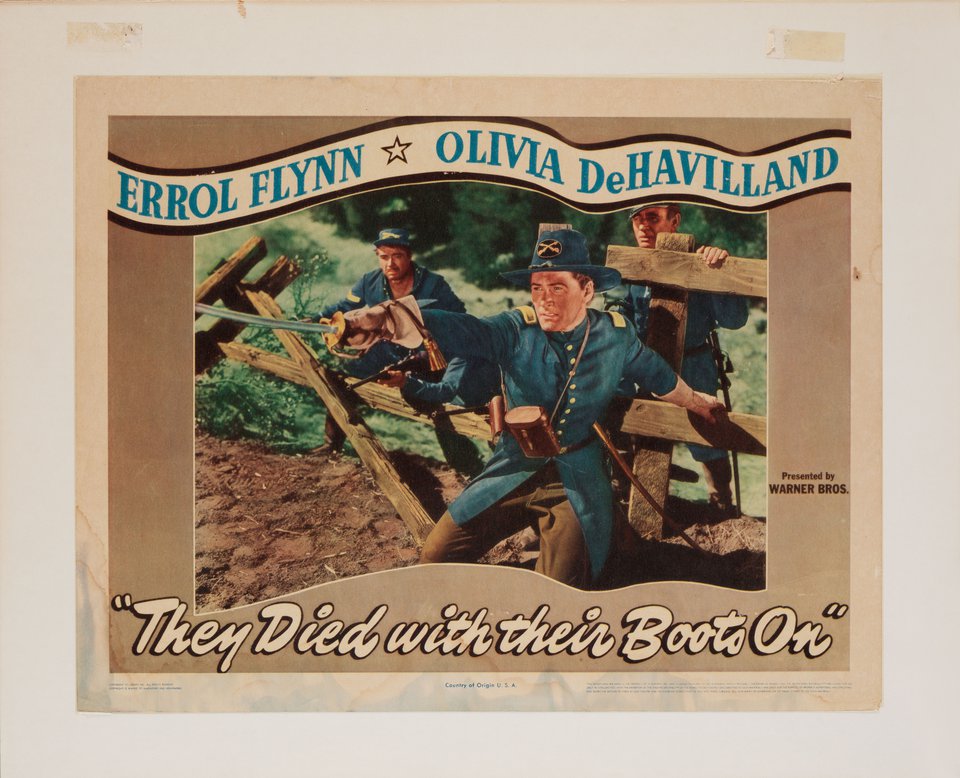
1941 Just a few weeks after the attack on Pearl Harbor, the highly fictionalized and romanticized They Died With Their Boots On, starring Errol Flynn as a swashbuckling Custer and Olivia de Havilland as his wife. Anthony Quinn, of all people, plays a decidedly Latin Crazy Horse. The film is a big hit, and serves as the cinematographic hagiography of Custer par excellence, not to mention a powerful recruitment tool.
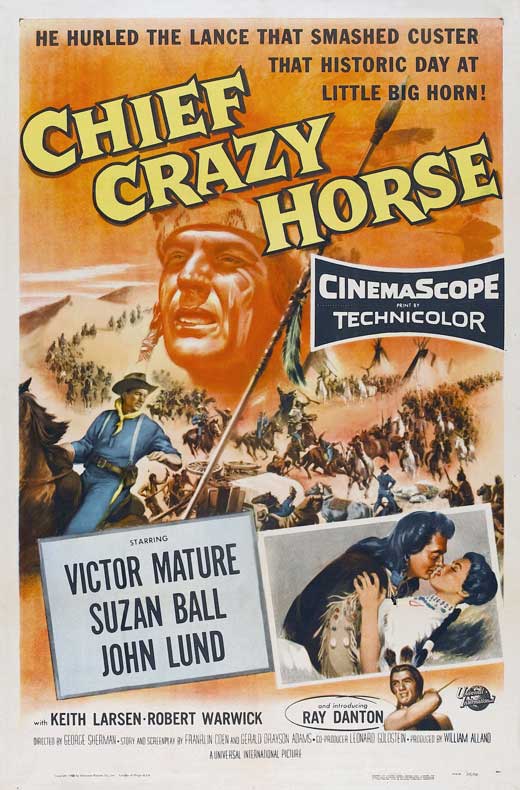
1955 Chief Crazy Horse, starring Victor Mature, is released to a largely tepid reception. It is, however, notable for taking a withering view of Custer's command. He is revealed, by the end, to have been incompetent. The first hints of sympathy for the Native American combatants sneaks into the narrative.
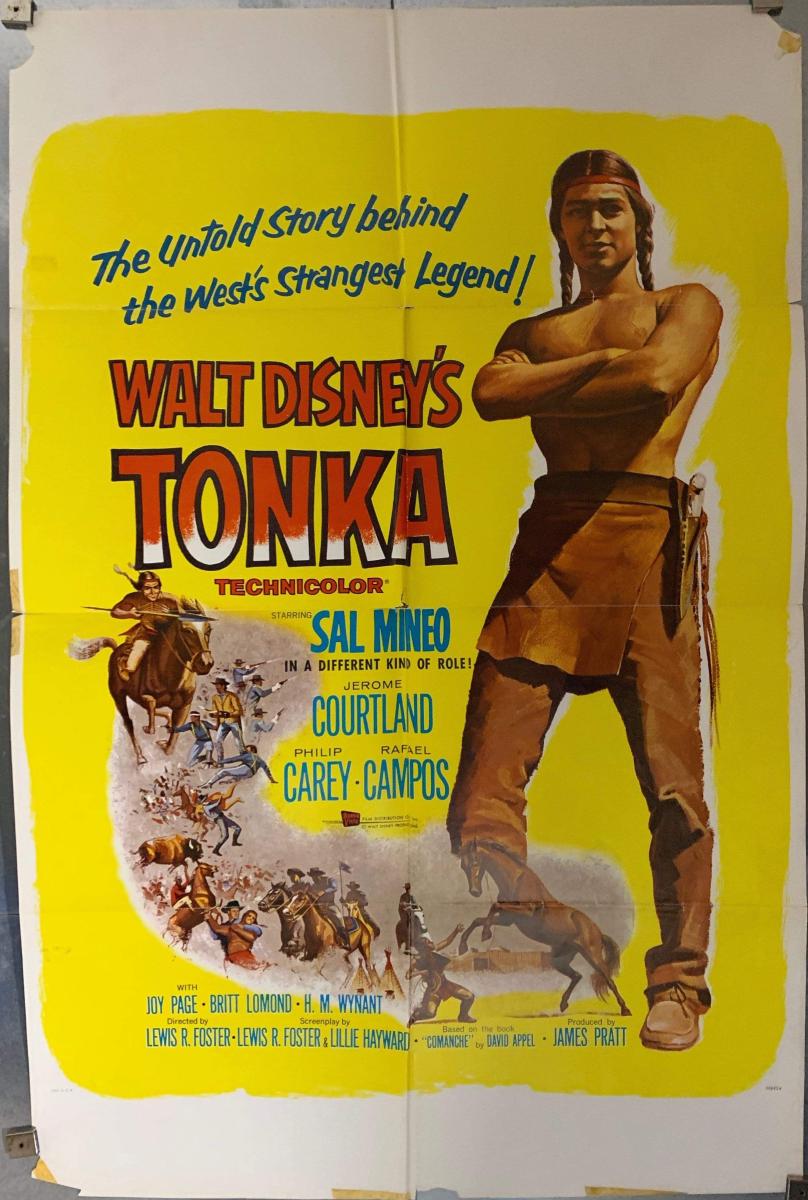
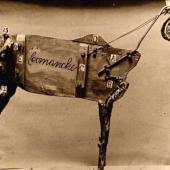
1958 The Walt Disney company makes the family film Tonka out of the life of Comanche the horse (see the article about Comanche in this issue), starring Sal Mineo as White Bull (see the article about "Throwing Your Life Away" in this issue). Inaccurate and Disney-fied, it nevertheless made an estimated $2.5 million at the box office.
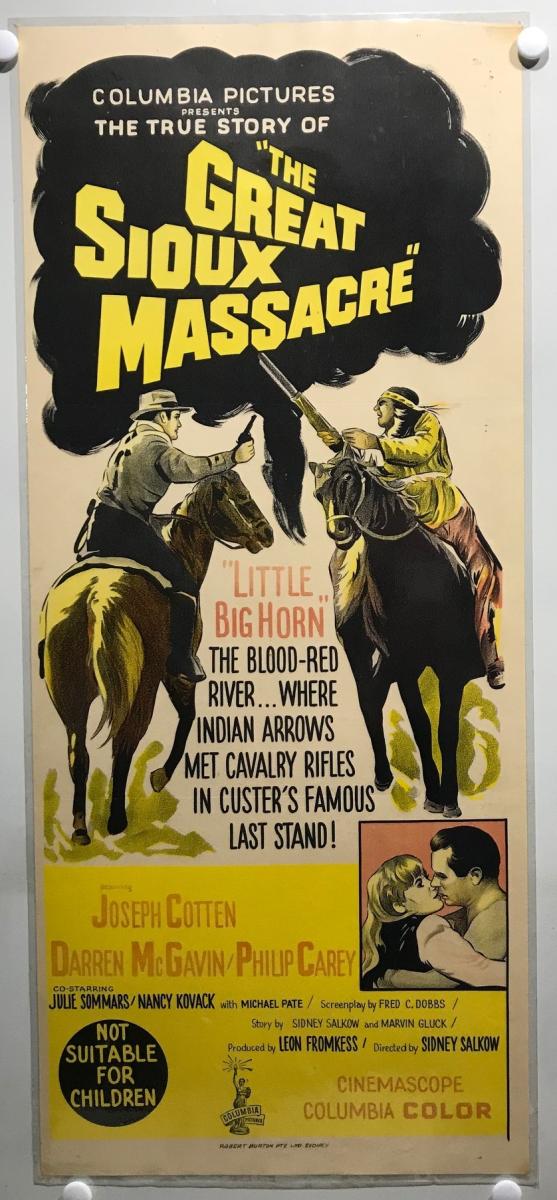
1965 The Great Sioux Massacre is released, starring Joseph Cotten as Marcus Reno and Iron Eyes Cody as Crazy Horse. As a film it is unremarkable, and reuses battle scenes from the same director's Sitting Bull, filmed nine years previously, as a cost-saving measure.
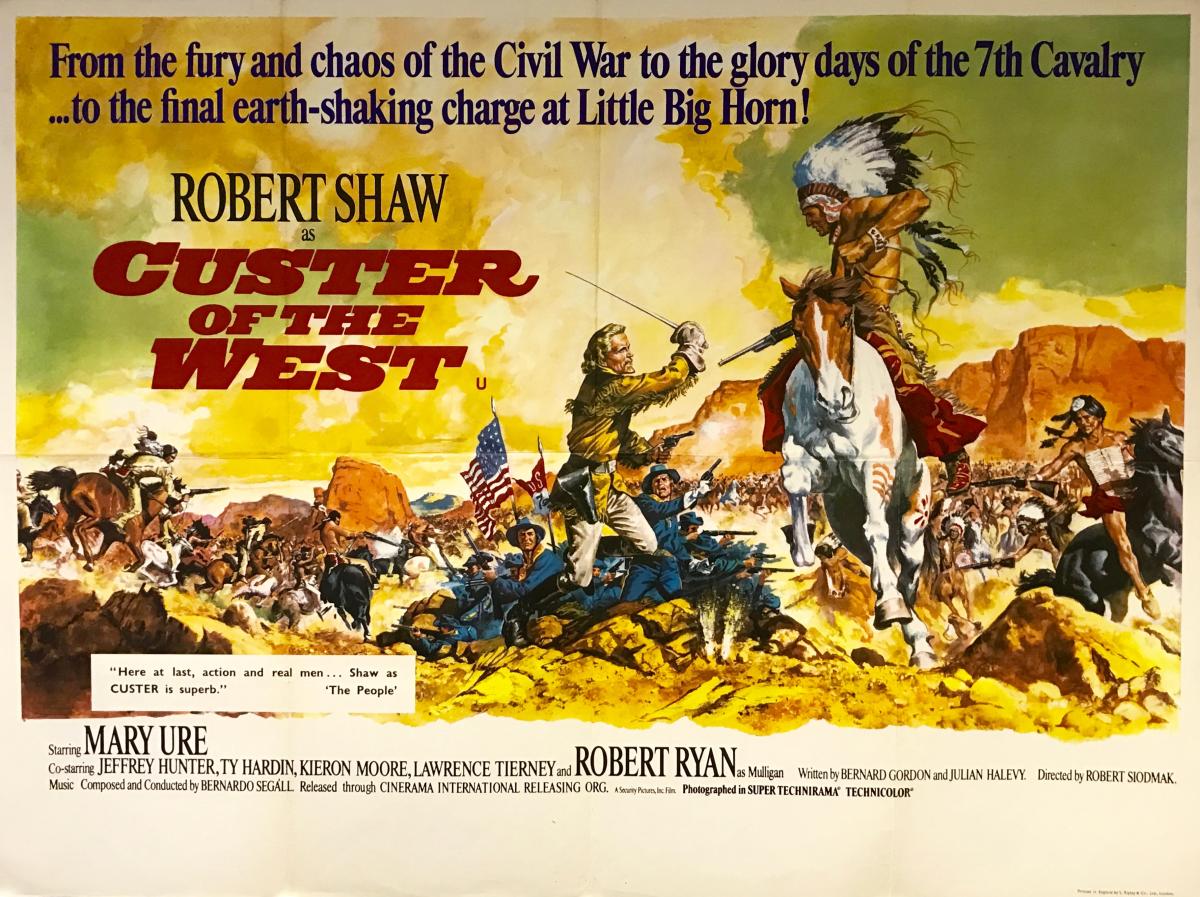
1967 Two ambitious but unsuccessful Little Big Horn projects are released in the same year. One is Custer of the West, a biography of Custer filmed in Spain. Screenwriter Bernard Gordon wrote that he "tried to give the Indians a fair shake... [it] was our point of view that the Indians were victims right to the end." The other project was television's The Legend of Custer, or simply Custer, which ran for 17 episodes before being taken off the air, partially due to extensive Native American protests and a feeling that the time for the lionizing of Custer had passed.
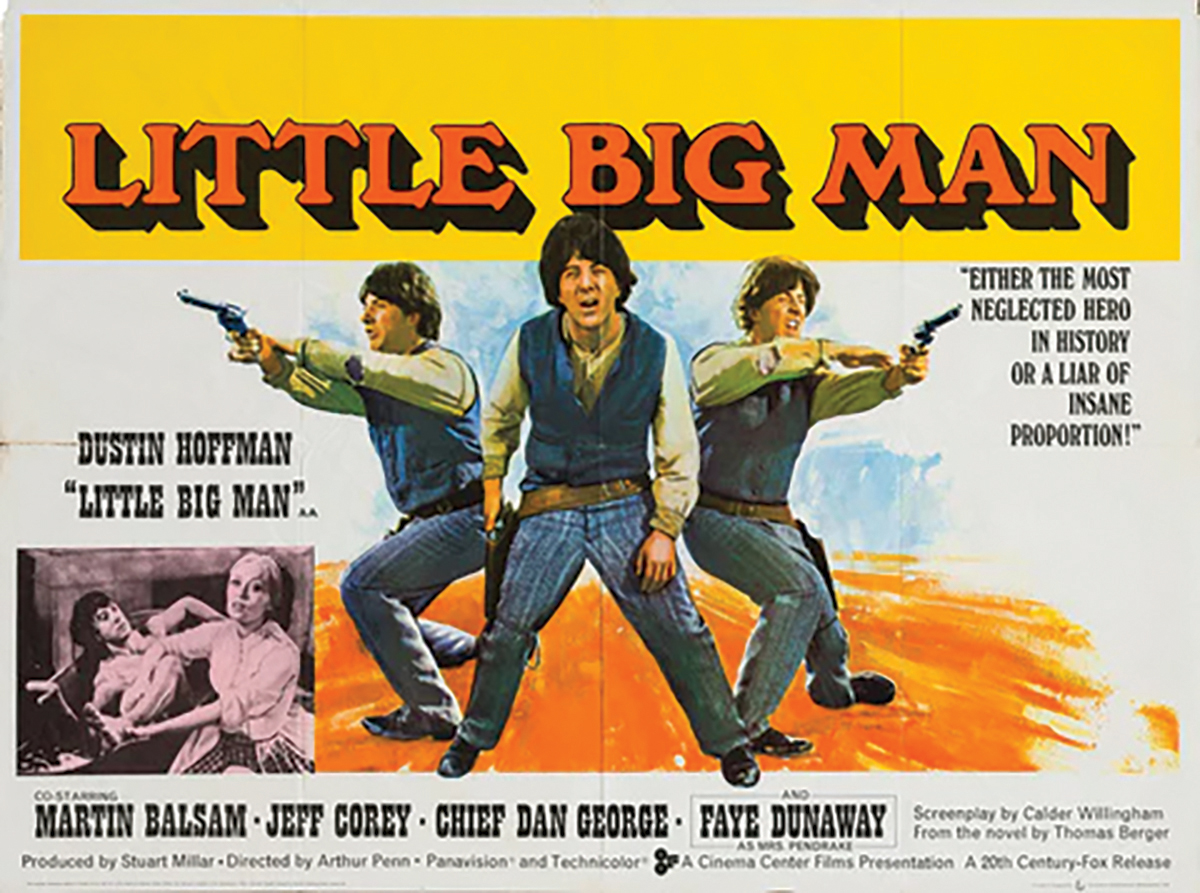
1970 If the turning point for the public image of Custer has not already arrived, it has now. The Arthur Penn-directed satirical Western Little Big Man, starring Dustin Hoffman and Chief Dan George, takes an exclusively critical view of Custer as a vainglorious fool with pretty hair.
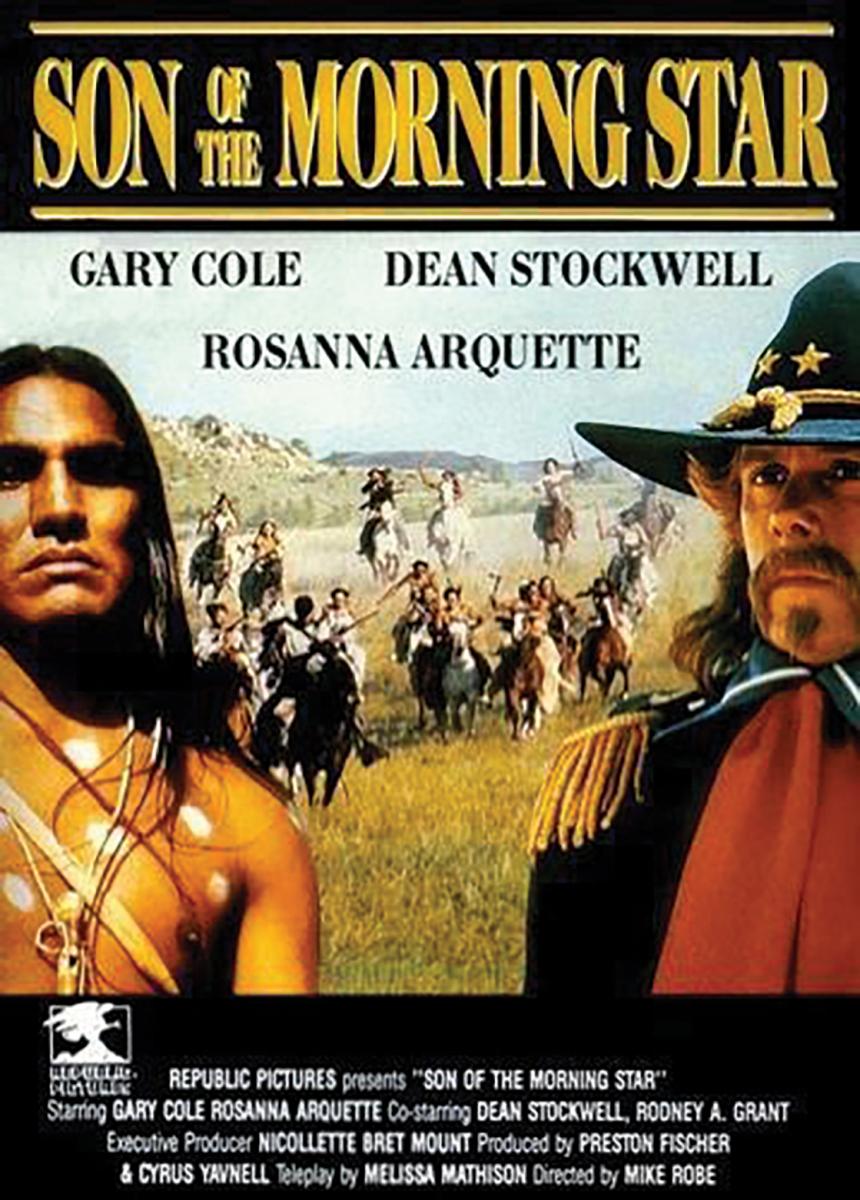
1991 ABC miniseries Son of the Morning Star, based on the book by Evan S. Connell, premieres and is hailed as the most realistic version of the story ever put on film. As such, it continues the trend of taking a dim view of Custer. New York Magazine, contrasting it with the recently released Dances with Wolves, says that the miniseries "deals in delusions instead of dreams."
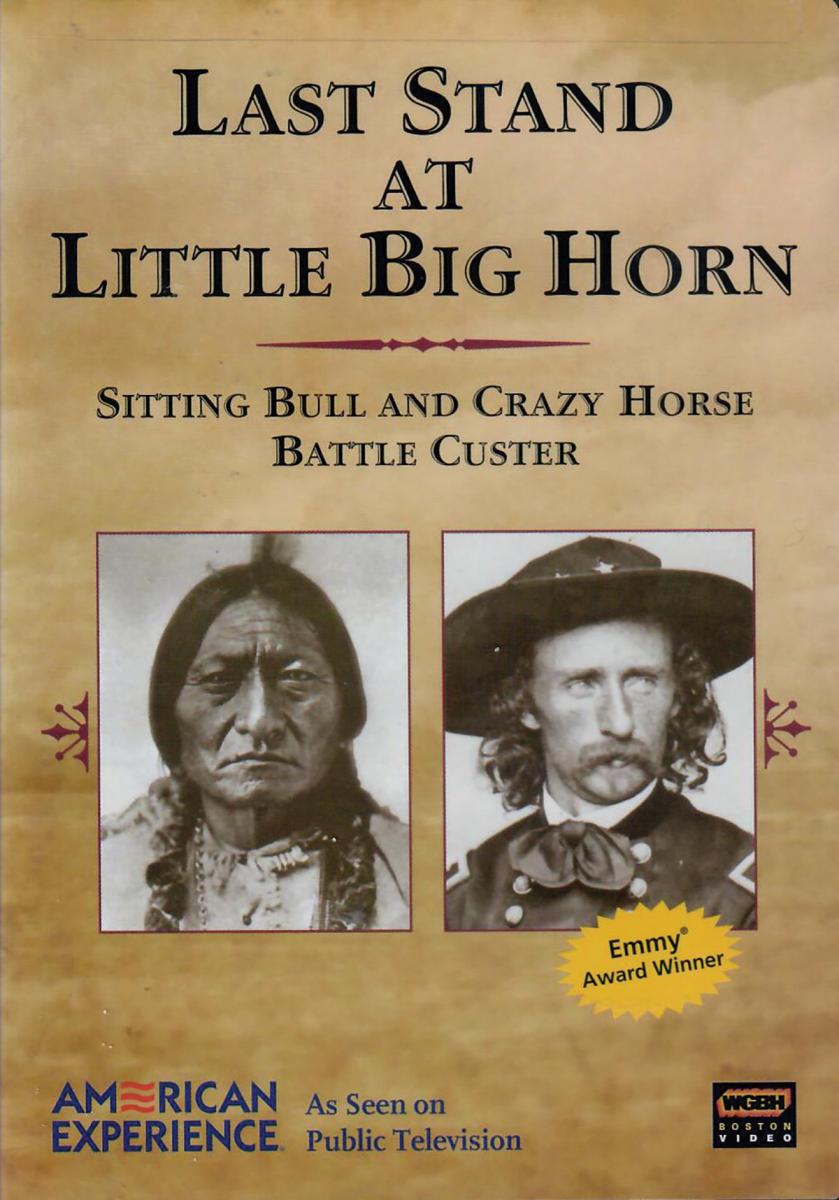
1992 PBS airs the documentary Last Stand at Little Bighorn, written by James Welch, who would also write Killing Custer as a companion to the film. Needless to say, Custer is portrayed in the manner to which we've become accustomed.
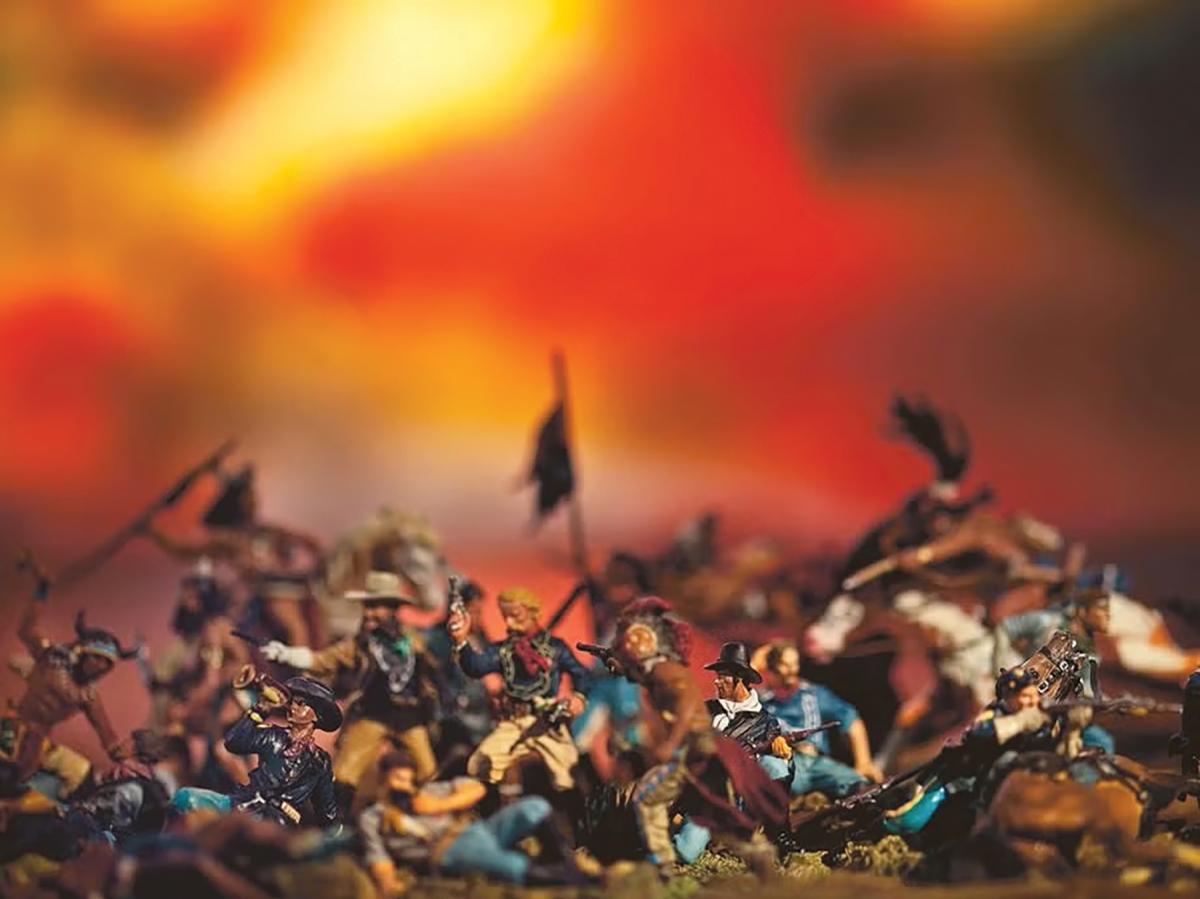
2014 Artist David Levinthal, known for his Wild West series consisting of artful photographs of meticulously arranged toy figures, returns decades later to the subject with a new series entitled "History." "Last Stand Hill" (2014), a detailed and eerie depiction of the battle using the same miniature figures, now hangs in the Smithsonian American Art Museum.
Enjoyed this story?
Montana has more layers than most people ever see.
Distinctly Montana finds them, four times a year. Subscribe and get every issue.



Leave a Comment Here