Medals of Honor Conferred for Gallantry Displayed on the Battlefields of Montana During the Plains Indian Wars
By Douglas Schmittou |
Photo by Robert Schmittou
The Medal of Honor, America's highest military decoration for valor, was established through Congressional acts on December 21, 1861, and July 12, 1862, which authorized its conferment to members, respectively, of the United States Navy and Army. On March 25, 1863, Private Jacob Parrott became the first recipient of this award. For more than 50 years, the MOH was the only medallic award for gallantry in combat. The advent of a tiered-rank structure for U.S. military decorations in the twentieth century and adoption of precisely defined eligibility criteria made conferment of the Medal of Honor an increasingly rare event and contributed to its venerated status.
When this article was submitted for publication, 3,552 Medals of Honor had been awarded to 3,533 recipients, according to the Congressional Medal of Honor Society. That total includes five recipients who were enshrined, two posthumously, at ceremonies on February 24 and March 2, 2026. Most notably, the honor accorded 100-year-old Navy Captain Royce Williams (Ret.) provided long-overdue recognition of his extraordinary performance in a legendary, 35-minute-long dogfight, during which he single-handedly shot down at least four Soviet MiG-15s, on November 18, 1952. Citing aviation historians, Rear Admiral Doniphan Shelton, who long championed Williams's cause, described the 7:1 encounter as "unmatched in the Korean War, unmatched in the Vietnam War, [and] unmatched ever since then."
Classified according to operational theaters and the era during which they occurred, 422 Medals of Honor commemorate gallantry in engagements fought during the Indian Wars. Approximately 100 of those medals were issued for valor demonstrated on the battlefields of Montana. Archaeologist Douglas Scott provides this statistical breakdown of MOH awards associated with the Great Sioux War (1876-1877): "thirty-one for Cedar Creek, Montana and related engagements; twenty-four for the Little Bighorn; four for the Rosebud battle; three for the fight in the Wolf Mountains; two for the Slim Buttes fight; and twelve for [miscellaneous] skirmishes and achievements."
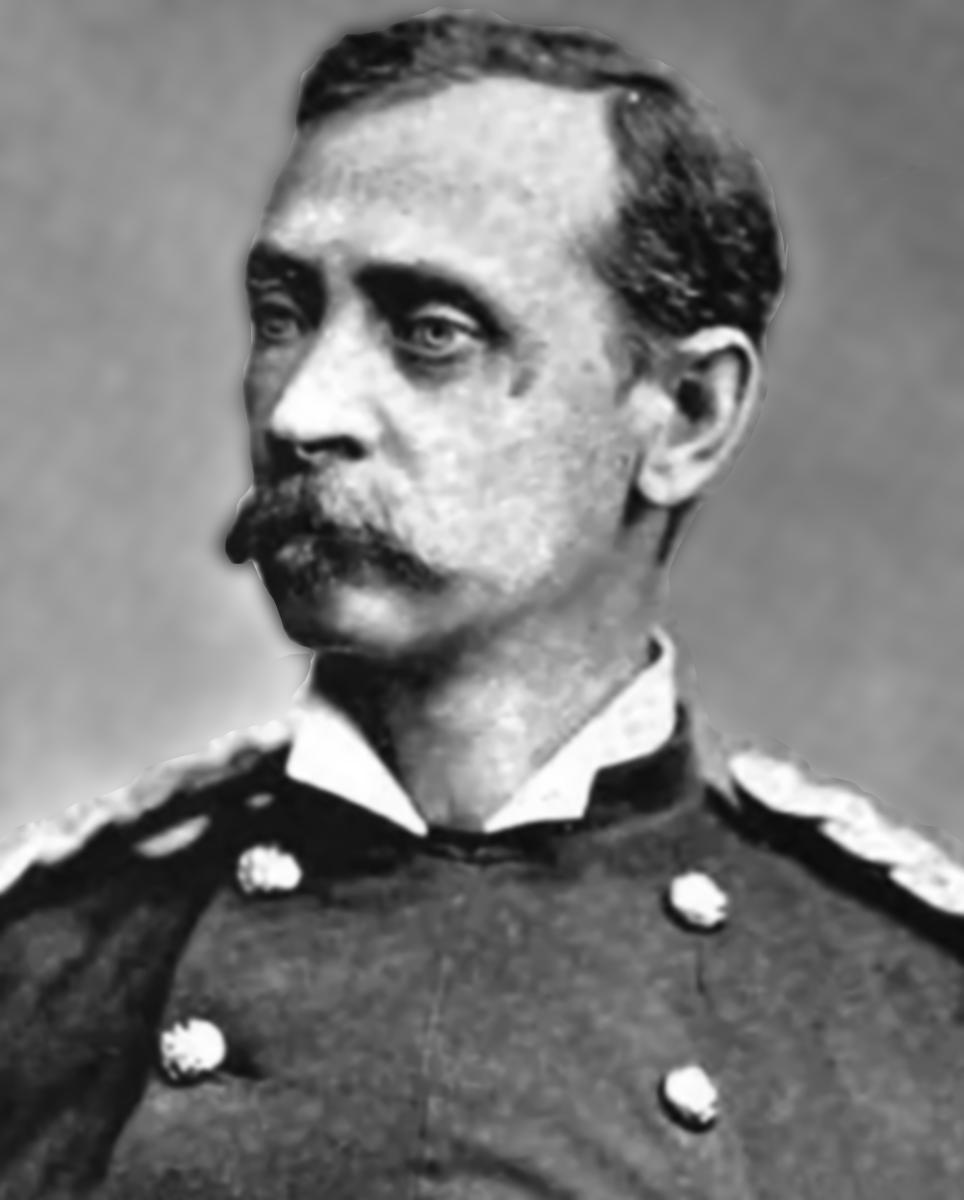
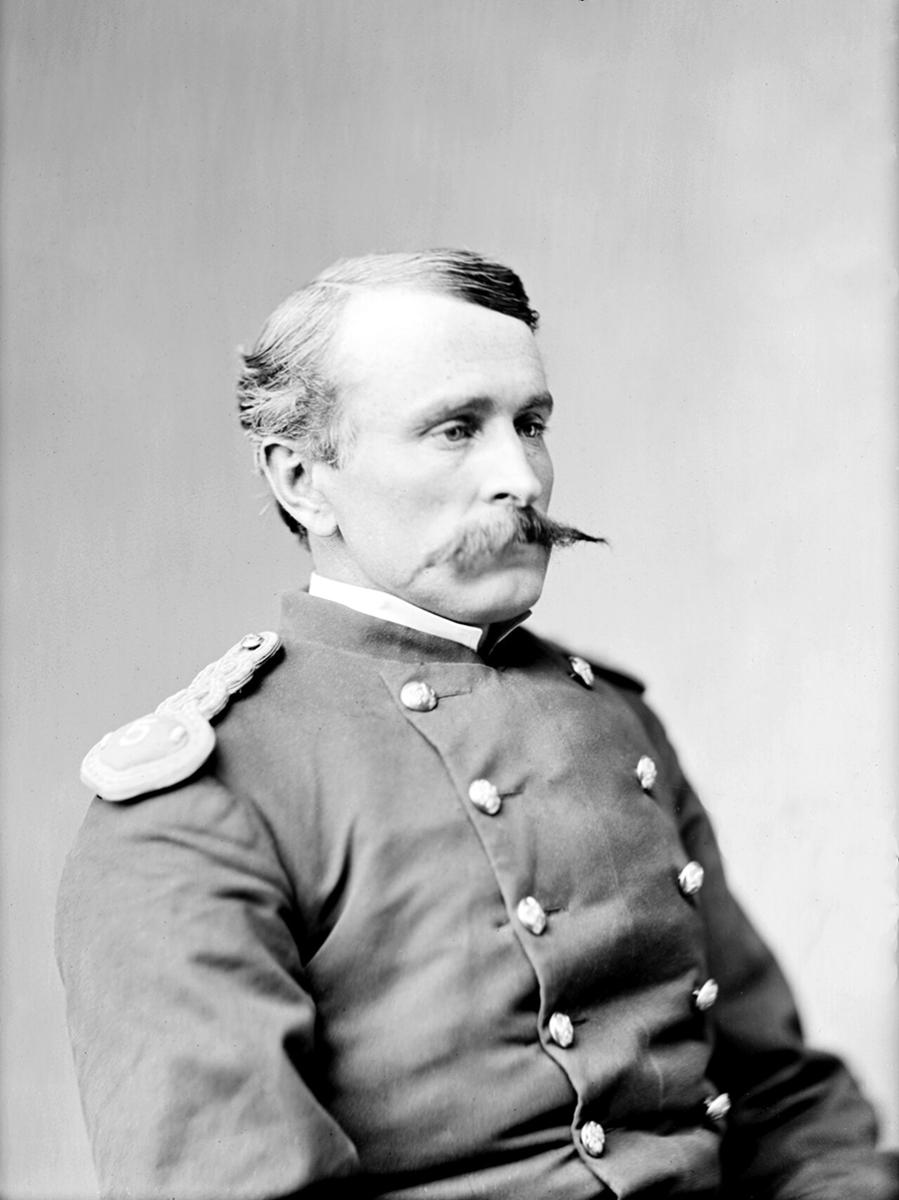
Captain Guy Henry
The Battle of the Rosebud, which transpired on June 17, 1876, was one of the largest pitched battles ever fought between the U.S. Army and Plains tribes. However, it produced an inexplicably low number of Medals of Honor, one of which was bestowed upon Trumpeter Elmer Alonson Snow for his harrowing ride across the "Gap." During Captain Anson Mills's second cavalry charge, Snow sustained a bullet wound, one that fractured bones in both forearms, thus rendering the limp-wristed bugler incapable of manually controlling his horse. Fortunately, Snow narrowly escaped his brush with death.
First sergeants Michael A. McGann, Joseph Robinson, and John Henry Shingle received Medals of Honor for valor exhibited at Kollmar Crossing, the one sector of the battlefield in which Lakota forces possessed a significant numerical advantage. Hostilities there culminated in the fiercest fighting of the entire engagement. According to Paul Hedren, the author of Rosebud, Third Cavalry officers who were also Civil War veterans concurred that they never experienced "anything hotter" than the firefight and close-quarters combat that erupted at Kollmar Creek. Captain Guy Henry, who joined the ranks of MOH recipients in 1893, survived a grievous bullet wound to his face, one inflicted at Kollmar Crossing. Henry justifiably described this area as the "Valley of the Shadow of Death."
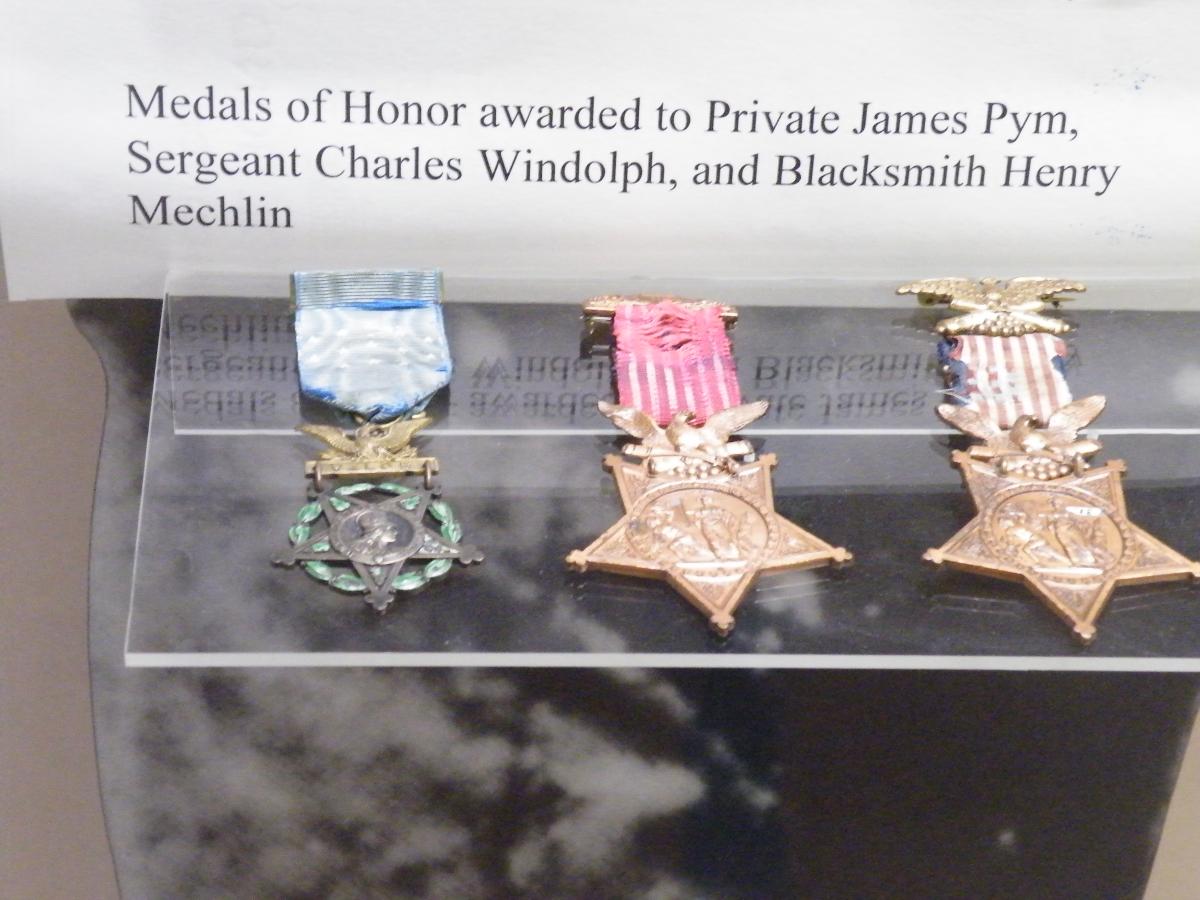
Twenty-four Medals of Honor were awarded for gallantry in Montana's most iconic battle. The Reno-Benteen defense site was the focal point of activities that led to conferment of those medals, most of which were awarded to soldiers (15) who volunteered, on the morning of June 26, to procure water for their wounded comrades. These men were subjected to "galling fire" from Lakota warriors, so Captain Benteen dispatched four sharpshooters to Medal of Honor Point. From this exposed position, they provided cover fire as water brigades moved to and from the Little Bighorn River via Water Carrier's Ravine. Private Charles Windolph, Sergeant George Geiger, Blacksmith Henry Mechling, and Saddler Otto Voit received Medals of Honor for their service in the latter capacity. Indeed, the medals of Mechling, Windolph, and Private James Pym have long been exhibited at the Little Bighorn Battlefield visitor center.
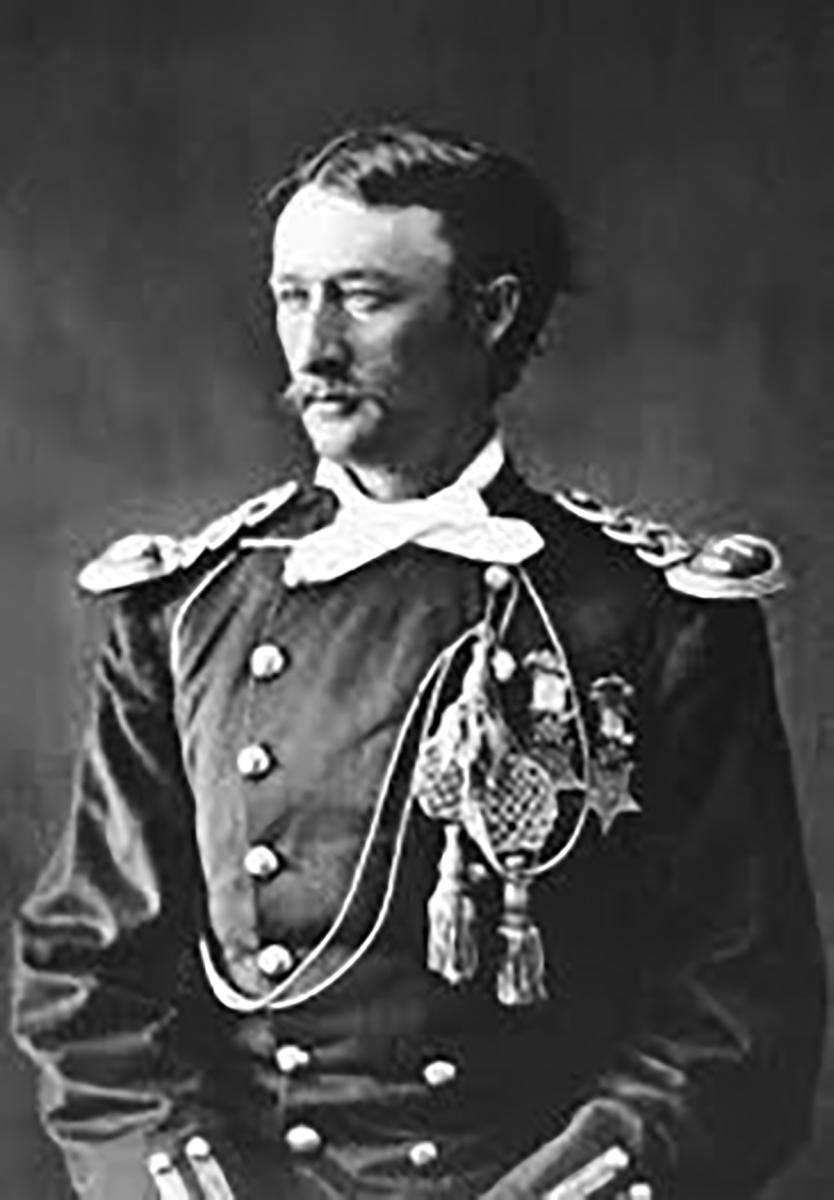
Second Lieutenant Thomas Ward Custer
Five additional Little Bighorn combatants received the Medal of Honor for gallantry in other engagements. The best-known member of this cadre is Thomas Ward Custer, who became America's first double Medal of Honor recipient on May 26, 1865. The action for which he received his second medal was particularly noteworthy. On April 6, at Sailor's Creek, Second Lieutenant Custer galloped directly toward Confederate infantry lines, leaped over defensive breastworks, and engaged their color bearer. Seizing the regimental flag with one hand, Custer was shot in the face at point-blank range, so close that his face was speckled with burnt gunpowder. Soon thereafter, Custer dispatched his adversary with one round from his pistol. Colonel Henry Capehart, who witnessed this feat, later stated that "for intrepidity I never saw this incident surpassed."
The largest Medal of Honor award ceremony in Montana history occurred on July 18, 1877, at Cantonment on Tongue River, where General William T. Sherman pinned medals on the dress coats of 31 enlisted men, all of whom served under the command of Colonel Nelson Miles during the winter campaign of 1876-1877. Citations for these awards are sparsely detailed and, in Miles's letter of recommendation, broadly contextualized as having occurred at "Cedar Creek, Montana, October 21, — Redwater Creek, Montana, December 18, 1876; and Wolf Mountain, Montana, January 8, 1877."
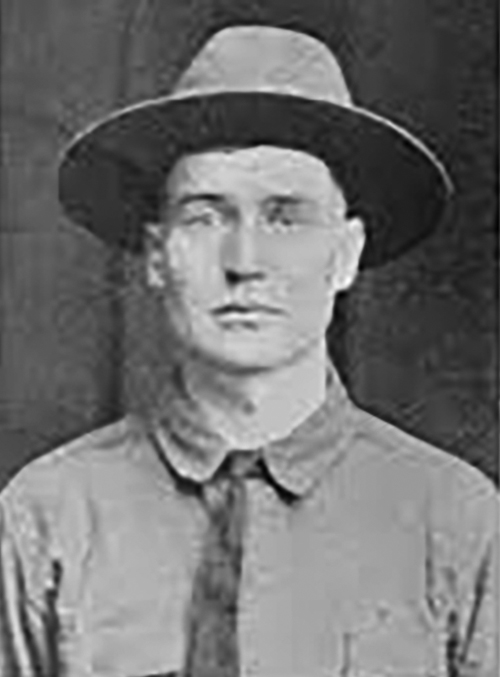
Ten members of Companies G, H, and I, Fifth Infantry, received Medals of Honor for services rendered during the Fort Peck Expedition, an operational phase that lasted from November 6–December 22. Led by First Lieutenant Frank D. Baldwin, who, in 1894, became a two-time Medal of Honor recipient, they relentlessly pursued and skirmished with winter-roaming Lakota bands. Those military operations occurred in conditions that occasionally tested the boundaries of human endurance and survival.
The hours immediately after the Bark Creek engagement posed particularly severe, life-threatening challenges. Citing an entry in Baldwin's diary for December 7, 1876, Jerome Greene states, in Yellowstone Command, that "a sudden raging norther swept down on the men [at dusk], dropping the temperature to minus thirty-five degrees." By 9 p.m., Baldwin began a forced march back to Fort Peck. Facing blizzard conditions, Baldwin imposed several tactical directives to ensure the welfare of his men. Most notably, he positioned three sergeants at the rear of his column, with "fixed bayonets and strict orders to prick any man" who fell behind.
First Lieutenant Frank D. Baldwin
While navigating this crucible, Baldwin momentarily dozed off and fell from his horse. Years later, he informed Walter Camp that he still carried "the marks of the wound" he received for that transgression. Baldwin ultimately recommended the man who revived him "for a medal, which he got." In this instance, immediate life-saving measures apparently superseded heroism on the battlefield as a prerequisite to Medal of Honor referrals. In just over two days, Greene notes, Baldwin's bone-tired, 112-man column had marched 73 miles.
During the Nez Perce War of 1877, two engagements in Montana contributed significantly to MOH rolls. The bloody Battle of the Big Hole (August 9-10) resulted in conferment of six Medals of Honor. Opening salvos of the climactic Battle of Bear's Paw Mountain, which occurred on September 30, provided the context for nine more MOH awards.
On the latter occasion, well-positioned Nez Perce warriors decimated elements of the Seventh Cavalry during the initial assault on their village. Sharpshooters targeted commissioned and noncommissioned officers to decapitate command and control, thereby killing or wounding 53 of 115 men. Published accounts from both military and civilian sources praised the marksmanship of Nez Perce combatants. Louis Shambo, who led a contingent of Cheyenne scouts, stated quite simply that "those [Nez Perce] Indians were the best shots I ever saw." By the end of that day's hostilities, Greene indicates that casualties for troops under the command of Colonel Miles numbered 20 killed and 50 wounded. The eventual surrender of the Nez Perce would be effectuated through imposition of siege conditions.
Barely two months after receiving his first Medal of Honor for gallantry at Cedar Creek, First Sergeant Henry Hogan's conduct in this engagement placed him in rarefied company. Lieutenant Henry Romeyn, Fifth Infantry, assumed command of the fragmented Seventh until he sustained a gunshot wound through the right lung, after which Hogan carried him "off the field of battle under heavy fire." The bravery of both men was formally recognized by conferment of Medals of Honor in 1894, thus marking one of only three times in American military history that a Medal of Honor was awarded for rescuing another MOH recipient. One of only 19 double Medal of Honor recipients, Hogan holds the unique distinction of achieving that status, in both instances, during Indian War engagements in Montana.
First Sergeant Henry Hogan
Since its inception, Medals of Honor have been awarded to nine sons of Montana. Four of those men made the ultimate sacrifice: William Wylie Galt (1944), Laverne Parrish (1945), Donald J. Ruhl (1945), and Travis William Atkins (2007). Thus far, no member of tribes indigenous to Montana has been awarded the MOH. Nevertheless, Plains tribes have long served in the Armed Forces at rates disproportionately higher than any other demographic group in the United States.
Statements by Plenty Coups, the renowned Apsáalooke (Crow) chief, and George Horse Capture, a more contemporary Gros Ventre scholar, illustrate a deeply rooted, original-defenders-of-this-land perspective on military service. Reflecting upon the contributions made by soldiers from a multitude of indigenous peoples to American war efforts in World War I, Plenty Coups informed biographer Frank Linderman that "My heart sings with pride when I think of the fighting my people, the red men of all tribes, did in this last great war. [If] ever the hands of my own people hold the rope that keeps this country's flag high in the air, it will never come down while an Absarokee warrior lives."
Horse Capture echoes those sentiments but makes this distinction: "We are dedicated to our country—the physical land, not the country as most other groups think of it. This is our country. It makes no difference whose name is on the deed. We are the landlords."
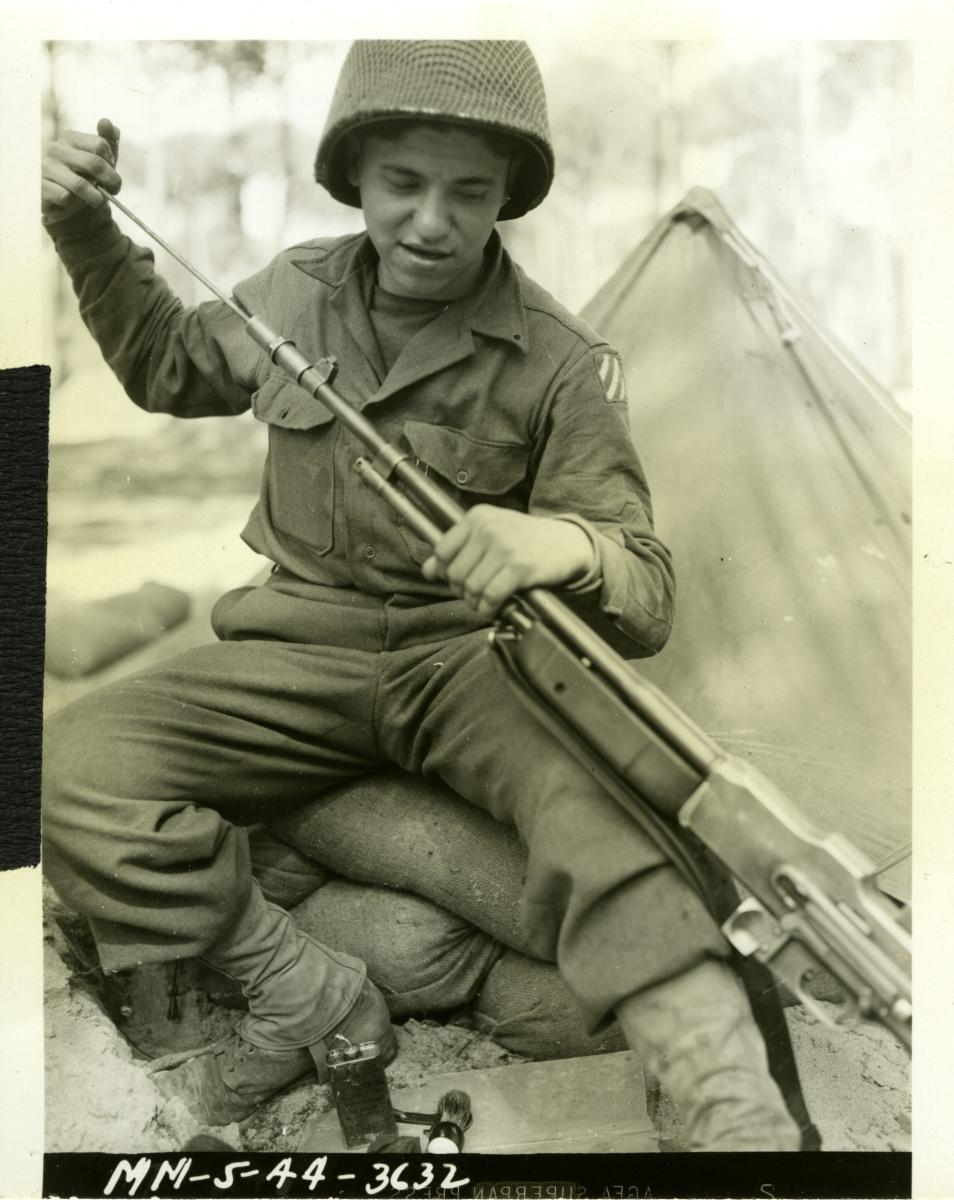
Interestingly, a distant relative of the author, traced through his mother’s matrilineage, ranks among the most distinguished Medal of Honor recipients from World War II. On June 8, 1944, Pfc. Alton W. Knappenberger (1923–2008) received the Medal of Honor from Lt. General Mark Clark for “conspicuous gallantry and intrepidity at the risk of his life above and beyond the call of duty.”
Knappenberger’s actions occurred during combat near Cisterna di Littoria, Italy, on February 1, 1944. After a German counterassault virtually annihilated his unit, Knappenberger seized a nearby Browning Automatic Rifle (BAR) and crawled across the snow-covered ground to an exposed knoll, where he surveyed the forces arrayed against his position.
Leaderless, alone, and without significant, prior combat experience, Knappenberger’s MOH citation (https://www.cmohs.org/recipients/alton-w-knappenberger) indicates that he received fire from machine-gun nests, grenadiers, and infantry, plus tank, artillery, and antiaircraft-gun emplacements.
“Knappie,” as he was known to his comrades-in-arms, systematically dispatched enemy targets for more than two hours, thereby single-handedly thwarting the advance of a company-strength contingent of German infantry. When American troops gained control of terrain facing the knoll, they found the bodies of 60 German soldiers.
Surprisingly, Knappie emerged from this engagement virtually unscathed. News of his battlefield exploits reached the high command, who were duly impressed. According to David Venditta, the division’s commanding general called Knappie a “one-man army.” The moniker stuck.
Seventy-two years later, Joe Mantegna recounted Knappie’s combat experiences during the 2016 National Memorial Day Concert. A video of that moving and highly informative tribute is archived at https://www.youtube.com/watch?v=oEyI2L8aGWM.
Enjoyed this story?
Montana has more layers than most people ever see.
Distinctly Montana finds them, four times a year. Subscribe and get every issue.









Leave a Comment Here