
The Wild Bunch Train Robber
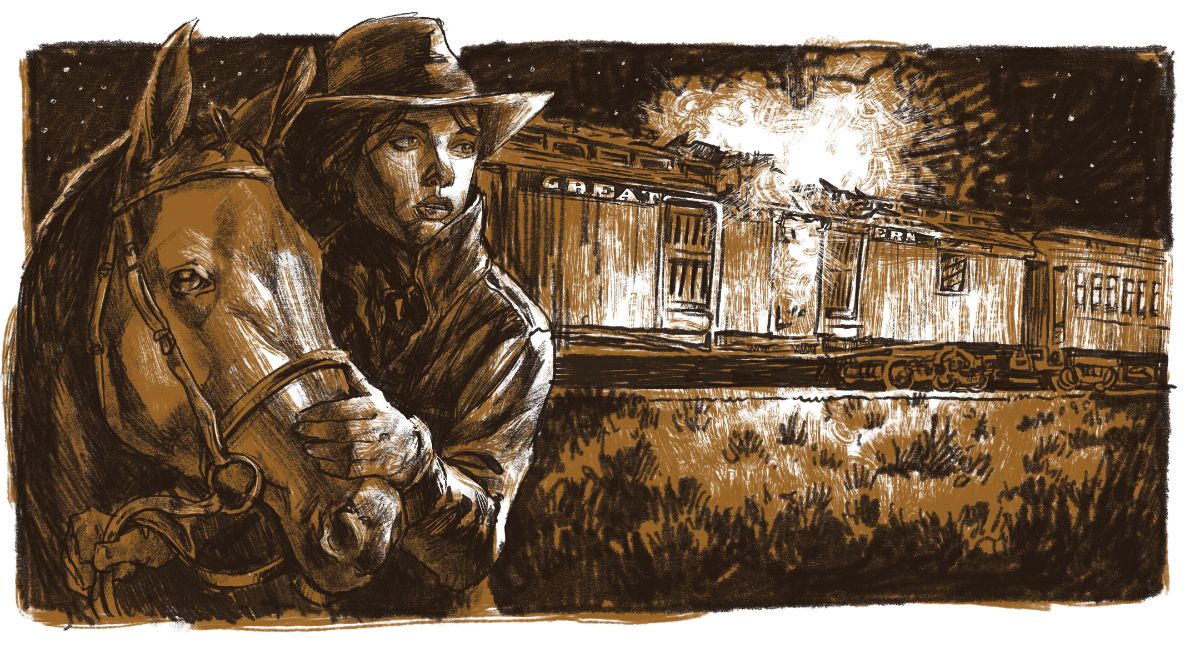
Just before midnight on July 3, 1901, the Great Northern Railway's Coast Flyer No. 3 eased out of the depot at Malta, Montana, its iron wheels grinding against the rails as sparks drifted into the warm prairie dark. Malta was a rough-edged cow town—false-fronted buildings facing a wide lane of rutted dust, hitchracks crowded with saddle horses switching their tails against the flies. The train's lamps glowed against the vast sweep of the plains as it headed west toward Wagner, another small cattle town cut from the same cloth.
Among the passengers that night was Ben "Blackie" Kilpatrick, a trusted hand of outlaw leader Butch Cassidy and his notorious Wild Bunch. Traveling with him were Harvey "Kid Curry" Logan and O. C. Hanks. They appeared to be ordinary riders bound for the next stop. They were anything but.
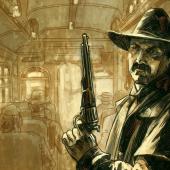
Less than six miles east of Wagner, engineer Thomas Jones felt the cold reality of a revolver pressed to his head. Logan had slipped aboard the tender and climbed into the engine cab, catching both Jones and fireman Mike O'Neill off guard. The command was simple: stop the train. With a gun leveled inches away, neither railroad man hesitated.
Logan ordered O'Neill down to uncouple the baggage and express cars from the passenger coaches. The fireman obeyed, hands trembling as steel pins were drawn and the cars separated. In the confusion, a nearby rancher, John Cunningham, rode toward the halted locomotive, sensing trouble. When he realized the train was being robbed, he wheeled his horse back toward Malta. A shot rang out. Kilpatrick's bullet struck the animal, dropping it mid-stride. Cunningham scrambled free and ran for town on foot.
Inside the coaches, curious passengers dared peek through the windows. Kilpatrick fired warning shots and barked orders for them to remain seated. A brakeman named Woodside and a traveling auditor hesitated and both were shot through the shoulder for their defiance.
The bandits forced their way into the express car and ordered the mail clerk and express messenger aside. Dynamite was set. The explosion shattered the night and ripped open the safe. According to the July 4, 1901, edition of the Great Falls Tribune, the robbers escaped with an estimated $50,000. Later audits placed the loss at $41,500—nearly all of it currency shipped from Washington to the Montana National Bank of Helena, much of it unsigned but still negotiable.
A fourth accomplice waited near the tracks with fresh horses and the explosives used in the heist. Dressed in trousers, boots, and a duster, the rider blended easily into the outlaw silhouette. Months later, authorities discovered the truth: the fourth rider was a woman.
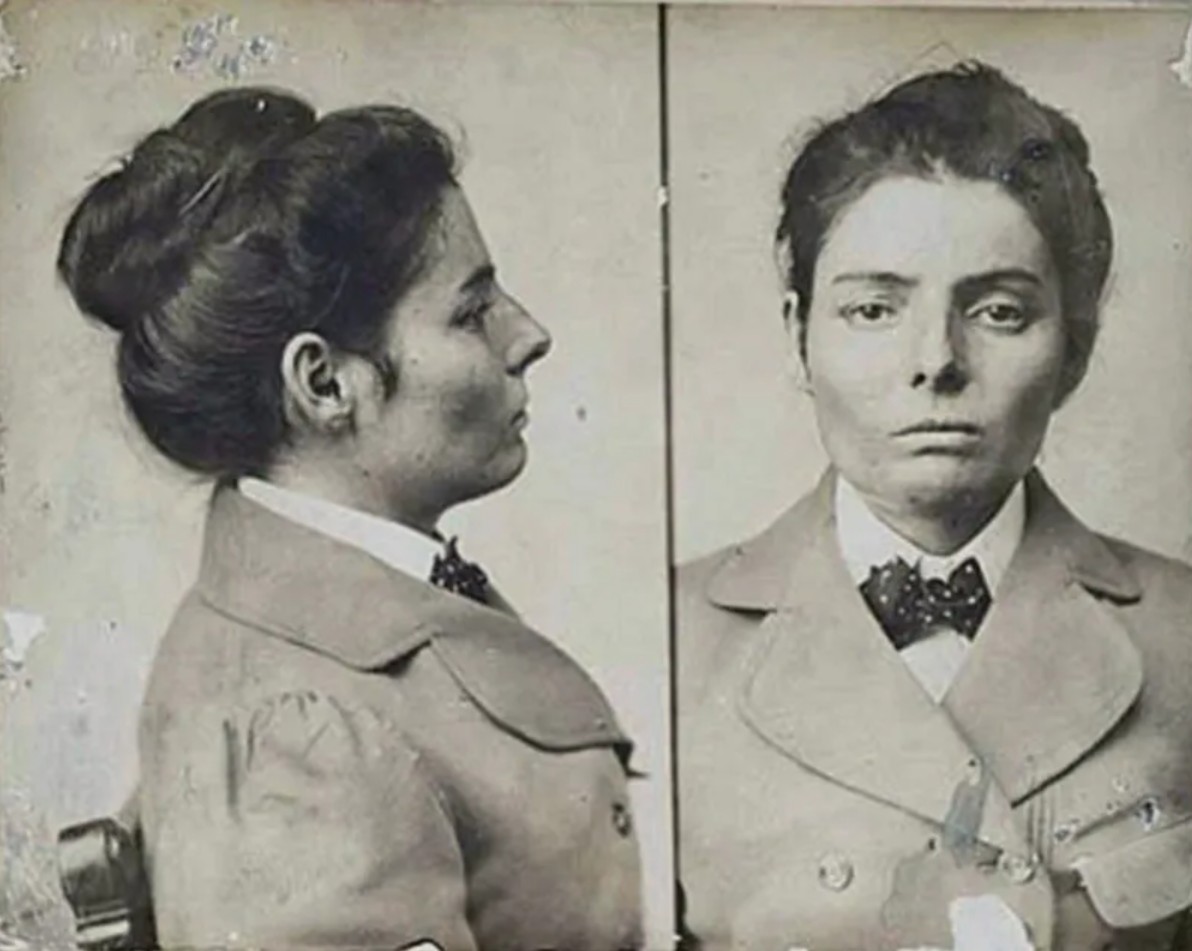
She was twenty-five-year-old Laura Bullion of Texas—Kilpatrick's lover and partner in crime.
Pinkerton detectives out of St. Paul were soon assigned to the case. Rewards were posted. Circulars described the suspects as seasoned desperadoes: George Parker better known as Butch Cassidy, Harvey Logan, and Harry Longabaugh, the so-called Sundance Kid. Yet in this instance, both Cassidy and Longabaugh were nowhere near the scene. No circular mentioned a woman.
Pinkerton files labeled Laura Bullion a "consort of criminals." Born October 4, 1876, in Mertzon, Texas, she was raised largely by her grandparents in Knickerbocker after a childhood shadowed by instability. The Southwest she grew up in was thick with outlaw legend. She came to know men such as Tom "Black Jack" Ketchum, Ben Kilpatrick, and William "News" Carver.
As a young woman, Laura moved to San Antonio and worked under the name Della Rose at a bordello run by Fannie Porter. The establishment was a known refuge for members of the Wild Bunch, including Cassidy and Harry Longabaugh. It was there Laura's life became entangled with Kilpatrick's. Loyal, discreet, and unflinching, she proved herself valuable to men who survived by secrecy.
How many robberies she aided in remains uncertain. What is certain is her role at Wagner.
In November 1901, stolen Wagner banknotes surfaced in St. Louis. Pinkerton agents traced them to Kilpatrick, who was arrested on November 5. He refused to identify himself. A key found among his belongings led police to a room at the Laclede Hotel, where they encountered Laura leaving with a suitcase filled with forged Helena notes. She was arrested immediately.
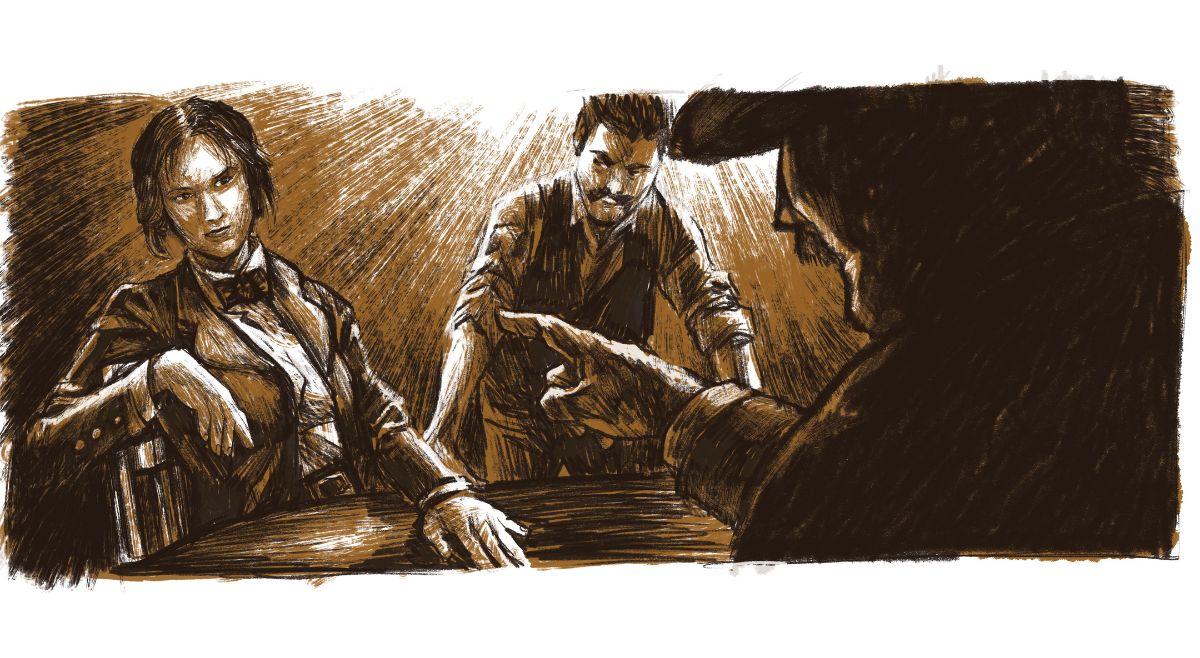
Questioning her proved futile. The St. Louis Republic remarked it was "like questioning the Sphinx." Superintendent Schumacher and Chief William Desmond pressed her for names. She responded with silence, yawns, and carefully rationed words. In a swirl of confusion, authorities briefly convinced themselves they had captured the Sundance Kid. A notebook in Laura's possession described Harry Longabaugh's appearance in detail. For a time, police believed Kilpatrick was Longabaugh. Telegrams from Texas sheriffs finally confirmed the prisoner's true identity: Ben Kilpatrick, the "Lone Texan."
Laura admitted to forging signatures on the stolen notes but denied involvement in the robbery itself. She registered at the hotel under a false name—J. W. Rose and wife. She maintained that the man she accompanied introduced himself as Cunningham. If she suspected more, she kept it to herself.
Newspapers sensationalized her story. Some claimed she led the robbery, firing recklessly beneath a mask. Others called her astonishing, staggering, unprecedented—a woman who dared ride with train robbers. The truth was less theatrical but no less extraordinary: she had taken part, disguised as a man, and helped facilitate one of the most daring robberies in Montana history.
In December 1901, Kilpatrick was sentenced to fifteen years in the Missouri State Penitentiary. Laura received five years in the Massachusetts Correctional Institution for Women. Even behind bars, her loyalty to Kilpatrick never wavered. They corresponded faithfully. She refused to testify against him.
In interviews, Laura described prison life with composure. "Prison life is what the prisoners make it," she said. She spoke of sewing, letter-writing on Sundays, and the monotony of days measured in routine. She admitted she had learned too much about the world's wickedness.
Released in September 1905, Laura immediately sought legal avenues to shorten Kilpatrick's sentence, even petitioning for executive clemency. When he was released in 1911—only to be rearrested on an old Texas charge—she followed him. The case collapsed for lack of evidence.
In March 1912, Kilpatrick attempted another train robbery in Texas. This time, express messenger David Trousdale killed him with a wooden mallet inside a railcar. Some speculated a third accomplice waited nearby with horses, as at Wagner. Laura's name surfaced in whispers, but no proof linked her to the attempt.
After 1912, she faded from the outlaw narrative. By 1918 she was living quietly in Memphis, Tennessee, claiming to be the bereft war widow of a man named Maurice Lincoln. She worked as a seamstress in department stores, her past buried beneath careful silence.
Laura Bullion—the only confirmed female participant in a Wild Bunch train robbery—died on December 2, 1961, at age eighty-five. She was laid to rest in Memphis Memorial Park Cemetery.
In life, she was a shadow rider in men's clothes, waiting with fresh horses in the dark. In legend, she became something rarer: a woman who stepped across the boundary of her era and into outlaw history.
Enjoyed this story?
Montana has more layers than most people ever see.
Distinctly Montana finds them, four times a year. Subscribe and get every issue.

















Leave a Comment Here