
Isle of Books Presents Last Best Books: A Mountain's Idea of Time, Black Robe Enters Coyote's World, and Miles City: Rollicking Cow Capital
A MOUNTAIN'S IDEA OF TIME
by Charles Finn
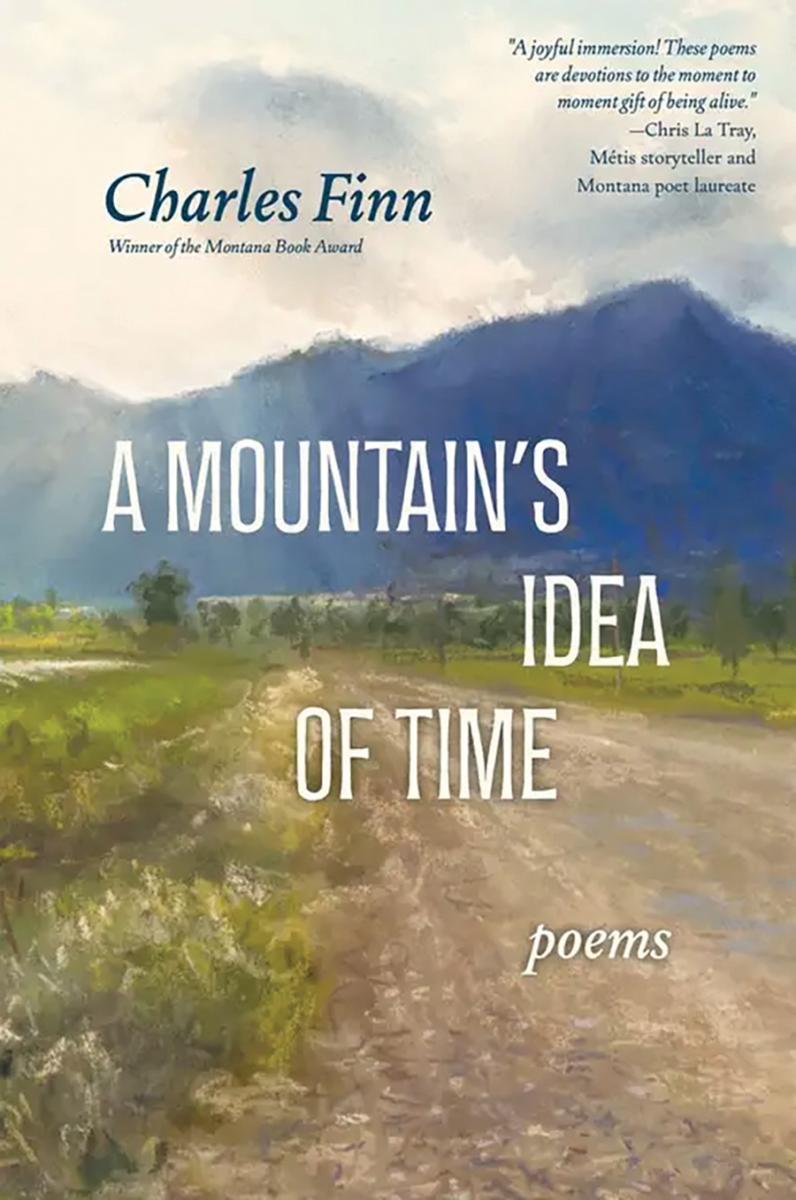
Charles Finn returns to the pages of Last Best Books with his latest collection of poetry, and we couldn't be more pleased to welcome him back. Following his Montana Book Award-winning On a Benediction of Wind, which we reviewed previously, Finn presents A Mountain's Idea of Time as an ode to slowing down and taking in the enduring wonder of nature.
Through lyrical poetry, Finn brings his readers along on drives down Montana's backroads, summer evenings spent at a cabin in the woods, and frequent reveries on the banks of the Milk River near his home in Havre. The poems themselves seem to slow down, and Finn's voice invites us to examine and discover, to feel the texture of moments spent in Montana's timeless natural spaces. He is a poet of the extraordinary ordinary, writing in simple yet evocative verse about the myriad everyday things that pass us by: "the creaky wisdom of trees" and "water striders performing their miracle." Compared to Mary Oliver—and deservedly so—his poems elevate the usual to the sublime while staying grounded in the here and now of Montana's Hi-Line country. Published this past July, this lovely volume features beautiful cover art from Montana artist Bobbie McKibbin and will serve as a reminder to appreciate all that encompasses our earth and to consider living by a mountain's idea of time.
BLACK ROBES ENTER COYOTE'S WORLD: CHIEF CHARLO AND FATHER DE SMET IN THE ROCKY MOUNTAINS
by Sally Thompson
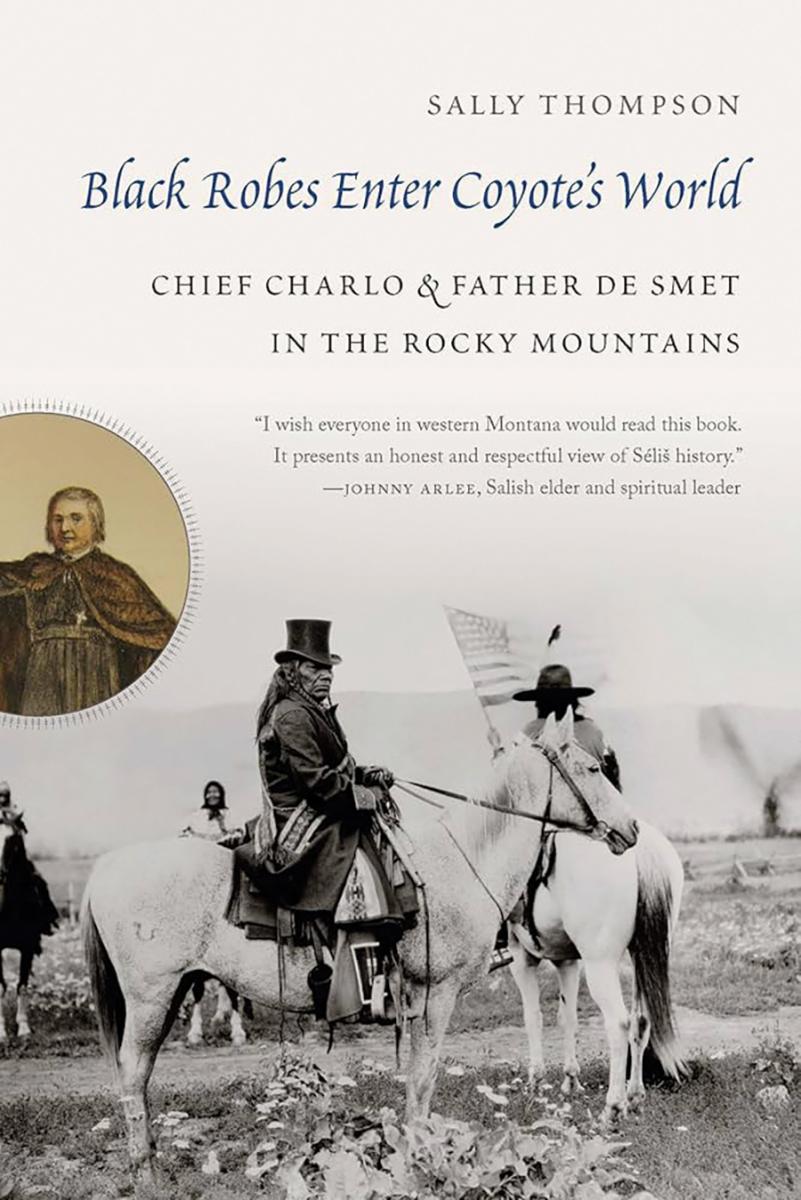
Missoula-based anthropologist Sally Thompson, whose Disturbing the Sleeping Buffalo we previously reviewed and who also has a story in this issue, has written a dual biography tracing the parallel lives of Chief Charlo of the Bitterroot Salish and Father Pierre-Jean De Smet, the Belgian-born Jesuit missionary whose work helped reshape the Rocky Mountain West. The book opens at a Potawatomi mission on the Missouri in 1839 and follows Charlo from his birth in 1830 at the Place of Wide Cottonwoods—what is now Stevensville—through the seasonal rounds that defined Salish life: north to dig roots and fish for bull trout in the Missoula Valley, then east across the Continental Divide to hunt buffalo on the plains.
De Smet, meanwhile, spent less time among his "beloved Flatheads" than his reputation suggests. He traveled constantly between the Pacific and the Rockies, mapping routes, documenting resources, and writing popular accounts that encouraged white settlement westward. Thompson refuses simple hero-and-villain frameworks. The Salish welcomed the Black Robes in the 1840s, hoping for spiritual power and protection. By Charlo's death in 1910—just before the Allotment Act stripped away half the tribe's treaty-guaranteed lands—he had come to curse the day white immigrants entered his country. The book recently won a Will Rogers Medallion Award and is a finalist for two High Plains Book Awards. Highly recommended for anyone interested in the history of the Bitterroot Valley and the forces that shaped it.
MILES CITY: ROLLICKING COW CAPITAL OF THE MONTANA FRONTIER
by Will O'Neal
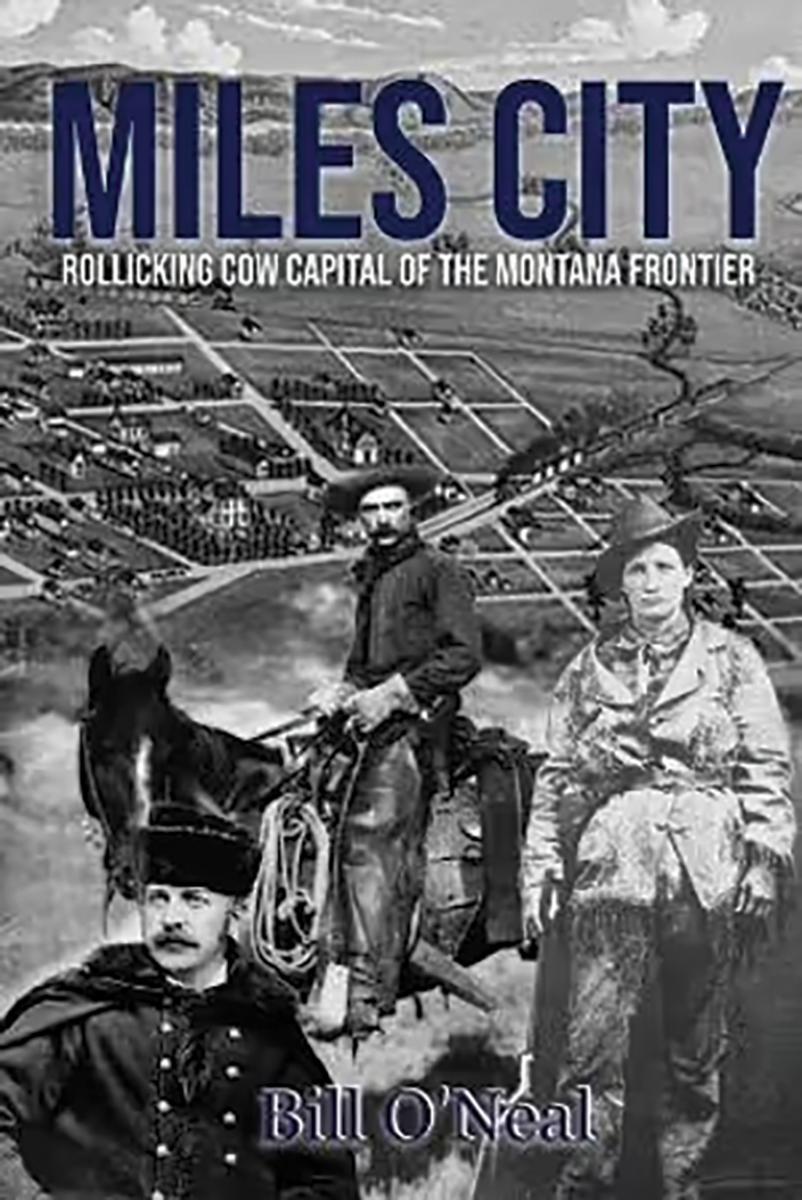
Former Texas State Historian Bill O'Neal brings his considerable expertise to Miles City, Montana—the self-proclaimed "Cow Capital of the World"—in this thoroughly researched and handsomely illustrated history. The volume traces the town's evolution from a military garrison following the Battle of the Little Bighorn through its heyday as a cattle empire hub, illustrated throughout with striking black-and-white photographs of the town and its denizens as they were.
O'Neal's accessible, clear writing style makes complex frontier history a pleasure to follow, whether chronicling dark chapters like the "Stuart's Stranglers" vigilante killing of 19 supposed cattle rustlers, or celebrating Miles City's fun-loving spirit that gave birth to the World Famous Miles City Bucking Horse Sale, one of the most legendary Western gatherings in the country. The cast of characters reads like a Western hall of fame: Granville Stuart, Theodore Roosevelt, John Philip Sousa, and Calamity Jane all make appearances in this sprawling narrative. O'Neal spent nearly two years researching in Miles City's museums and libraries, conducting interviews with local residents, and the depth shows. His nuanced prose captures both the violence and vitality of a frontier town where Texas longhorns, railroad money, and rough-hewn ambition collided on Montana's eastern plains. Essential reading for anyone interested in the authentic American West, and how Montana is perennially at the center of it.










Leave a Comment Here