
Montana Media: Unsung Spielberg on a Montana Canvas
It is impossible to deny the indelible influence the films of Steven Spielberg hold on American movies and culture. Their matchless level of archetypal absorption has, correspondingly, led to a kind of devaluation of Spielberg as an artist; it's the old "crafter of popular entertainments cannot be truly skilled or deep" line of thinking. Naysayers complain particularly about the director's tendency toward broad gestures and sentimentality, which certainly isn't deniable. But the aforementioned elements, I would argue, don't automatically count as flaws in and of themselves, especially if the storyteller has the willingness to carry them through sincerely. Maybe it's just because I've become more embracing of sentiment as I've aged. I certainly went through a phase in adolescence where I thought I needed to discard Spielberg movies like so many childish things in order to appreciate Real Cinema. It turns out Real Cinema needn't deny pleasure, or earnest depth of feeling.
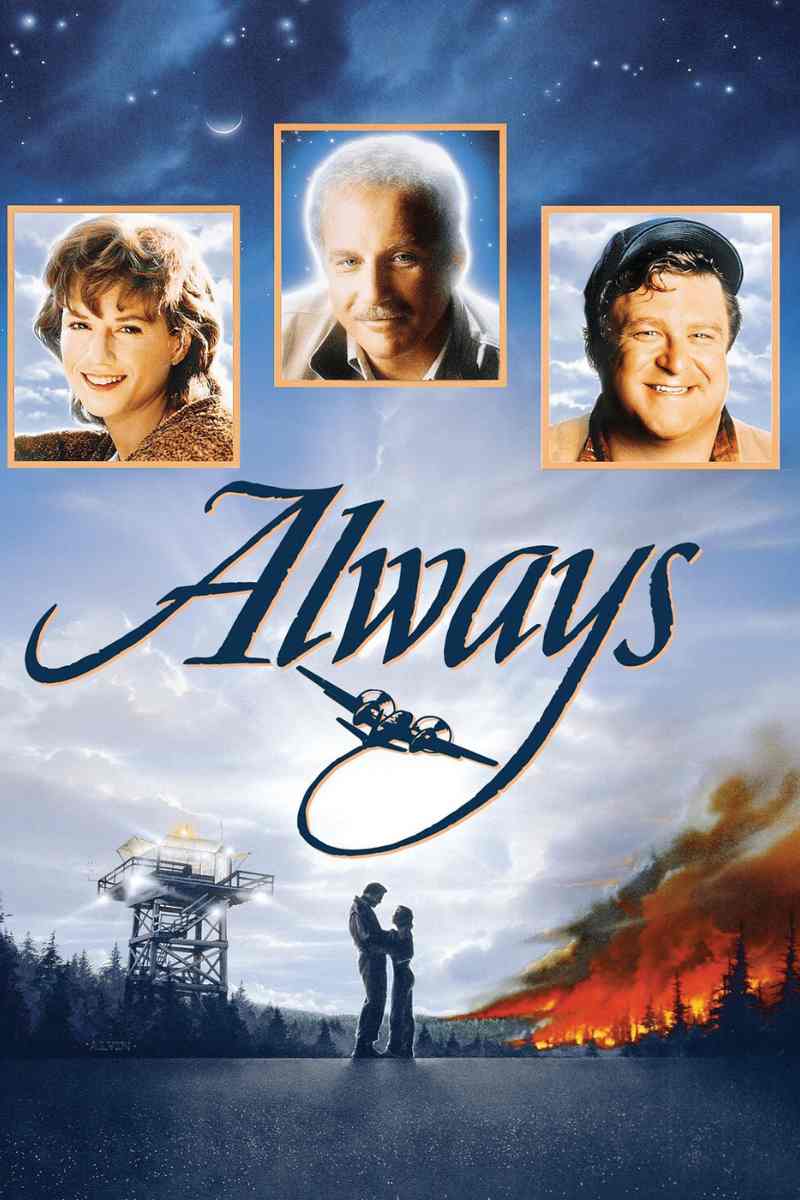
Spielberg's romantic fantasy Always (1989) was largely dismissed as disposable and hokey at the time of its release, and underperformed commercially. Sandwiched as it was between Indiana Jones and the Last Crusade (1989) and Hook (1991), it isn't surprising that it would subsequently be plopped into the tier of secondary Spielberg features. Nevertheless, the movie has acquired fans over time, and in the avalanche of sheer ugliness that is our current reality, the experience of watching it feels like a soothing tonic. And the Montana landscape where it was filmed, as well as implicitly set, grants it a particular resonance for Treasure State viewers, especially during the summer fire season.
The story centers around Pete Sandich (Richard Dreyfuss, in his third collaboration with Spielberg after Jaws [1975] and Close Encounters of the Third Kind [1977]), a hotshot aerial firefighter who serves as an inspiration to his fellow pilots, and a source of anxiety to his beloved girlfriend Dorinda (Holly Hunter), who works as an air traffic controller on the air base. Alas, Pete takes one risk too many and is killed saving his buddy Al (John Goodman). Pete's spirit doesn't immediately cross over to the great beyond, however. He's informed by an angel called Hap (the great Audrey Hepburn, in her final film appearance before her death in 1993) that he has the opportunity to serve as a guiding spirit to an up-and-coming pilot named Ted (Brad Johnson), to help another as he himself was helped in his own life. Pete's mission becomes more complicated as a romantic connection begins to form between the klutzy yet good-hearted Ted and the grieving Dorinda. Can Pete help her to move on before allowing himself to do the same?
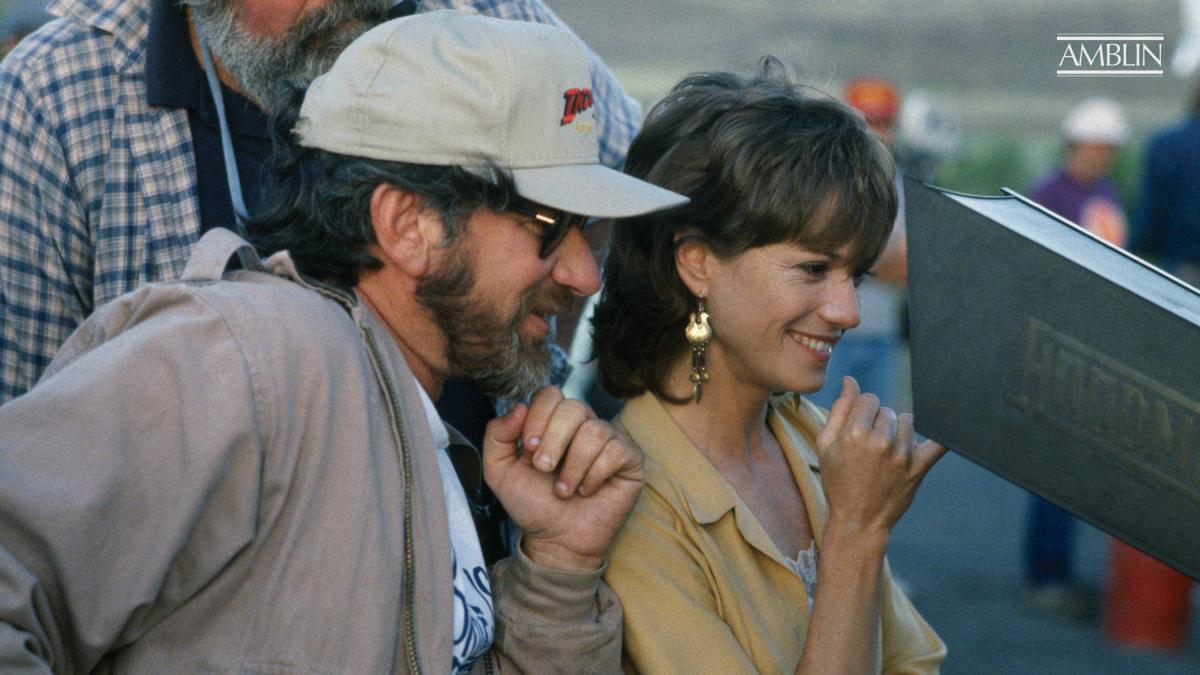
Always was a project Spielberg had been wanting to pursue a long time before it came to fruition. The film is a remake of one of the director's favorite childhood movies, Victor Fleming's A Guy Named Joe (1943), which starred Spencer Tracy as the pilot, Irene Dunne as his beloved, and Van Johnson as his flight protégé. The aviators are serving in WWII in that movie, and the ethos of that era of studio filmmaking enthuses Spielberg's movie; it's an enthusing influence throughout his oeuvre, from the Indiana Jones films to 1941 (1979), a top candidate for the worst film he's ever made. The Always milieu is aerial firefighting in the American West, but the characters could be plugged into a classic Hollywood picture and fit right in (there are even instances of "ah shucks!" and "gee whizz!" being spoken unironically). In a 1989 interview, Spielberg said, "I like the period because it was naïve and it was somewhat innocent, and it represented the growing pains of the 20th century."

While rewatching the film, I was struck by its resemblance to Howard Hawks's Only Angels Have Wings (1939). That movie centers around an airmail company operating in an isolated South American town surrounded by steep mountains, with Cary Grant as the cynical flying ace with a gallows sense of humor, and Jean Arthur as the woman who is both aghast at the constant danger to which he and his coworkers submit themselves and impressed by their willingness to keep doing it. Holly Hunter's Dorinda is fittingly updated to modern sensibilities—she can fly planes as well and has a charming tomboyish energy—but she is spiritually akin to Arthur as the rare woman in an overwhelmingly masculine professional space who loves a man doomed by his commitment to the job he does so well. Probably the most beautiful shot in the entire film (courtesy of cinematographer Mikael Salomon) is a close-up of Dorinda, silently absorbing the news that Pete is preparing to depart on what will be his final flight, the blazing gold of the rising sun resting atop the indigo blue of the fading night sky behind her. It's a single wordless encapsulation of love and life being inseparable from the reality of death and loss.

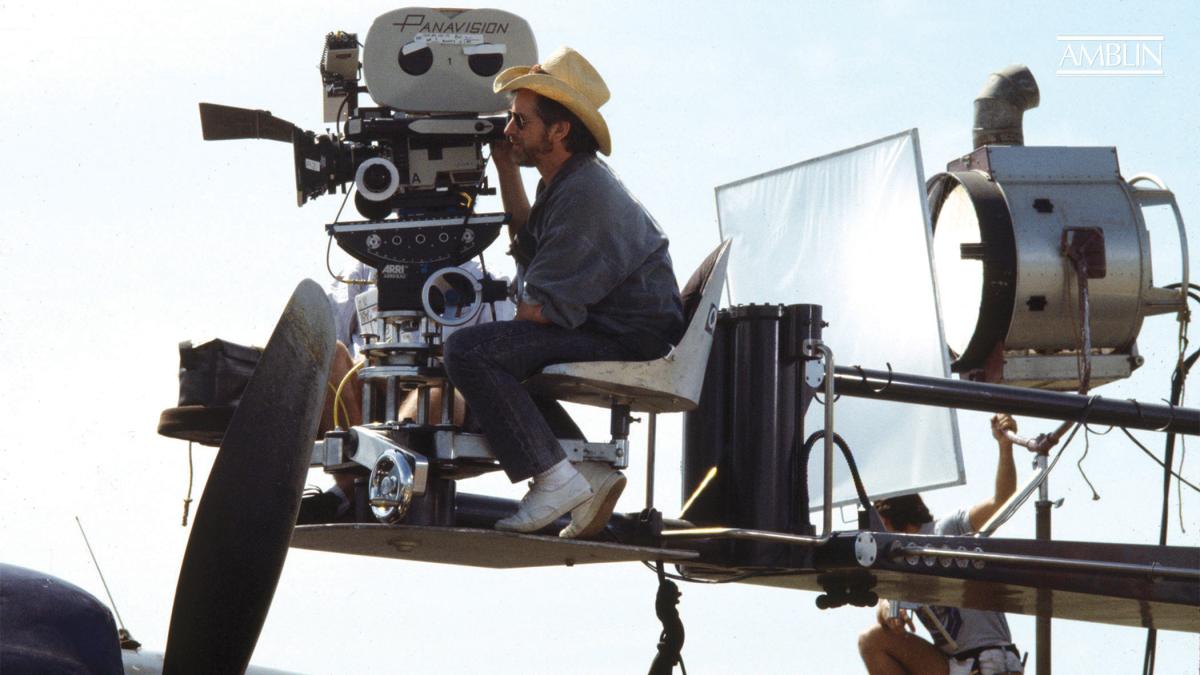
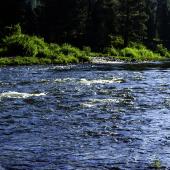
The film was shot around Libby, Montana, as well as in portions of the Kootenai National Forest (though the scenes that are ostensibly set in Colorado were shot in Washington state and soundstages were used for the interiors). Several hundred locals from Libby served as extras in some of the bigger scenes on the air base, and the name of the city is briefly mentioned at one point during a crucial radio conversation—hence, I feel one can assume that the action takes place in Montana, albeit in magic movie-land Montana. Spielberg requested permission from the Forest Service to send out crews to capture aerial footage of the massive wildfires in Yellowstone National Park in 1988 to use for the film. Later, a few additional forest fire scenes were shot in areas of the park that had already burned; they were re-burned (distressing as this is to contemplate) with the supervision of the special effects team, who rigged pre-burned trees to light again on cue. But Montana provided the element of water in addition to that of fire. The lake that appears at the beginning of the movie and that features significantly in the conclusion was Bull Lake, located south of Troy.
In the midst of a long hot summer, it might do well to give Always a try, especially if you're feeling lovelorn or otherwise in need of reassurance. Earnest vindication of love and the importance of a life lived in service to others may be out of fashion, but when did fashion dictate actual merit? And when the setting is as grand and enduring as northwestern Montana, what is there lacking?
Enjoyed this story?
Montana has more layers than most people ever see.
Distinctly Montana finds them, four times a year. Subscribe and get every issue.








- Reply
Permalink