
A Ski Lodge with a Runway: Bozeman's Airport Expands
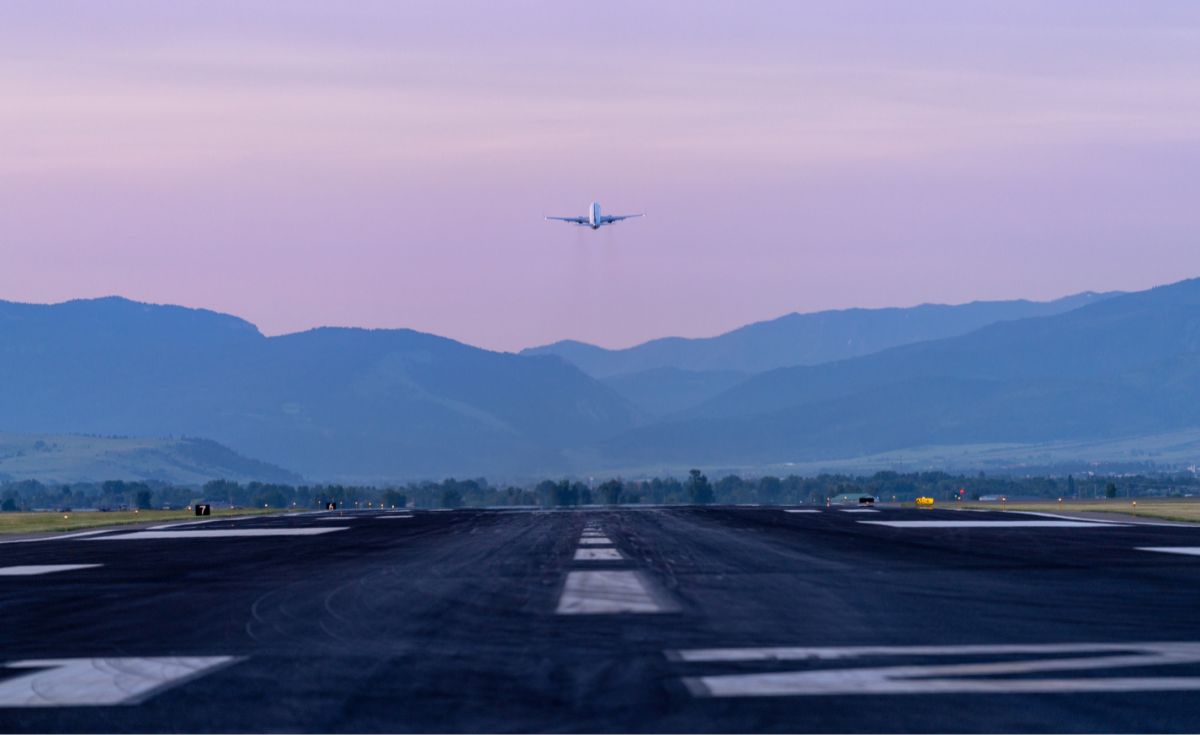
Bozeman Yellowstone International Airport is the busiest airport in Montana by a fairly wide margin. In fact, if you arrived in Montana by air last year, there is a 2-in-5 chance you flew into Bozeman. In 2025, a record 2.8 million passengers passed through BZN, disembarking into the concourse to hug grandchildren, shake the hands of colleagues, or, if they were lucky, set off on a Montana adventure. Some of them were arriving in Montana for the first time, and the airport terminal is the first thing they see of the Treasure State from the ground.
What will that traveler's first impression of Montana be, then? An institutional labyrinth of junkspace, the word Dutch architectural theorist Rem Koolhaas coined for the continuous, air-conditioned interiors of modern life, of which the stereotypical airport is the prime example? Or something that feels like Montana?
And now, as the airport undertakes a vital expansion, how will they maintain uninterrupted passenger flow while preserving the essential Montana character of the place?
That's a challenge now being undertaken by Martel Construction and Hennebery Eddy Architects even as the flights to and from our beautiful state continue unabated.
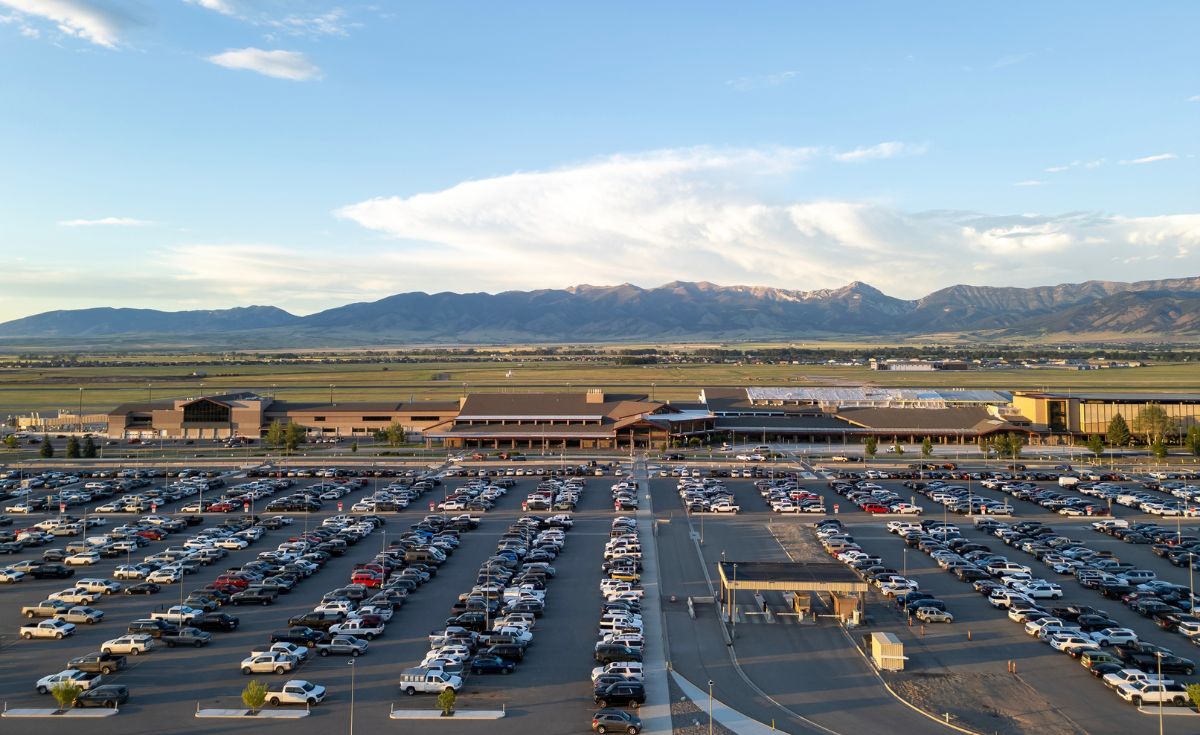
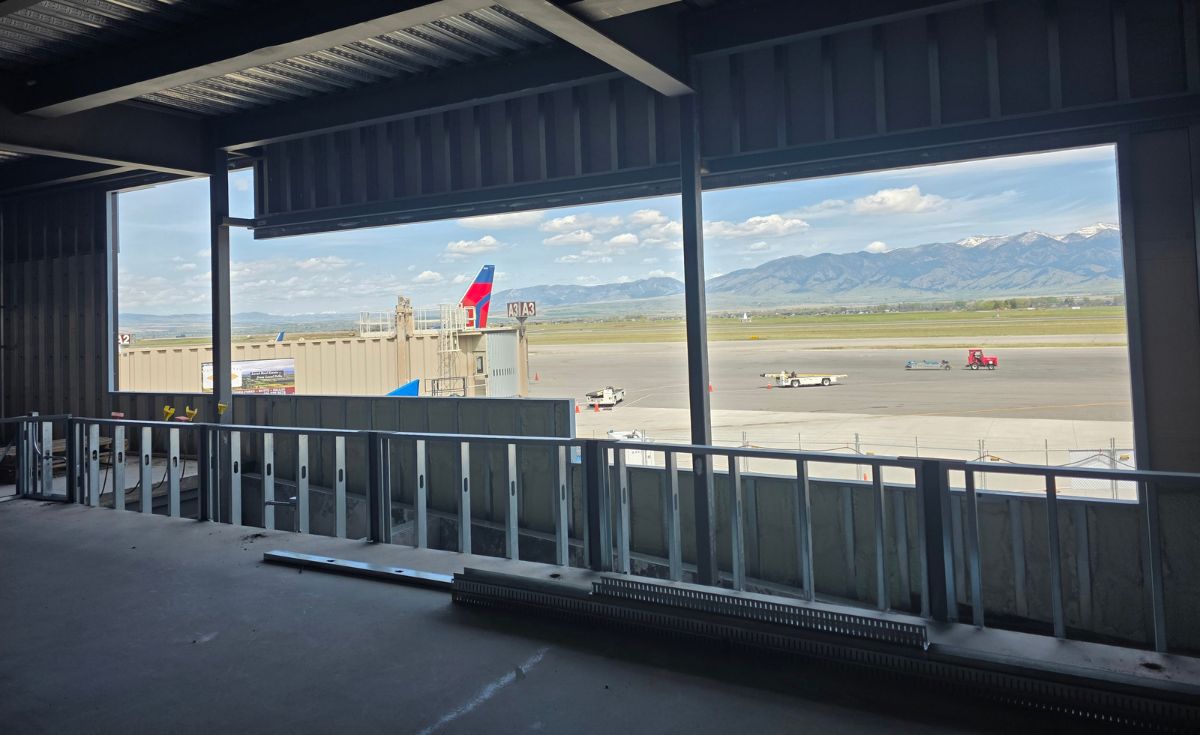
The main part of the expansion, the largest in the airport's history, grows the terminal from 12 gates to 15. Past expansions just added on, but this one has to wrangle the challenges of renovating a fully operating airport. The baggage must be routed through the network of conveyor belts and sensors without interruption, and the passenger's experience must change as little as possible for their convenience. Complicated systems like heating and cooling, fire suppression, and the PA have to stay operational while adjacent areas are taken down and reassembled.
The goal, in the words of Travis Kabalin, project manager for Martel Construction on the East Terminal Expansion Project and the man whose task it is to keep it all running, is "essentially allowing the airport to continue to function with minimal owner and passenger disruption." Even the smallest handover is involved: "A lot of planning goes into just turning over a small area for new baggage claim." And the hardest part is one most travelers would never guess, aligning the new construction with the old. "It would appear straightforward since most of the existing construction can be seen," Kabalin says, "but each area has its own challenges based on construction type and the era it was built."
And as ever in Montana, winter will have its say. "We also schedule around seasons," Kabalin told us. "In the winter, heating can be disrupted; in the summer, we can disrupt some cooling."
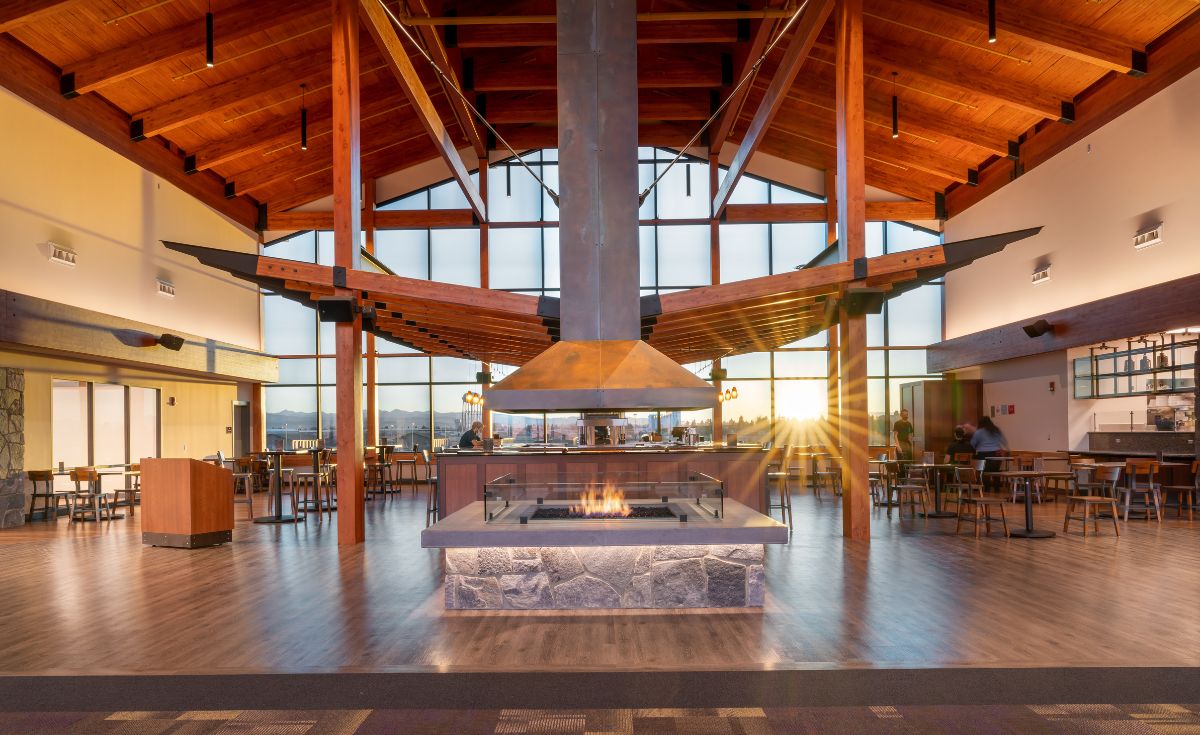
In addition, Kabalin says, the steel and glulam (glue-laminated wood) beams that give the addition its signature Western-lodge aesthetic can only be delivered to a single side of the building, squeezed between a pair of 200-ton cranes and a 90-ton crane competing for space. Coordinating those drop-offs is as delicate as dance choreography, but the result will be a newly renovated Great Hall featuring expanded dining options (and with a stunning view of the Bridger Mountains), as well as three new baggage carousels and an expanded security checkpoint. In the meantime, the primary inconvenience to arriving passengers is a temporary reduction from three working baggage carousels to two, which careful planning has ensured will barely be detectable.
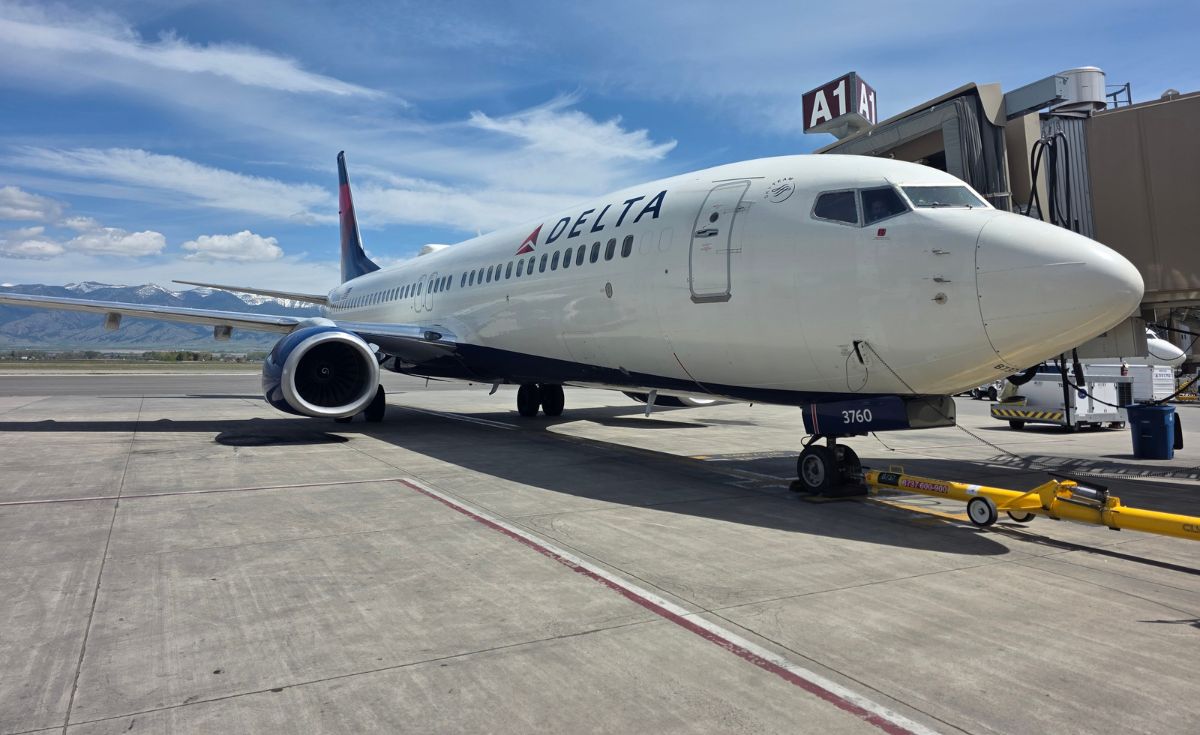
Brian Sprenger, president and CEO of the Bozeman Yellowstone International Airport (BZN), has loved aviation and airports all his life. His aviation career began at Gallatin Field (now BZN) in 1983 cleaning airliners before moving into a 14-year career with Northwest Airlines as a customer service agent in Bozeman and Honolulu, followed by Glacier Park International Airport station manager and finally the manager of education programs at the airline's headquarters in Eagan, Minnesota. Brian returned to Bozeman in 1999 as the assistant airport director at Bozeman Yellowstone International Airport and has served in his current capacity since 2009.
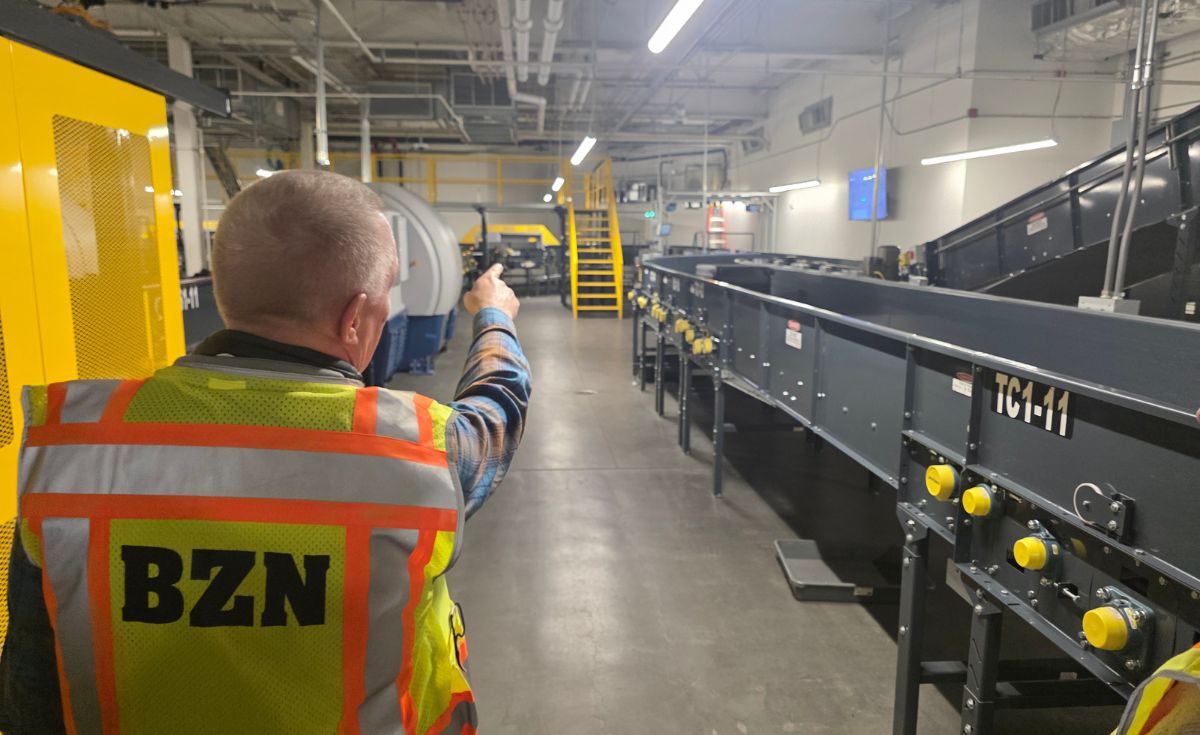
While on a tour of the facility, Sprenger told us that baggage presents unique challenges in Gallatin County. In the winter, when folks from all over the world fly to the destination to ski, the residue of explosives used in avalanche mitigation sometimes makes the machines that "read" luggage nervous. In summer, the fertilizer used in the area's golf courses does the same. As we watched the baggage get routed into the vast network of conveyances, a red light flashed, indicating that the machine was rerouting it for a second look. As bag after bag moved through, another flashed.
"Two that close together is rare," Sprenger said with a chuckle.
Both pieces of luggage passed the discriminating baggage system's closer inspection a moment later.
The baggage system, when completed, will have 3,000 linear feet sized for 15 gates, and will handle 1,400 bags per hour.
Maintaining this high level of customer service, efficiency, and logistical hygiene while under renovation may seem daunting, but even still, as Sprenger notes with pride, "Bozeman is the only airport where skis start and end at the same point." BZN is already very Montana in how it runs, so the crucial work now is to make sure the building itself continues to feel and look Montana.
Martel Construction is the general contractor for the project and they are no strangers to working on the Bozeman Yellowstone International Airport. Founded in 1960 by German-born carpenter Emil Martel and his son Bill, the Bozeman-based company has been doing expansion work on the airport since building the original terminal in 1977. Because a working airport comes with its own share of risks, Martel brought in a third-party fall-protection specialist to train some 130 workers in the specific safety requirements of building around live passengers. The result is a rare kind of continuity: the same local builder shaping the same terminal, expansion after expansion.
The finished terminal is targeted for 2030. But its shape is already clear, and it answers the question the airport asked itself. When the old sections come down, their original wooden beams and stonework aren't hauled off. They are salvaged and worked back into the new construction, the lodge taken carefully apart and put back together to be, as Kabalin told us, "a place for travelers to gather." A room in which to sit and appreciate the splendors, natural and otherwise, of Montana.
So consider again that first-time visitor, stepping off the jet bridge into Montana. Before they arrive at their grandchildren's house, or the office of their colleague, or even the beautiful fly fishing lodge they can't wait to get to, they will see the inside of an airport. This is something to which they have, at best, become inured. At worst, it's something to be dreaded, a labyrinth of gates and attendant irritations. They could be forgiven, in short, for expecting junkspace.
What they will find instead, thanks to the visionary leadership of the aviation-minded folks at BZN, Martel Construction, and Hennebery Eddy, will be wood, stone, and a wall of Bridger Mountains welcoming them before they reach the parking garage announcing that they have arrived, but not just anywhere, not just among any indifferently assembled mountains and prairies and rivers. No, they will have arrived, definitively and without question, right in the heart of Montana.

























Leave a Comment Here