
Journey Through History at Montana's Newest State Park: Judith Landing
Looking for a hotbed of history? Go find yourself a confluence. When one of Montana’s great rivers or streams tumbles into another, it creates an ecosystem that draws diverse wildlife, abundant fish, geological oddities, and for the last few millennia, people. From the spot just over the North Dakota border where the Yellowstone River joins the chocolate milk waters of the Missouri, to the recently-restored Milltown State Park junction of the Blackfoot with the Clark Fork, these hydraulic crossroads have been the vortex of several of the state’s most significant historic events, both natural and man-made.
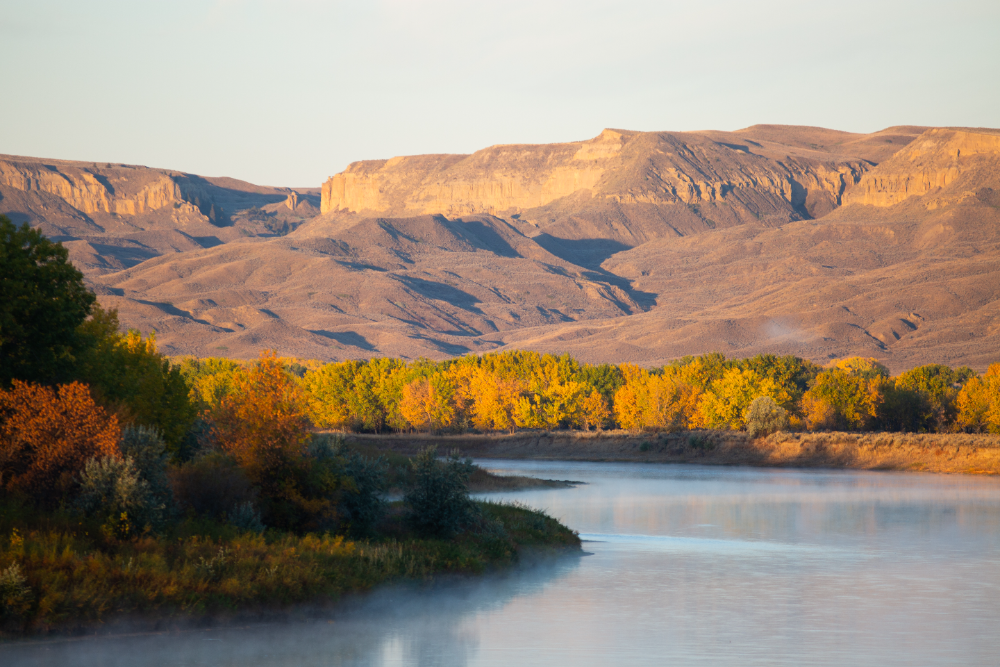
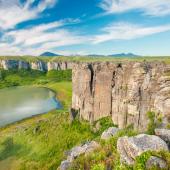
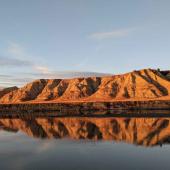
This summer one of our most interesting and beautiful confluence areas gets its proper recognition as Judith Landing becomes Montana’s newest state park. Fifty miles north of Lewistown, the Judith River joins the Missouri as it flows eastward among the White Cliffs, coulees and cottonwoods along the Upper Missouri River Breaks National Monument. For thousands of years, the spot has been a popular take-out for those traveling the river, from today’s kayak-wearing recreationists to 1880s steamboats to indigenous people crossing the river in buffalo skin bull boats.
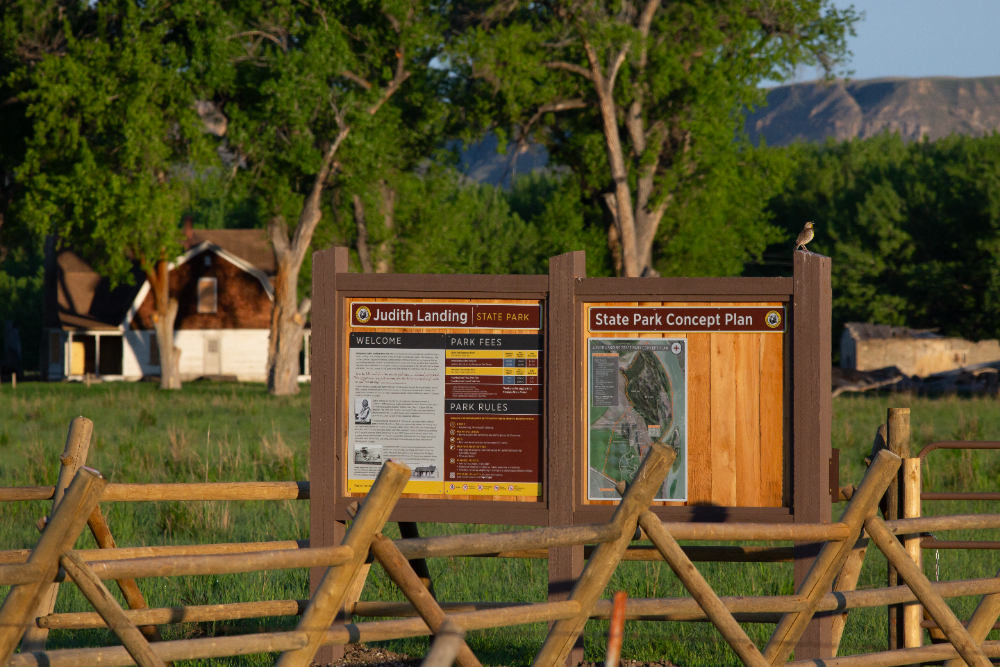
Judith Landing campground, along the north riverbank, has eight sites which get plenty of use from fishermen, floaters and campers through the summer. Across the bridge on the south bank is the site of the new state park, comprising a 109-acre parcel acquired by the state in 2025. It includes the Judith Landing Historic District, which contains the remnants of several structures from various periods in the confluence’s history, and encompasses notable historic events that date back, oh, 150 million years or so.
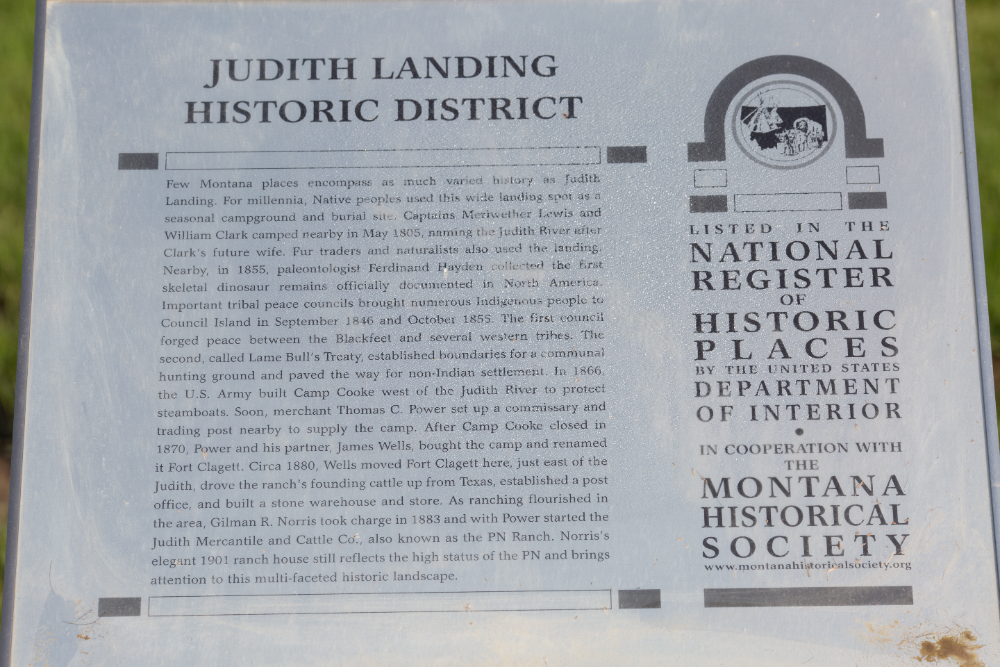
Ferdinand Hayden, the pioneering geologist noted for his role in the first scientific exploration of the upper Yellowstone, dug up what are widely considered the first dinosaur fossils uncovered in North America, right here at Judith Landing in 1854. The hadrosaurid teeth he found are believed to be from the late Jurassic period, and many more fossils of these duck-billed dinosaurs have been since found across central and eastern Montana.
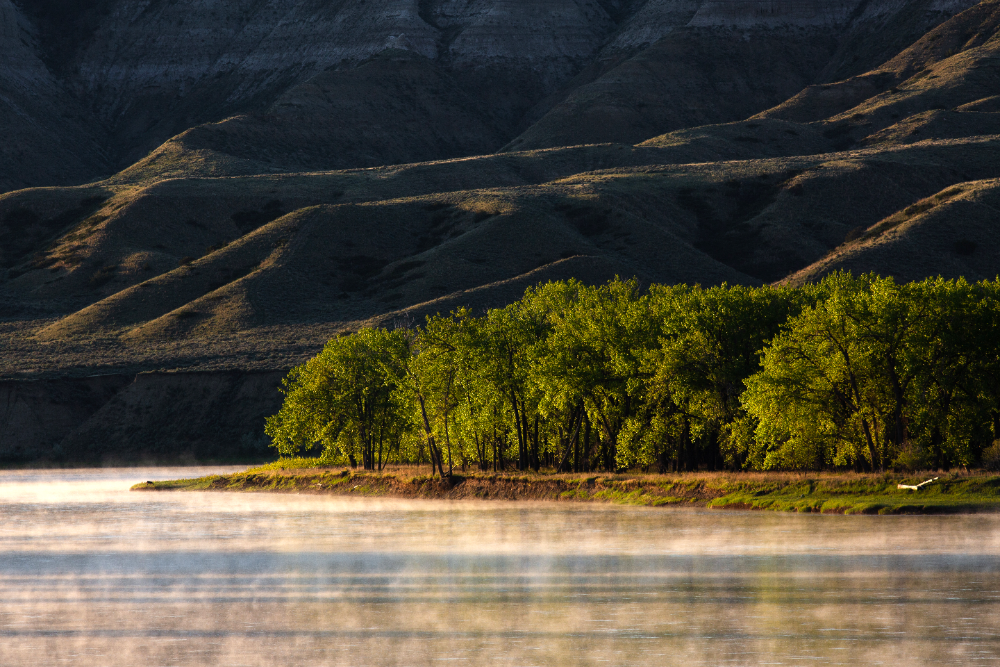
For thousands of years, the confluence was favored as a hunting camp for indigenous peoples following the movement of game and seasonal availability of plants as they traveled through the cycle of their year. The abundant fish, antelope, buffalo, birds and other wildlife of this lush ecosystem provided resources that were otherwise pretty scarce in the parched badlands terrain. By the 1700s this was all Blackfeet territory, and that tribe fought to protect their land from the increasing number of fur traders who had begun drifting down from Canada.
Judith Landing’s location on the Missouri River pretty much guaranteed a visit from Lewis and Clark. The explorers added another layer of historic significance to Judith Landing when they camped nearby in 1805, and William Clark was so taken with the beauty of the place he named the Judith River after his wife Julia.
As with so many resource-rich areas of Montana, the Judith-Missouri confluence became a shared area among tribes in the northwest, even though it lay firmly in Blackfeet territory. Council Island was the scene of a tribal council in 1846, where the Blackfeet negotiated a treaty with several tribes in the region to establish a peaceful coexistence. In 1855 came the Lame Bull Treaty at the same site, instigated by Isaac Stevens on behalf of the Northern Pacific Railroad. This entailed establishing a common hunting ground for the Blackfeet, Nez Perce, Salish and Pend d’Oreille tribes, thus opening up land and clearing the way for the railroad to continue its westward expansion.
Colonial history takes over here, as settlers and gold seekers began moving into the area after the Civil War. The Army established the territory’s first military post, Camp Cooke, near the mouth of the Judith River in 1866. The intention was to protect steamships and overland travel to Fort Benton from Indian attacks, but the remote location made it difficult to maintain the camp. It was abandoned in 1870, and you can still see some rubble remains at the site if you’re intrepid enough to reach it.
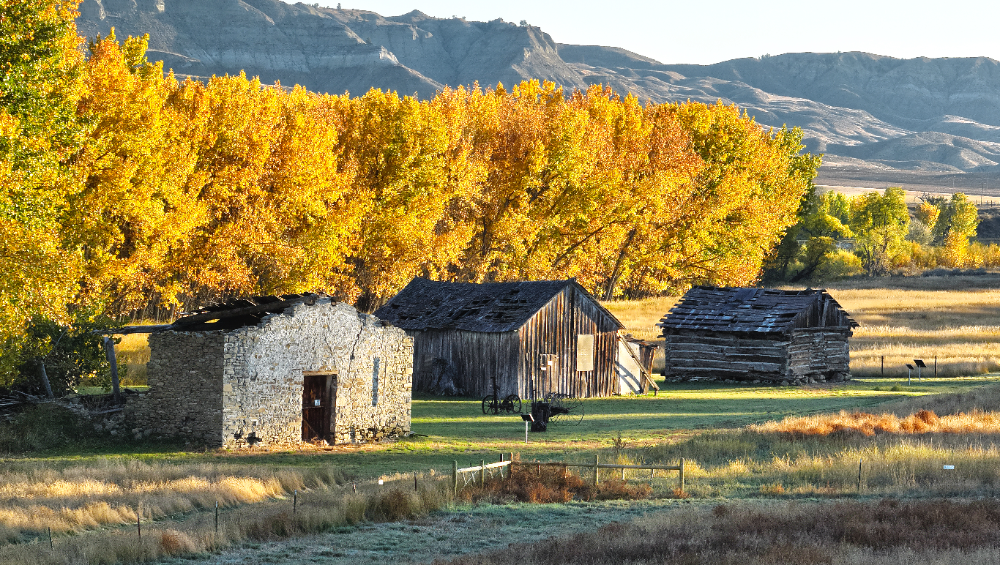
An important development in Judith Landing’s history grew out of the doomed outpost. Thomas C. Power had built a trading post near Camp Cooke to provide commerce for soldiers, and when the camp shut down he bought the buildings to expand his commercial foothold. He opened a post office and ran a shipping business for a short time, sending cattle, beaver pelts, buffalo hides and other goods to St. Louis. A large limestone and granite store/warehouse built in 1880 held his inventory of goods, and he did a fair bit of business with area ranchers and stockmen. By then the little community was known as Judith Landing.
During its heyday, the warehouse had been run by Gilman Norris, and Power teamed up with Norris to build a ferry across the river in 1880, known as the PN Ferry. It operated until 1908. In 1883 the pair expanded their world domination plans and formed the Judith Mercantile and Cattle Company, establishing the Power-Norris Ranch, known as simply the PN Ranch. The enterprise soon became one of the largest in central Montana. Judith Landing grew along with it, soon boasting a saloon, a hotel, a store, a mail station, stables and sheep sheds. A few years later Power would make an unsuccessful run for governor of the new state of Montana, and went on to become one of our first two U.S. senators.
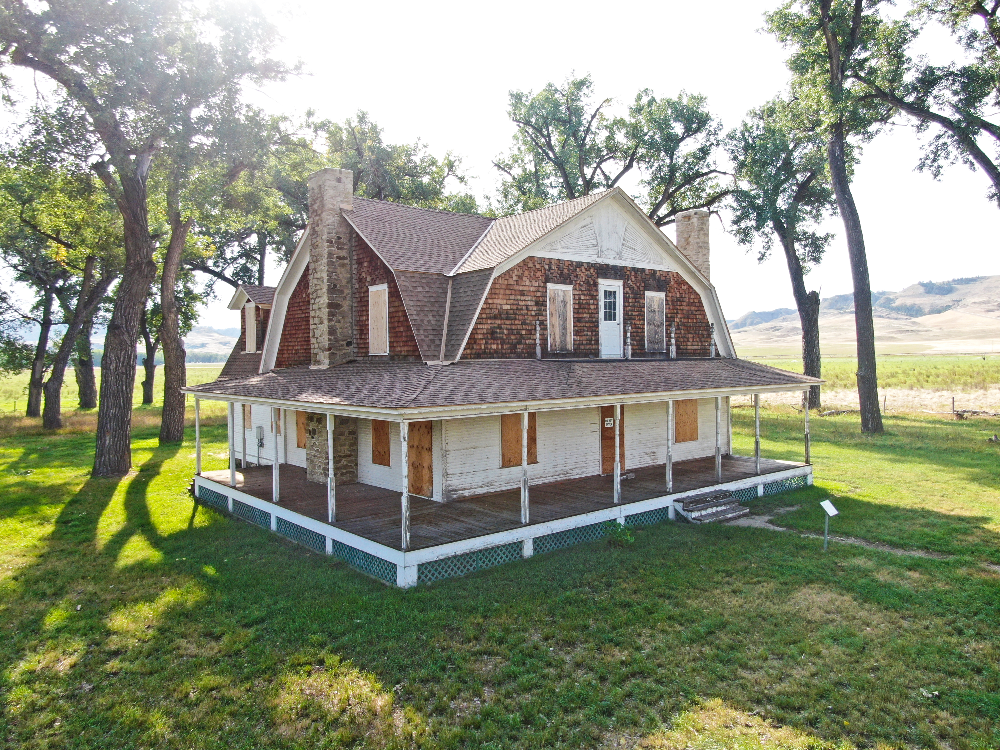
The remnants of the warehouse are still there, along with a blacksmith shop and a few other bits and pieces of the old Fort Clagett compound. And of course there’s the crown jewel of the PN Ranch, the Norris Ranch House, nestled among a copse of towering cottonwoods where it was built by Norris in 1901 for $6,000. The spacious, Craftsman-style house features a wraparound porch, second-story balcony and a three-story stone fireplace. Sadly, Norris’s wife Pauline didn’t live to enjoy their beautiful home. She succumbed to typhoid in 1903 and Norris was left to raise their three children alone. He remarried in 1908, sold his cattle, and left Judith Landing to manage a hotel in Seattle.
The PN Ranch, all 47,000 acres of it, continued as a working cattle ranch well into the 21st century. In 2016 it was purchased for an undisclosed sum by American Prairie, a Bozeman-based enterprise that's piecing together large parcels of land in central Montana to establish a herd of wild bison. American Prairie donated the land to the Montana State Parks Foundation, which in turn donated it to the state of Montana for the establishment of its 56th state park.
By the time you read this, the state park may be open for business, but given last year’s federal funding debacle, completion of the work may still be a ways off. The plan is to develop Judith Landing as a rustic state park, meaning little in the way of amenities. These will include a graveled access road, parking for 20 vehicles including multiple accessible parking spots, a vault toilet, picnic shelter and tables. Plans also include one mile of universally accessible trails leading to the picnic shelter, the historic buildings and all interpretive signage. A second, mile-long trail will provide easy access to PN Island, winding through the natural landscape along the south bank of the Missouri River.
All in all, Judith Landing state park will be a simple beauty. Its rich tapestry of Montana history makes it a fascinating destination, and its remote location will likely keep the summertime crowds to a minimum. As you look to the north you can see the Bears Paw Mountains announcing the Hi-Line. Westward, toward Fort Benton, lie the Highwoods, and the Judith Mountains loom up to the south. Whether you’re camping, fishing, or just floating on through, you’ll surely see the very same appeal of this oasis along the Mighty Missouri that so many have for thousands of years.


- Reply
Permalink