
Some Notes on the Metaphysics of the Ninepipe Reservoir Painted Turtles
I.
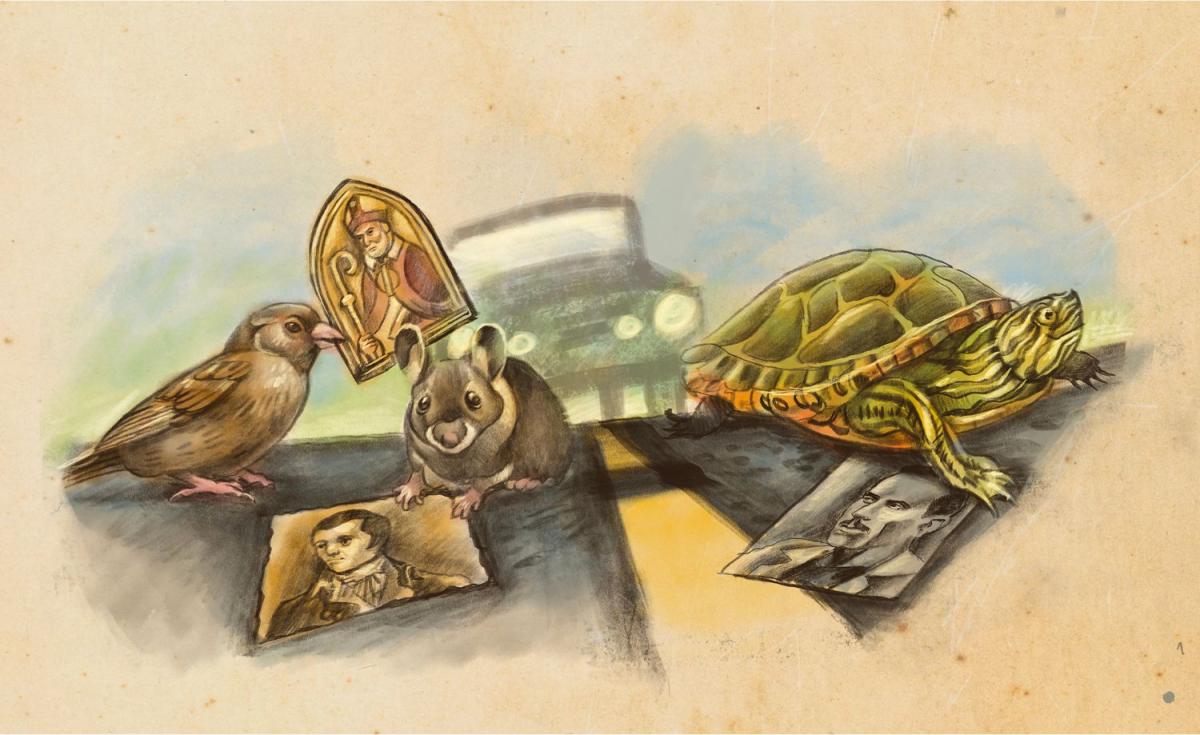
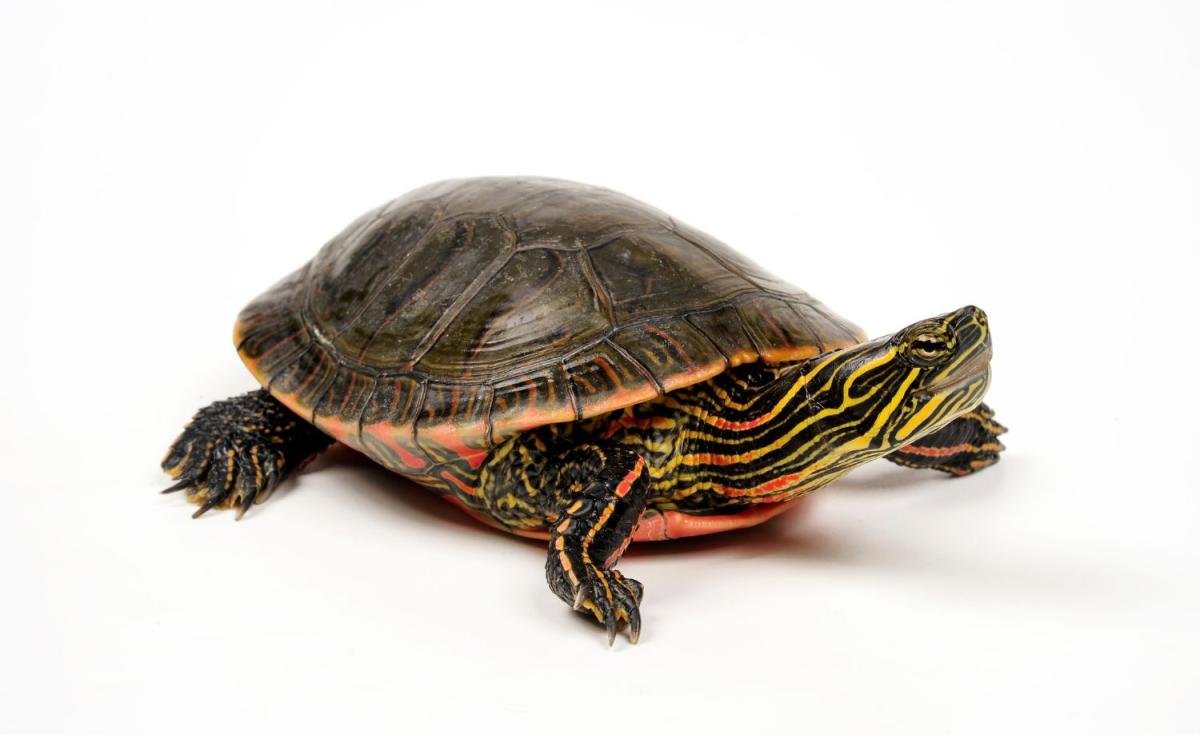
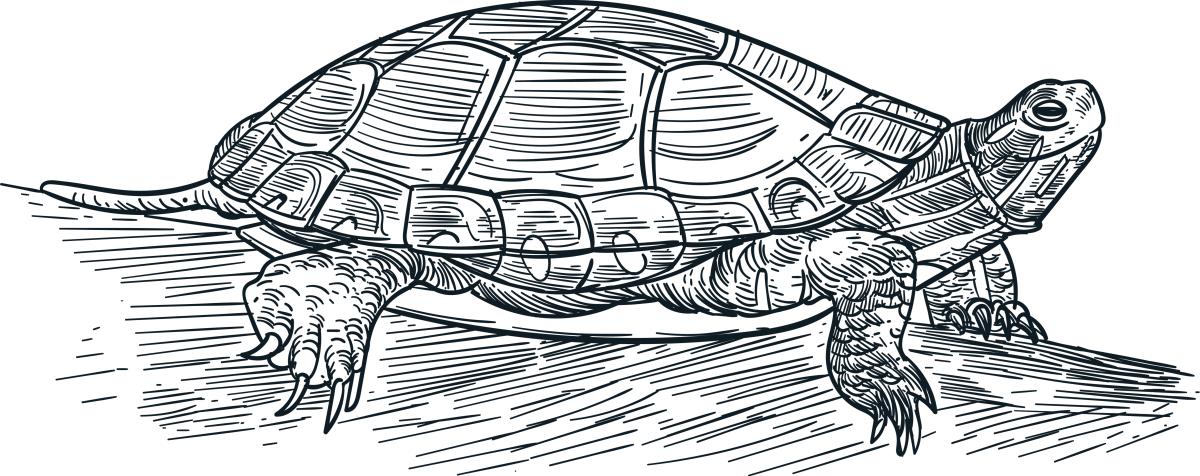
Winter is long, but the female Western painted turtle does not remember it. As she wakes in spring, her head tentatively reaching out from her shell, blindly seeking the sun like a tongue for a morsel of sweetness, her dreams of snow and ice dissolve into the air. As whatever passes for turtle consciousness resolves in her mind, she begins to feel the tug of instinct.
In a sense, her journey began untold eons and eons ago, when her earliest ancestors first enacted this yearly ritual. Ever since then, her every cell and fiber tells her she must emerge from the morass and make her way to water. She makes her way, slowly of course, out of the mud toward the remembered water source, which may be a lake, stream or, in this case, a pond in the Ninepipes Reservoir.
Once there, she will feast on pondweed, or snails, or maybe some algae or a bit of decaying organic matter, foraging far and wide, meeting other turtles. Likely, she will mate with a male turtle and lay a clutch of eggs in a nest very much like the one she emerged from back in spring. Then, another instinct will sing her a lullaby, and she will retire in the mud once more, to sleep the winter away.
But in the meantime, she faces something that her millions of years of engrained instinct will not have prepared her for. For at the edge of the mud, and the ice, and the emerging grass, is a banner of a weird grey and black material that seems to stretch into eternity in either direction—but then, the horizon of a turtle is short. Undeterred, she steps into the weird thing, which she does not know we call a road, and makes her way across, one plodding step at a time. If she is feeling like a speed demon, she may achieve a velocity of up to 7 miles per hour.
What she cannot possibly know, or understand, is that there are large metal-and-plastic things that travel this road, and that these inconceivable conveyances move at speeds that move well more than a hundred times faster than her. She may have some inkling, honed over those millions of years of her ancestors' collective experiences, to fear and avoid coyotes, otters, raccoons or hawks as well as she is able. But she has no idea at all what these large and quick objects are.
Nor does she have much time to try and suss out what it is, either. For she is no sooner aware that one is bearing down on her, in this small bend in the road, no sooner planted one of her beautiful, striped eyes, well adapted for seeing on land and in water, on the approaching oddity, than it is too late. Too late to philosophize as to the nature of the thing. Too late to try to adjust course. Too late.
II.
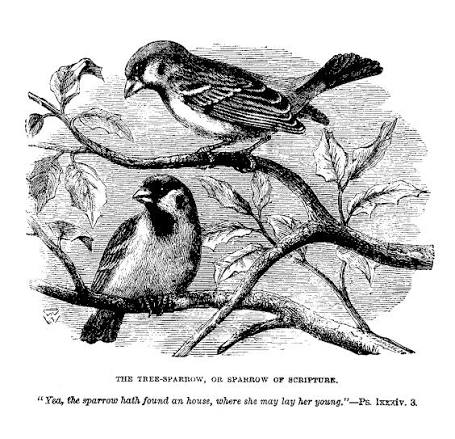
In ancient Roman times, in occupied Judaea, a sparrow was a light snack and could be purchased cheap. Workers of the empire stood to make about one Denarius a day, which could be broken down into 64 farthings. Sparrows were about a penny each, or two for a farthing. The average working class Roman, therefore, made about 128 sparrows a day.
The median income in America is about $272 a day. This means that, in today's money, a sparrow purchased from a stall in Roman-occupied Jerusalem would be worth about $2.13.
"Are not two sparrows sold for the smallest pittance?" Christ asked his disciples as he prepared them to go forth as sheep among wolves, to spread the good news.
He told them to proclaim in the light what he has told them in the dark. He warned them that the message they are to spread is so radical that they will be hated in His name. They will need to flee from city to city. They may even die. But they should fear not, He told them (in David Bentley Hart's translation of the Gospel of Matthew) "...do not fear those who kill the body but cannot kill the soul... Are not two sparrows sold for the smallest pittance? And not one of them will fall to earth abandoned by your Father."
A Western Painted Turtle, on the open market, goes from between $30 and $120 depending on whatever makes a turtle more or less expensive. Granted, these are not destined to be eaten, as were the ancient sparrows, but sold for pets. But it makes them considerably more valuable than the sparrow discussed by Christ and the apostles, who goes on to tell them "...even the hairs of your head are numbered. So do not be afraid; you are of greater worth than a great many sparrows."
How many is a great many sparrows? Assuming that 100 of anything is usually a great many of that thing, that makes an apostle worth about $213, or a turtle and some change.
Or is His comment telling us that the sparrow, and by logical extension the turtle, has value beyond the monetary?
A website that sells mice lists them from $1.50 for a tiny pink mouse to a fancy hairless mouse for $20. In 1780s Scotland, when the poet Robert Burns was plowing the fields at Mossgiel Farm, had they been selling mice, that would have made them worth a few farthings—well within view of the value of a sparrow.
One day his plow upturned a little mouse's nest, and as he stood and stared at the poor displaced mouse, he considered its value in relation to him, and which had suffered more in the incident. The resulting poem, one of his most famous, was, according to his brother, composed even as Burns's hand was still on the plow.
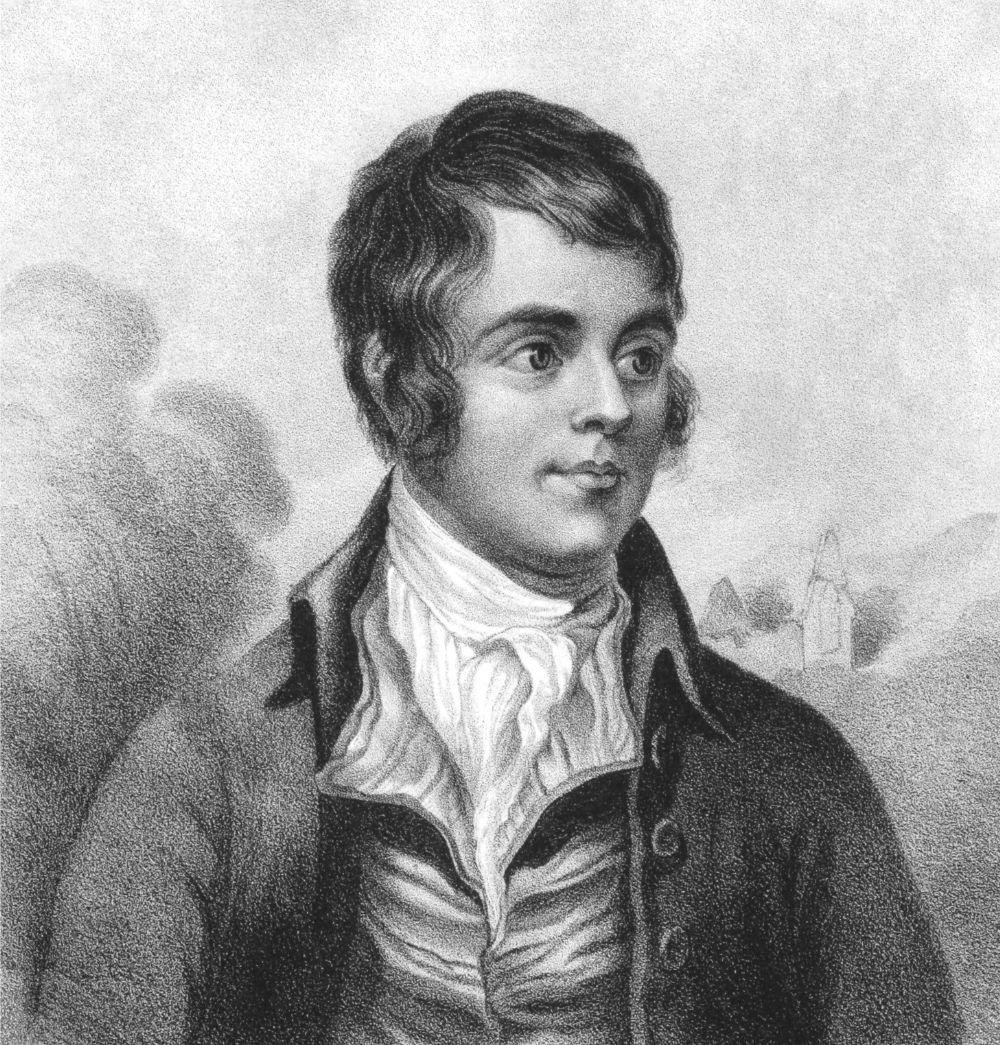
In the poem, he apologizes to the small "beastie," for destroying the nest she had labored so long over. He also considers, briefly, an issue of value and exchange when he realizes that the bit of grain the mouse had stolen would never have been missed, and that he, the poet, will still make a profit on what's left. The only consolation he can offer the mouse, which isn't much, is that "the best laid schemes of mice and men" often go awry in like manner. At least, he tells the mouse at the poem's conclusion, she's not able to dwell on the past or fret about the future as he can, and we do.
A hundred and fifty or so years later, Steinbeck would depict a turtle crossing a road in The Grapes of Wrath, offering up a portrait in miniature of the modern human's relationship with minifauna:
"A sedan driven by a forty-year-old woman approached. She saw the turtle and swung to the right, off the highway, the wheels screamed and a cloud of dust boiled up. Two wheels lifted for a moment and then settled. The car skidded back onto the road, and went on, but more slowly. The turtle had jerked into its shell, but now it hurried on, for the highway was burning hot.And now a light truck approached, and as it came near, the driver saw the turtle and swerved to hit it. His front wheel struck the edge of the shell, flipped the turtle like a tiddly-wink, spun it like a coin, and rolled it off the highway. The truck went back to its course along the right side."
We might turn again to Robert Burns, contemplating his poor mouse victim:
"I'm truly sorry man's dominion, / Has broken nature's social union."
The human body, by the way, is worth about $1 or $2 in raw materials, or somewhere north of $150 if you ordered those same materials from pricier chemical supply catalogs.
III.
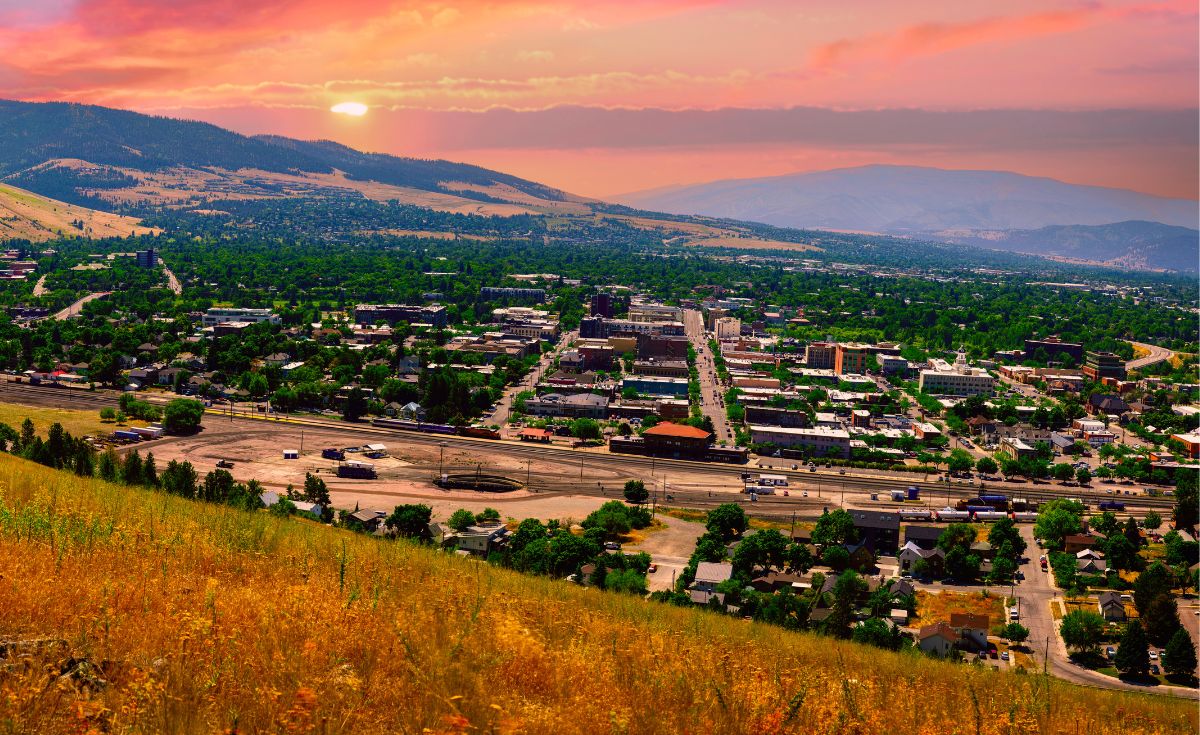
You're at the wheel of the car, and you can't wait to get there. You've got a beautiful spring day at the lake planned, and the sooner you get there the sooner you can relax. Work is, as ever, annoying. You've got kids in the backseat, and a cooler in the trunk. The dog is looking out the window, tongue lolling as it watches the scenery of the Mission Valley roll by outside. You're an animal lover.
The road bends and you follow it, listening to your music, or to your podcast, and you think about all the stuff you still have to do—stop and get some steaks from the grocery store, a bottle of wine, maybe a jar of huckleberry preserves or some huckleberry coffee. Maybe you're a tourist, or maybe you're a Montanan playing tourist. As you're having fun with your family, you're trying not to think about anything that will spoil the mood, like the price of gas, or how you deserve a raise, or how you've got a doctor's appointment coming up that you don't relish the thought of. Or you're trying not to think about something dumb you did in the past. Oh yes, and you'll need some milk from the store too.
The song changes on the radio. You don't like this one that much. Let's change it. You reach for the 'next' button. Ah, that's better. You like this one.
In the backseat, one of the kids asks for a bottle of water. Eyes on the road, you carefully retrieve one and hand it back to them.
Then you see a small object about fifty feet in front of you. It takes a moment to register that it is a turtle. You have a couple of seconds remaining to react. You're not panicking because this isn't a fatal situation, not for you. You'd prefer not to hit the turtle, certainly. You're no monster, not like Steinbeck's truck driver. But at the moment there's no room in the other lane, so a little swerve won't be possible.
US Highway 93 is a very busy and narrow road. The American Legion fatality markers on the road can attest to its danger.
For a moment you consider stopping to help the turtle across the highway, but there's too much traffic behind you and you don't want to risk your children.
Plus, you are only experiencing the deeply ingrained human instinct to master your environment, to build and to travel, and to explore. It is the same instinct, if in miniature, that drove Polynesian explorers to set out on rickety boats and sail wind-tossed seas in search of more. The same instinct, if you think about it, that sustained Lewis and Clark's fantastic, impossible journey across a continent that, for all they knew, contained monsters and murderers. Granted, it's easier to drive than it is to portage, or to row, but can you be blamed for having a bit of a road trip? After all, it's only natural. And you work so hard, and there's so little time.
As you bear down on the turtle, there's just so little time.
IV.
A US Department of Transportation study undertaken in 2002–2004 indicates that roughly 350 or so turtles are struck on Highway 93 every year. Losing 350 elk is a travesty, and 350 grizzlies would be an apocalypse. But there is a school of pragmatic accounting, shared by most of us, that feels as if 350 turtles is very sad, but a lot less troubling.
Make no mistake. The Western Painted Turtle is not endangered. In fact, they roam over much of the Rocky Mountain West. Their value, therefore, does not lie in their being particularly rare, or exciting, or because they are the kings of the jungle.
There is a principle in wildlife research funding: a certain few popular animals get all the funding. We call these bears, wolves, moose charismatic megafauna. They are charismatic in the sense that people love them. They are all the more lovable if they are endangered.
This necessarily means that the turtle's story is not that of the African lion or the grizzly bear or, controversially in Montana, the wolf, where the animal's value is derived both from picturesqueness and in rarity. Consider the Javan rhino, of which only some 75 still exist, and which ranks highly for both picturesqueness and rarity. The value of such a "beastie," to borrow a word from Burns, is very easy to reckon.
Dr. Erim Gomez is an Assistant Professor of Wildlife Biology at the University of Montana, and he runs the Charismatic Minifauna Lab. He holds a PhD and is in the W. A. Franke College of Forestry.
He defines "charismatic minifauna," a term he didn't originate but has helped to popularize, as "smaller wildlife species. Some you could easily hold in a hand or two. These animals are from taxa (taxonomic groups) that are often overlooked by the public and receive less attention in conservation and research funding. They include a wide range of species, from crayfish and butterflies to turtles, salamanders, and songbirds. While many charismatic minifauna are nongame species, the term is not limited to nongame wildlife."
He says he "was inspired to use the term because of my childhood love of small wildlife. Have you ever seen a child hold a frog, salamander, or turtle for the first time? To that child, those animals are definitely charismatic. When I ask people about the first non-insect wildlife they ever held, many name one of those animals."
Sometimes it can be challenging to study a creature that dies in such droves in spring. The Western Painted Turtle can live for a remarkably long time. "When an animal has survived for 25, 30, or even 50 years, losing it feels a bit heavier. Still, I try not to dwell on it."
The question of the value of a painted turtle, neither rare nor lionized, must be reckoned a different calculus, perhaps closer to that of Richard Adams's Watership Down, a classic novel about a different kind of charismatic minifauna. The book's rabbits, though anthropomorphized, face roads, predators, and even other rabbits. When one is killed, the reader or viewer is saddened and horrified (as many people who encountered the story in their childhood will attest to). Considerable suspense is generated from whether characters like "Hazel" and "Fiver" will survive.
Turtles display some degree of individuality, Gomez told us via email. Some will hiss at humans while they try to hold them, others won't. Some even seem to learn.
"Repeated trapping and release can make some turtles trap-shy. Some animals remember traps and learn to avoid them, so we move the traps around and space trapping sessions one to two weeks apart. Some scientists even use different types of traps over the season to confuse the turtles."
In 2024, the Confederated Salish and Kootenai Tribes received nearly $75 million from the federal government to construct extensive wildlife crossings all along Highway 93. In July of 2025, much of that funding was rescinded, leading to dramatic cutbacks in their sweeping plan. Only reduced funding remains, and one large wildlife crossing is still slated for 2027. The sweeping series of crossings have been reduced to one overpass wildlife crossing and a wildlife movement bridge over Post Creek, until additional funding is secured. Cut are the proposed daylit underpasses that the tribes' biologists had planned as ideal for darkness-shy painted turtles.
Some turtles may, at least, try to pass, unbidden, over the one remaining grizzly bridge over US Highway 93. The trip will take moments for a grizzly bear, and much longer for a turtle, who will now have to climb what must seem to them to be a mountain before they get to their pond, but those turtles who can make the trip will not, at least, have to deal with cars. For the rest, at least there's still the road. Someday, the CSKT hope to install low fencing that would direct the turtle toward the crossing without obstructing additional wildlife. It is perhaps the best solution we can hope for at this time.
V.
If our value is worth more than $150 of boutique chemicals and elements, then perhaps it can be reckoned that our souls are worth more than our bodies.
"The more I learn about a species, the more connected I feel to it, and the more I feel obligated to have a reciprocal relationship with it by working to conserve it," Dr. Erim Gomez writes in an email. "I don't dwell on accidental deaths, but I have heard stories of people deliberately trying to run turtles over. If those stories are true, that is maddening."
Thomism, the philosophy of St. Thomas Aquinas, still the official philosophy of the Catholic Church, holds that, while those who "practise a pitiful affection for animals are all the more disposed to take pity on their fellow men," the turtle, lacking an immortal soul, isn't owed the same treatment as a creature that has one. One could, in theory, torture or kill one without having done them any wrong.
What is a sparrow worth? What's a turtle here and there?
In any case, this is not a conservation story. The clash between the turtles and the cars, while seemingly implacable and without resolution, may well only be a small blip in the history of turtles, in the endless march of what Steinbeck called their "hard legs and yellow-nailed feet" across the eons. The Western Painted Turtle will live on. It is no more at immediate risk, and, if we are to be honest, probably at considerably less risk of becoming an endangered species than we are. After all, we too are only dimly aware of the wide, rumbling roads we have to cross on our path to wherever we are going.
A small number of turtles, in the cosmic scale, were briefly troubled by a road through a place they had known as theirs since time began. During that short tribulation, thousands of them died while crossing a relatively narrow band of asphalt and then, one day, no more cars came. Then they had the road to themselves until, before they knew it, the road crumbled to gravel and the turtles, without even having noticed it changing, found that it was all ponds and wetlands once more.
Should those turtles ever develop the ability to think, or even to try to develop their own sense of metaphysics and ask themselves the really difficult questions, they, or whatever succeeds us, will have to reckon with what our value was, how much our very souls were worth, individually and in bulk.



Leave a Comment Here