People & Place

  • For the Love Of... Chinook Horses

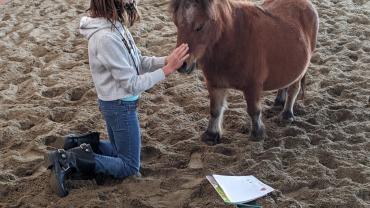
    The great American writer Herman Melville, author of Moby Dick, proved he knew horses nearly as well as whales when he said, "No philosophers so thoroughly comprehend us as dogs and horses." That comprehension shows itself in remarkable ways—horses will sidle up close, nuzzle you, even lovingly nip at you.
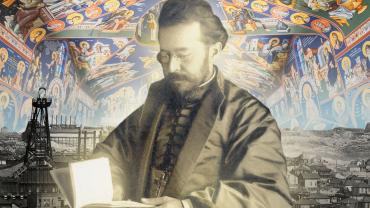
  • Boomtown Saint

    By Christopher Muhlenfeld
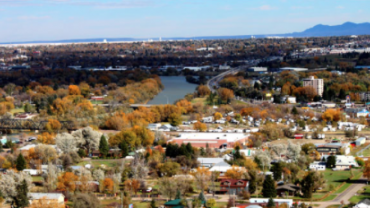
    One could be forgiven for thinking that a city so drenched in decadence wouldn't have hosted one of North America's earliest saints. Yet in the midst of this hedonism and chaos, an Orthodox Christian priest named Sebastian Dabovich played a significant role in Butte, and the fruits of his labors have endured for generations.
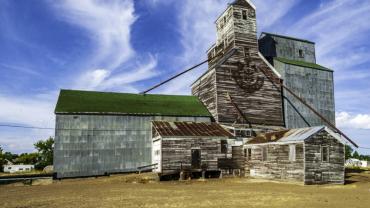
  • Get to Know Daniels County

    By Bryan Spellman
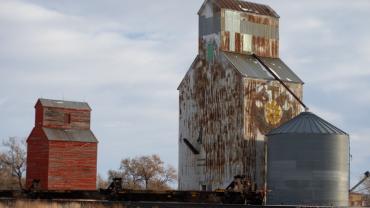
    On August 30, 1920, the Montana Legislature took the western part of Sheridan County and the northeastern portion of Valley County to create Daniels County. Named for local rancher Mansfield Daniels, the County covers 1,426 square miles, almost all that land.
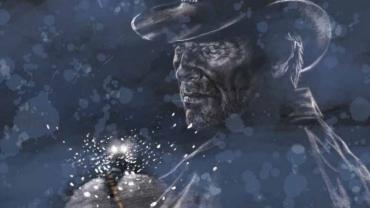
  • Montana's Road Ghosts and Phantom Hitchhikers

    By Renee Carlson, Illustrated by Rob Rath
    Also referred to as vanishing hitchhikers, these are ghosts that haunt our roadways. Some seek to hitch a ride with the living and others simply drift through the thin veil between worlds to appear briefly on the side of the road.
  • Get To Know A County: Beaverhead

    By Bryan Spellman
    One of Montana’s nine original counties, Beaverhead is the state’s largest county in area. Excepting minor boundary changes with neighboring Madison County, Beaverhead is the same size and shape as when it was first created.
  • Get to Know a County: Mineral County

    By Bryan Spellman
    On August 7th, 1914, the Montana Legislature created Mineral County, taking the western end of Missoula County and placing the seat at Superior.
  • On the Trail with Sheepherders, Groundskeepers of the Land

    By Hallie Zolynski, with photos by the author
    The name Montana conjures up cowboys herding cattle on the open prairie, and gunfighters hiding out in canyons to hide from rope-swinging vigilantes. But does Montana summon images of the lone sheepherder tending his flock and enduring days of solitude, bitter cold and the intense summer heat?
  • Remembering John Quigley's Frontier Town

    By Joseph Shelton
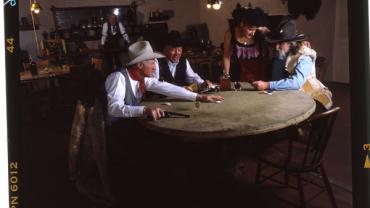
    When someone ordered a whiskey ditch at the bar, the "ditch" part was almost literal: the water was collected from a small spring running through the scene in between small trees (cut from the very tops of junipers and then treated with glycerine and formaldehyde).
  • Unsolved Montana Murders

    By Joseph Shelton
    Every state has their unsolved murders, of which they are justifiably proud (or is it ashamed?), and Montana is no different. Here, then, are six of Montana’s most enigmatic cases. May they send a wintry chill down your spine, and make you glad of your hot cocoa.
  • From Cowboys to the Cold War:

    By Joseph Shelton
    But while the Cold War never escalated beyond proxy wars and nuclear proliferation, it did change Montana, and the landscape of the West, forever. As author Ian Frazier writes, the nuclear missile silo has become "one of the quintessential Great Plains objects," along with the American bison, the prairie dog, and the outhouse.
  • Stagecoach Mary

    By Maggie Slepian
    One famed night, a pack of wolves frightened Mary’s team of horses, and the coach flipped on its side. Taking shelter behind the overturned vehicle, Mary held the wolf pack off all through the night, armed with her pistol and shotgun.
  • Meeting Tom Frye, the Montana Marksman

    By Frank Vargo
    As we neared the door to the store there was a roguishly handsome gentleman sitting on an old wooden Remington cartridge box that was inverted so as to make a seat. The gentleman was under a large cowboy hat, and he looked up at me and said, “Did you come for the shoot?” 
  • Fort Benton, Town Born of the River

    By Doug Stevens
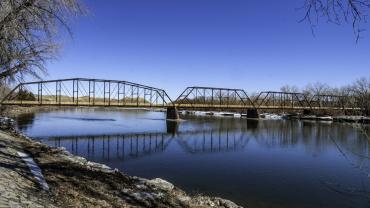
    Enter Alexander Culbertson, the most influential person in the establishment and development of Fort Benton. Culbertson joined the American Fur Company in 1829 and soon became the principal trader with the Blackfeet. His wife, Natawista, was of the Canadian Blackfoot Blood Band, which gave Culbertson a great advantage in building trust with area tribes. 
  • Poetry in Motion: Bronc Riding in Montana

    By Hallie Zolynski, With Photos by the Author
    At the end of our conversation, Ty said, “I've walked this path many times in my career and I'm smiling through the buck offs and mild pain because I know what being disciplined will lead to. Not to mention I'm thankful to be able to walk this path at nearly 51.”
  • Get To Know Fallon County

    By Bryan Spellman
    Cabin Creek today is home to the Williston Basin Interstate Pipeline gas compressor station.  It lost its post office in 1931.  Ollie, near the North Dakota line, is another railroad town—this time the Northern Pacific.  Its post office was open from 1911 to 1955.  
  • Get To Know Wheatland County

    By Bryan Spellman
    It should surprise no one that a county named Wheatland has agriculture as its primary industry. Fully one-quarter of county workers are involved in agriculture, forestry, fishing and hunting, according to the most recent city-data.com statistics, and that applies to both males and females.
  • 3-7-77: A History of Montana's Most Ominous Numbers...

    By Teresa Otto
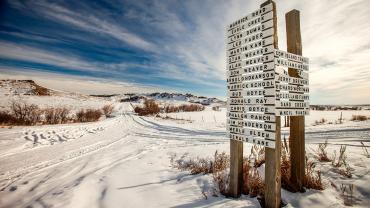
    A popular theory is it’s the measurements of a grave,” Evalyn Johnson, author and archivist at the Thompson-Hickman County Library in Virginia City, said. “But no one knows for sure,” local writer Angela Mueller added.
  • A Photographic Trip to Montana's Historic Cemeteries

    By Renee Carlson
    While it is okay to leave respectful memorials to loved ones, or even toys and trinkets on a long-passed child’s grave, it is never okay to leave refuse, graffiti, or other ill-intentioned items. Please join me as we respectfully wander a few of our beautiful state’s memorial gardens.