I have always been a hunter. Like many Montana boys my age, my father, like his father before him, schooled us in the teachings of the wild. Some kids spent their weekends playing sports, but my family were always sitting beside a lake, camping or adventuring the dirt roads with a small-caliber arms and a packed lunch in the back seat.
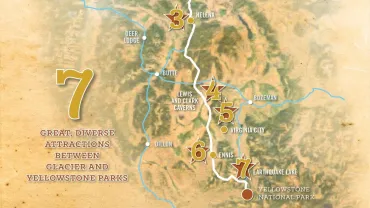
The road between Yellowstone and Glacier offers the less rushed traveler ample opportunities to discover Montana’s renowned “big sky”, its beautiful mountains, blue-ribbon trout streams, as well as its rich cultural heritage, making the drive between the two parks a much more enjoyable and enriching experience.
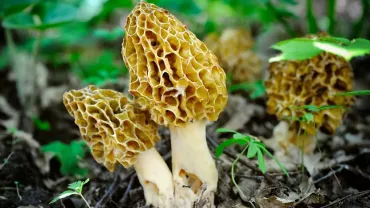
Since 1991, the Western Montana Mycological Association has offered workshops and forays focused on mushrooms— not all of them as exciting as this one—every spring and fall season. These forays are always campouts, and attract dozens of dedicated mushroom hunters from all over the state.
With each mile gained in elevation, the oxygen deprivation distracts your driving as does the granite splendor you behold at every turn. Even in July the snow stays on the ground at this elevation and skiers, sunny skies, swaying wildflowers, and tourists alike indulge in this rugged high beauty and marvel at the ingenuity of the highway.
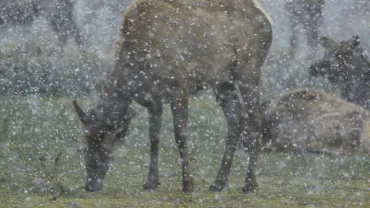
A spring blizzard and a prime subject - elk foraging on the grass – were at my disposal. My 500mm lens, resting on the beanbag on the car window, gradually filled with snow inside the lens hood. My view through the camera became obliterated.
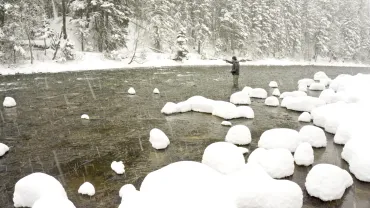
When the temperature begins to dip and the forecast calls for snow flurries and sunsets before work is over, the last thought for many is," where is my fly rod?” However, some still keep their rods and reels in the car for those days in winter that boast great fishing and solitude on the river. For those that want to give it a try, here are our top 5 tips for successful winter fly fishing.
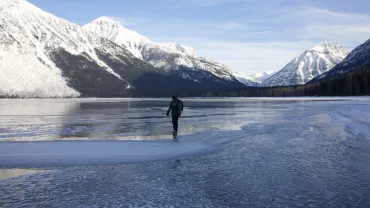
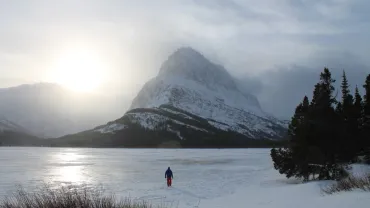
Winter is a most elegant time in Glacier Park with a landscape that appears donned with feathers, furs and jewels. On a sunny day evergreen trees appear to be cloaked in white sequins and frost forms a delicate lace on bony branches.
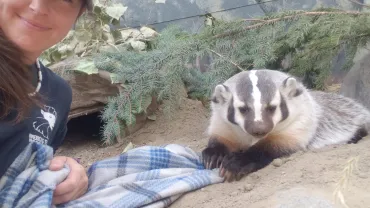
I feed the river otters lunch and sanitize the otter building. I do a quick free-contact (no barrier between the animal and me) training session with our badger, Uki, asking her to go in her crate, put her paw on a few spread out wooden marks, and touch her nose to a tennis ball on a stick.
The name Montana conjures up cowboys herding cattle on the open prairie, and gunfighters hiding out in canyons to hide from rope-swinging vigilantes. But does Montana summon images of the lone sheepherder tending his flock and enduring days of solitude, bitter cold and the intense summer heat?
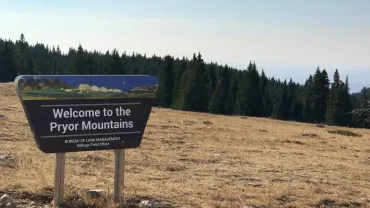
Montana is known for her majestic mountains in the west, and the dusty prairies in the east. As the beautiful craggy cliffs give way, however, the mountains taper down until they are little more than undulating hills with the occasional rocky outcropping.
It’s practically impossible to mention a winterkeeper’s position without thinking of The Shining, but aside from the wind sounding like people singing down the halls of the grand old hotel, David assures us it is far more grounded. Barely skipping a beat from his summer work, he had plenty to accomplish when the guests were gone.
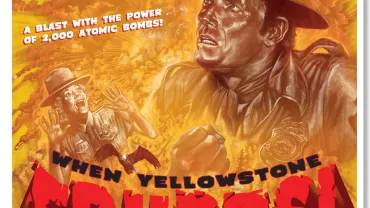
The blast is unthinkable, impossible to understand in human terms. Still, there are some who are far enough away that they have a moment to try. They can see a flash that overtakes the horizon, and then for a moment, they see a black streak rising into space. The scale of it is enormous beyond reckoning.
Montana’s Rocky Mountain Front lies to the west of Highways US 89 and 287 from the southern border of the Blackfeet Reservation to south of Augusta. It is where the northern Great Plains meet Rocky Mountains in a dramatic convergence of cliffs and rolling grassy hills.
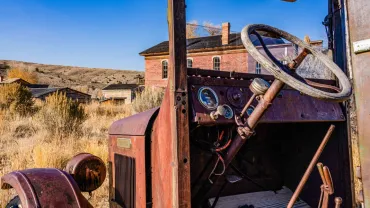
The early history of Bannack is very “colorful” and reads like a Hollywood western. With Virginia City also booming to the north, there was an active stage line between the two gold towns.
Thanks to the creation of the Montana State Parks system in 1939, residents and visitors alike have been able to hike up, swim through, camp within, and just bask in the grandeur that is Montana for 81 years now. Today, there are 55 state parks, each worthy of admiration and exploration. Here is a snapshot of five of them.
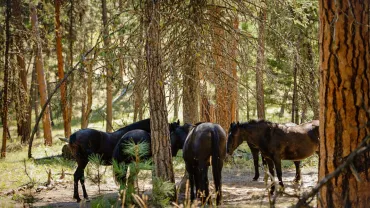
Wild Horse Island is a real “jewel” that shines among Montana’s State Park system. It is the largest island in Montana’s beautiful, pristine Flathead Lake and lies within the boundaries of the Flathead Indian Reservation between Missoula and Kalispell.
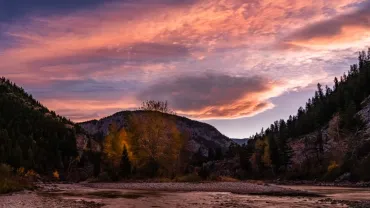
Take crisp, cool mornings and sunny, warm days – mix in a little early snow high in the mountains and add some beautiful fall foliage, elk bugling during their rut in the High Country, and you have a recipe for what many believe are the very finest days of the year to get out and enjoy what Montana has to offer.
Two jumpers are in the air – they make sure they stay a safe distance apart on their descent to the jump spot. The first jumpers land in the spot. The J-13 is now over the exit point, and the second two jumpers exit the plane.
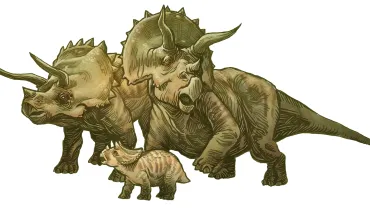
Sixty-six million years ago the earth was going through a transition. The climate was changing, and Montana was shifting from a sub-tropical to a more arid environment.