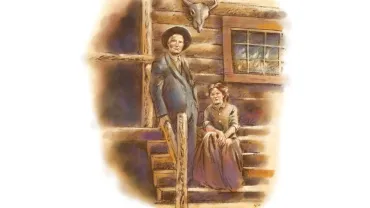
The preponderance of evidence suggests that Pitamakan rose to prominence during the terminal period of intertribal warfare, i.e., the late 1870s. She received a vision, one that foretold success in battle, in a cave near the waterfall in Glacier National Park that now bears her name.
Montana’s native tribes relied on the bounty of bison in nearly every aspect of their daily lives. In addition to depending on them as a primary food source, native peoples also developed ingenious methods that enabled them to use every part of these colossal one-ton giants.
John Bozeman was shot twice through the chest by the native Americans, while Thomas Cover was shot once through the shoulder. According to Cover himself, he was shot while rushing to Bozeman’s side.
A born storyteller, Ballie and artist Charlie Russell naturally became close friends, with the two sharing their love and memories of their days on the open range before the West was fully civilized. Both of them mentioned each other in tales...
Plenty Coup said that "The Cheyenne, and the Sioux... have always been our enemies... But when I fought with the white man against them it was not because I loved him or because I hated the Sioux and the Cheyenne, but because I saw this was the only way we could keep our lands... And it was my dream that taught us the way."
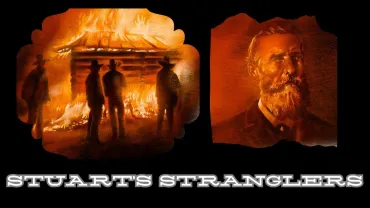
A cabal of rich cattlemen met in Helena in 1883 to discuss what was to be done. There were plenty who had reason to want the horse thieves taken care of—among them Granville Stuart, cattle baron, politician, and sometime vigilante.
He flew for two minutes and he exalted, as he always did, at the feeling of flying. He trembled and thrilled, as any of his contemporaneous pilots did, at the perversity of being a being out of its element, a large land mammal zipping through the air like a gull. He must have known, too, that one wrong move and it could all be over.
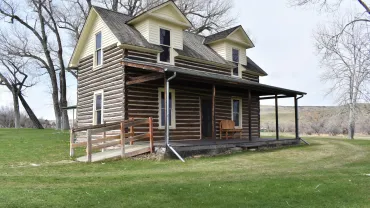
Charlie had camped and stayed in the area we now call Glacier National Park for years before he built a house there, taking inspiration from the stunning scenery and falling in love with the wildlife.
On April 10, 2012, the State of Montana honored Sarah Bickford by inducting her into the Gallery of Outstanding Montanans in the Capitol Rotunda in Helena. As a former slave who became one of Montana's most prominent early businesswomen, Bickford certainly deserved this honor.
These were some challenging times for travel in Montana, but in the 1930s, when Lolo National Forest West was established, a dirt track was constructed to the resort from Highway 200. Better days were ahead for Martin Quinn's favorite destination, and —through it all—the location stayed in the family name.
In 1884, Hill visited Paris Gibson, a business associate from St. Paul who was plotting the new town of Great Falls. While standing on the edge of the Missouri River, Hill recognized the potential of the region.
By 1854, an estimated 34,000 abandoned or orphaned children filled New York City's streets. Many of their parents had immigrated to America, lured by the promise of free land out West.
Before they set out, Lewis and Clark received unofficial orders, a secret mission, if you will: find a living mastodon out there in the uncharted wildlands of the Louisiana Purchase.
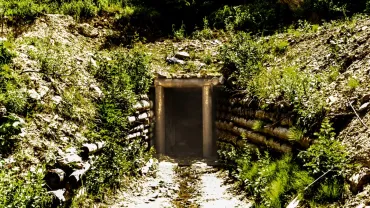
The crucial role of the Anaconda Copper Mining Company and other big mining enterprises in World War II materials production is widely appreciated. Less so is the contribution of Montana’s many small-scale mine operations.
Historically, agriculture has always been Montana's foremost economic engine from jobs to exports. Because of the Great Depression and World War II, only 30% of working farms used gas-powered equipment into the 1940s, while the rest still relied on horses to work in the fields.
From her family’s house on North Excelsior Street, MacLane could see the Anselmo headframe and watch the miners change shifts. In "I, Mary MacLane," she explains her relationship with language in a way that recalls both the synesthesia of the poetic mind and the laborious process of mining.
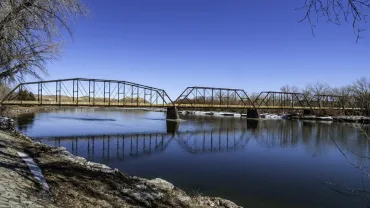
Of special note is the Chouteau County Court House. Built in 1883, to replace the original court house destroyed by fire that year, today the building is the second oldest court house still serving that function in the state of Montana.
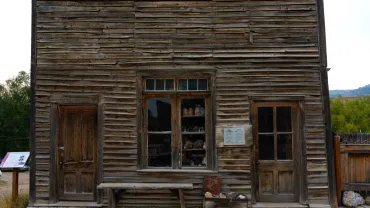
The early history of Bannack is very “colorful” and reads like a Hollywood western. With Virginia City also booming to the north, there was an active stage line between the two gold towns.