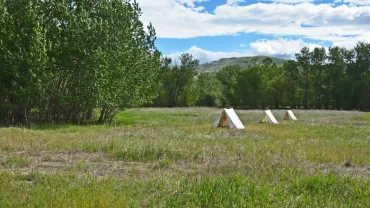
The team also found several artifacts that could be attributed to the Corps, including a blue bead, melted lead, and a tombac (metal) button. Most interestingly, the latrines they uncovered contained a not insignificant amount of mercury, a dead giveaway that the poop in the pit belonged to non-Native individuals.
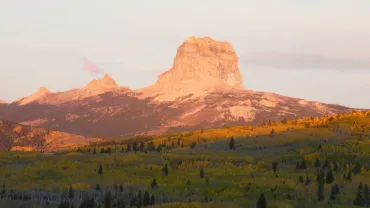
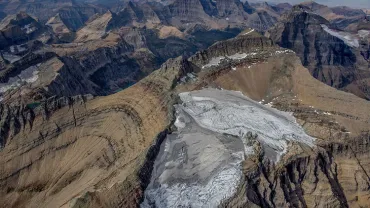
In September 1892, however, Stimson was a member of the first non-Indian party to climb Ninaistákis. At its summit, they discovered evidence of the mountain's long history of ceremonial use. On terrain far too rugged for bison to traverse, three bison skulls were found, two of which were so old "that the black sheaths of their horns had been worn away by winds and storms, and the sheaths of the other horns had turned from black to yellowish white."
We invite you to hop in your car to set off on a trip back in time, crossing paths with the Corps of Discovery’s route through central and southwest Montana as you embark on an expedition of your own.
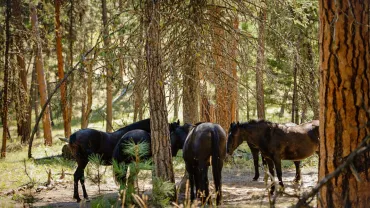
Wild Horse Island is a real “jewel” that shines among Montana’s State Park system. It is the largest island in Montana’s beautiful, pristine Flathead Lake and lies within the boundaries of the Flathead Indian Reservation between Missoula and Kalispell.
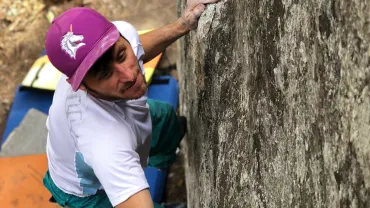
There’s nothing like hauling your body up a slab of million-year-old gneiss to get your blood pumping. Come spring, the friction tends to be good and it’s sometimes even warm enough to climb in shirtsleeves. Bouldering is a stellar way to spend time outside with friends, explore the outer realms of your comfort zone, and build strength.
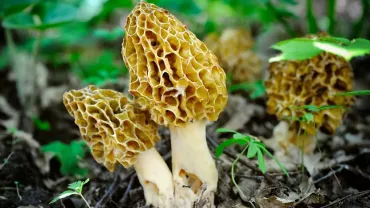
Since 1991, the Western Montana Mycological Association has offered workshops and forays focused on mushrooms— not all of them as exciting as this one—every spring and fall season. These forays are always campouts, and attract dozens of dedicated mushroom hunters from all over the state.
I parked along a stretch of dirt road where I could see the valley and the mountains between the trees, turned off the truck, and stepped out to silence and crisp spring air. There was something here I could not put into words, something that felt wild and uninhibited.
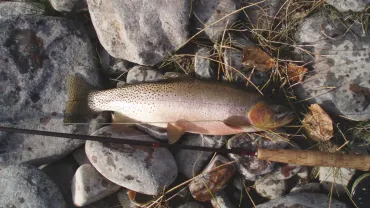
Forgive me if this is indelicate, but brown trout are carnivorous. Brown trout eat other brown trout. Also mice. Also anything that wiggles, including fish being retrieved by an Orvis rod. Little freshwater sharks is what they are.
Montana is known for her majestic mountains in the west, and the dusty prairies in the east. As the beautiful craggy cliffs give way, however, the mountains taper down until they are little more than undulating hills with the occasional rocky outcropping.
Gut leaders were made from silkworms by making a small incision just behind the head to reveal the silk glands, then submerging the poor silkworm in a solution of salt and vinegar. The silk was slowly drawn from the silk glands, and as it was extracted the material hardened into threads.
Two jumpers are in the air – they make sure they stay a safe distance apart on their descent to the jump spot. The first jumpers land in the spot. The J-13 is now over the exit point, and the second two jumpers exit the plane.
These were some challenging times for travel in Montana, but in the 1930s, when Lolo National Forest West was established, a dirt track was constructed to the resort from Highway 200. Better days were ahead for Martin Quinn's favorite destination, and —through it all—the location stayed in the family name.
Thanks to the creation of the Montana State Parks system in 1939, residents and visitors alike have been able to hike up, swim through, camp within, and just bask in the grandeur that is Montana for 81 years now. Today, there are 55 state parks, each worthy of admiration and exploration. Here is a snapshot of five of them.
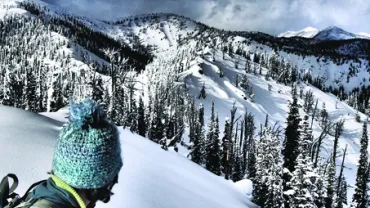
Forming the westernmost buttress of the broad swatch of peaks that comprises the Bob Marshall Wilderness Complex, the Swans lie within an hour’s drive of Missoula but well off the beaten path of the skiing masses.
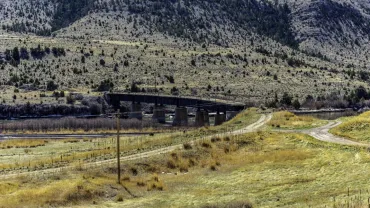
Toston, like Radersburg, owes its existence to the gold mines in the nearby hills. The Toston Smeltering Company processed ore for a short period in the late 1800s, but that was long enough to bring in a population that stayed on and farmed the area.
Montana is home to some of the most beautiful and pristine mountain ranges in the Rockies and with beautiful mountains comes spectacular skiing. Montana is known to have some of the best and most exciting skiing in the world with Whitefish Mountain regularly rating in the top 5 ski resorts in North America.
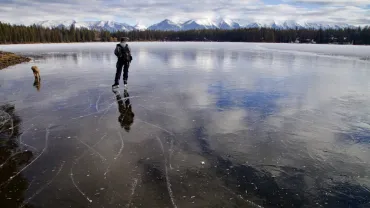
Skating on wild ice is truly a spiritual experience. The sensation of gliding along a frozen lake can be like flying. An experience that is surreal, exhilarating, uplifting and at times—frightening.
Glaciers add a nuance of complexity to mountain flying. As it is, mountain flying is complicated and can be dangerous due to wind, terrain, altitude, reduced aircraft performance, turbulence, and weather.
Two centuries ago when Lewis and Clark explored the vast land we now call Montana, they encountered a wilderness of some 93 million acres. Today, less than a tenth of this land remains wild and undisturbed.