Arts & Culture

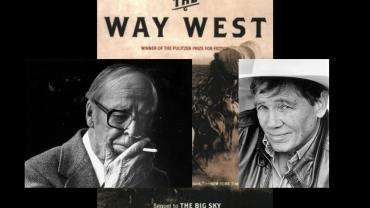
  • The Landscapes of Norman Maclean: Forest, Mountains, Water

    By Bryan Spellman
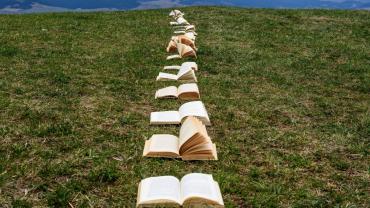
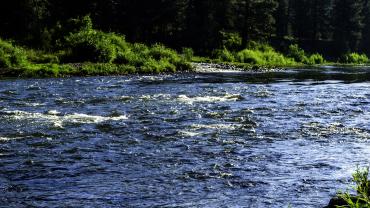
    Norman Maclean was not born in Montana, nor did he die here. His published work is slim, especially when compared to A.B. Guthrie or Ivan Doig. But I wager that if you asked people what piece of writing best exemplifies Montana, many would respondΒ A River Runs Through It.Β 
  • From Poker to Horseshoes

    By Bill Muhlenfeld
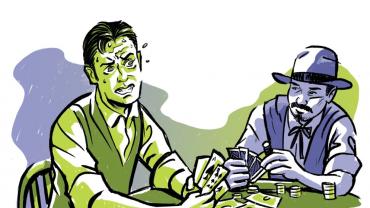
    If there is one place where Old West meets New it’s at the rodeo, where broncin’ buckaroos, flashy cowgirls and murderous bulls enjoy a few hours, all together in a large, penned arena. With so much ruckus it definitely (still) pays to have a bit of luck on your side so never, absolutely never, wear a yellow shirt while competing.
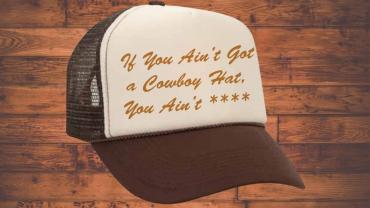
  • If You Aint' Got a Cowboy Hat, You Ain't ****

    By Dan Vichorek
    When they let me out of high school I didn't have a hat. That was okay. John Kennedy showed you you didn't need a hat to be successful. Kennedy was the first president since Abe Lincoln who was never photographed in a cowboy hat or Indian war bonnet. He got elected anyway, and girls liked him too. So much for hats.
  • 7 Montana Towns That Never Existed!

    By Sherman Cahill
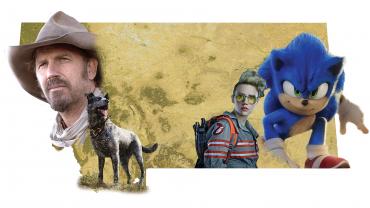
    Harmonville is also a town where magical, impossible things can happen without anyone seeming to notice, like when Costner fires his six-shooter 16 times without reloading, and no one declares it a miracle.
  • The First Signal

    By Cab Tran
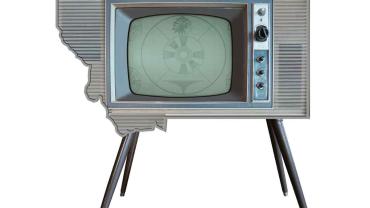
    Subtlety wasn't part of Craney's playbook. But he also understood that Montana was a unique market for advertisers, whether in radio or television, as he recalled to an interviewer in 1977: "It is a high cost market and one that is difficult to get national advertisers to come into…because there just aren't the people in Montana to make it a market."
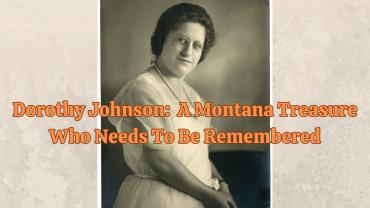
  • Dorothy Johnson: A Montana Treasure Who Needs To Be Remembered

    By Russell Rowland
    When writing The Man Who Shot Liberty Valance, Johnson said, β€œI asked myself, what if one of these big bold gunmen who are having the traditional walkdown isβ€―not fearless, and what if he can’t even shoot. Then what have you got?” 
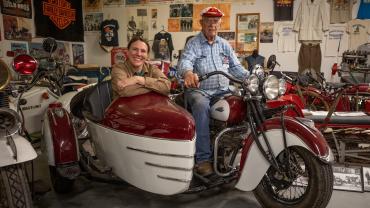
  • Gil Mangel's Diorama of America

    By Joseph Shelton, with photos by Rick Szczechowski
    Given its international and even sometimes cosmic range of artifacts, it is a model of one Montana man's view of the America he grew up in. That it is presented with all of the oddity, strangeness, and good humor of its founder elevates it above the merely informational into the rarified realm of the miraculous.
  • Montana Media: "All the Young Men" and the Power of Poitier

    By Kari Bowles
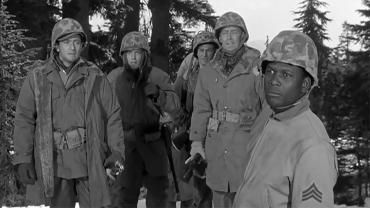
    The crew arrived at St. Mary’s, Montana, one of the Eastern gateways to Glacier National Park, for location shooting. Alas, the weather interfered, as the weather in Montana will do. Heavy fog, blizzard conditions, and a massive windstorm that trashed the farmhouse set resulted in delays.
  • "Shane" and A.B. Guthrie

    By Kari Bowles
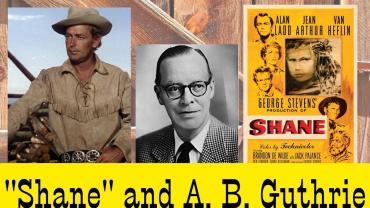
    Alfred Bertram Guthrie, Jr. was born January 13, 1901, in Bedford, Indiana. His parents moved to Choteau, Montana, when he was six months old; he would have an attachment to Choteau all his life.
  • Evelyn Cameron, Forever

    By Russell Rowland
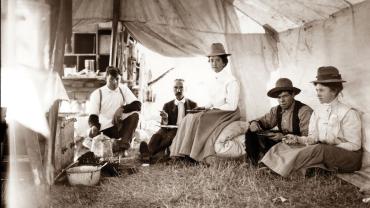
    The main thing that struck Lucey right away was the stunning quality of Cameron’s photography. In an era where most photographs showed their subjects as stiff and unsmiling, Cameron captured life on the prairie with a realism that was unique.
  • The Cowboy and the Lady: Montana's Biggest Movie Stars

    By Kari Bowles
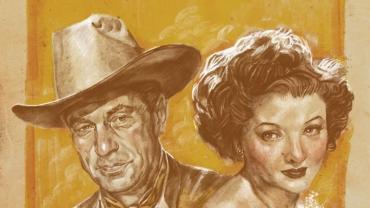
    The Treasure State was the birthplace of two of the biggest movie stars of the golden age of American cinema: Gary Cooper and Myrna Loy. If readers don’t recognize the names, they would do well to look into them.
  • Starring John Wayne: Identity and Reinvention on the Big Trail

    By Sherman Cahill
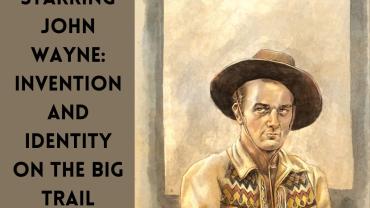
    According to Walsh biographer Marilyn Ann Moss, "20,000 extras, 1,800 head of cattle, 1,400 horses" traveled with the production, along with "185 wagons" and "123 baggage trains that trekked over 4,300 miles in the seven states used for locations." Finally, there were 293 actors, 22 cameramen, and 700 barnyard animals.
  • Montana Media: Unsung Spielberg on a Montana Canvas

    By Kari Bowles
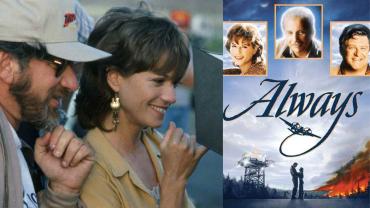
    The film was shot around Libby, Montana, as well as in portions of the Kootenai National Forest (though the scenes that are ostensibly set in Colorado were shot in Washington state and soundstages were used for the interiors). Several hundred locals from Libby served as extras in some of the bigger scenes on the air base.
  • Rozette Revealed: The Journey of Robert Sims Reid, Montana Author, Montana Officer

    By Ross Peterson
    And he wrote the Montana he saw. For all Western literature's transcendent fly-fishing sessions and sublime auburn sunsets, he balanced with, say, inclement weather and human corruption. Besides crime fiction, Reid is well-versed in writing poetry, literary fiction, and, now, nonfiction. Writing has been a consistent force for most of his life.
  • The Montana Circle of American Masters

    By Lindsay Tran
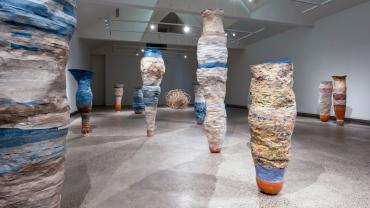
    Glenn moved to the Bitterroot 25 years ago, where he works out of a forty-by-forty-four-feet studio integrated into his home outside Victor. While he continues to travel across the country for installations, Glenn makes it a priority to teach closer to home. He opens his studio to tours, and has held demonstrations for high school students enrolled in welding classes in Corvallis.