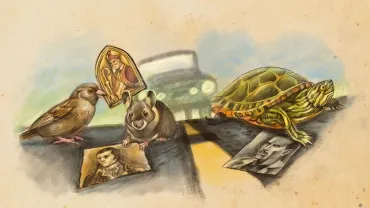
What she cannot possibly know, or understand, is that there are large metal-and-plastic things that travel this road, and that these inconceivable conveyances move at speeds that move well more than a hundred times faster than her. She has no idea at all what these large and quick objects are.
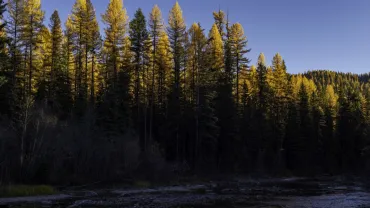
At peak color, the contrast between their foliage and dark green coniferous forests, set against the backdrop of Montana’s majestic mountains and brilliant blue skies, is absolutely breathtaking, surpassing anything that New England can offer.
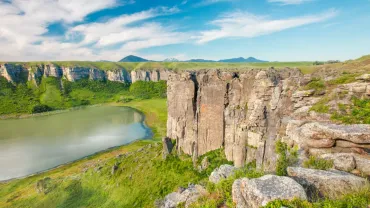
The beautiful landscapes found along the Shonkin Sag have had a significant impact on art, too. Its rugged terrain, as well as the buttes and mountains that flank it, influenced the work of Charles Russell, one of the most famous Western artists of the 20th century.
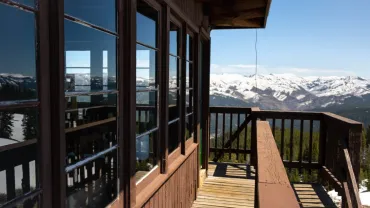
The lookouts played a critical part in maintaining and monitoring wildfires in the area while keeping visitors safe. Most of the lookouts in Montana are unmanned today, and many can be reached by hiking to them.
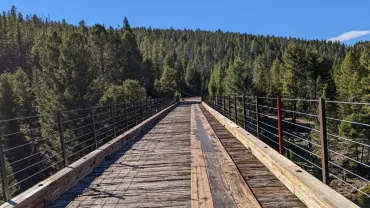
Abandoned lines have been having a bit of a renaissance—not as thoroughfares for trains, but as multi-use trails for pedestrians, cyclists, equestrians, and cross-country skiers.
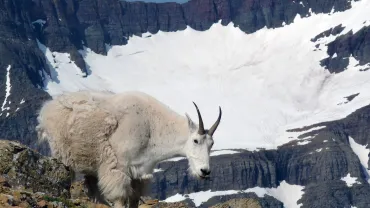
During my years among mountain goats, studying their lives and capturing their images on film beginning in the 1970s in Montana, lightning seemed to follow me like a faithful companion. Several times I shed my camera and lenses, spotting scope and tripod, and sprinted for cover.
The blast is unthinkable, impossible to understand in human terms. Still, there are some who are far enough away that they have a moment to try. They can see a flash that overtakes the horizon, and then for a moment, they see a black streak rising into space. The scale of it is enormous beyond reckoning.
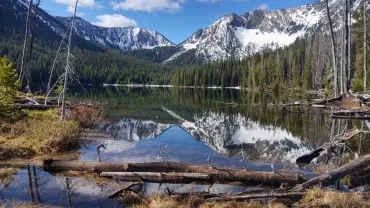
The wilderness supports riparian forests that hold spruce, alpine larch, white bark pine and fir in the sub-alpine areas to vegetation up on the high mountain slopes. Wildlife include elk, bear, bighorn sheep, mountain goats along with one of my favorites, the Pika. It protects the watershed and boosts nearby economies with tourism.
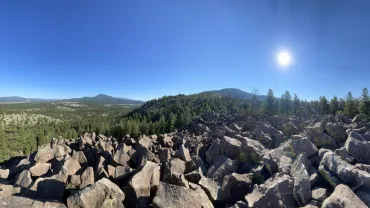
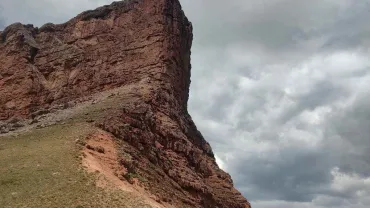
They seemed oddly out-of-place in the landscape, as if they had been dumped out of the sky and onto the forest floor below. Their rusty color contrasted with the drab gray of the boulders lying outside the perimeter of the pile.
The geyser basins had already been visited by the Washburn Expedition, but it was the Hayden group who got to see the eruptions of some of the park’s largest geysers. They gave them names such as Giant, Giantess, Grand and Castle.
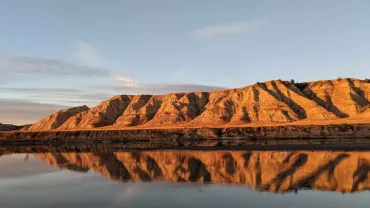
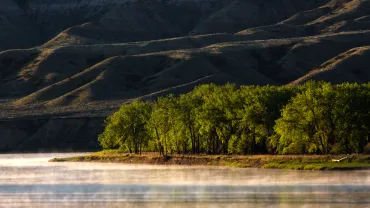
Across the bridge on the south bank is the site of the new state park, comprising a 109-acre parcel acquired by the state in 2025. It includes the Judith Landing Historic District, which contains the remnants of several structures from various periods in the confluence’s history, and encompasses notable historic events that date back, oh, 150 million years or so.
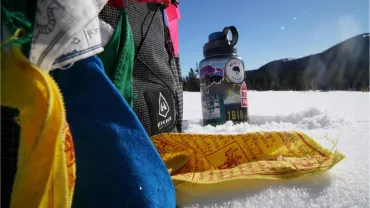
Using a pulk or sled to get around in winter and spring isn't a new concept. They were originally made of wood but are generally made using plastic now that can take a certain amount of weight. The shape of the pulk determines what it's best used for and needs to be able to run across the snow smoothly.
Awestruck, Waldt listened intently to the “phenomenal symphony” of sounds produced as ice formed rapidly over the lake’s surface. “The ice groaned, squealed, popped [and moaned. It literally] sang its way across that wild, pure-watered lake.”
I spent time recently on a couple of sections of the CDT, finding out what makes this trail unique and why thru-hikers say this trail is by far one of the hardest to hike out of any of the long-distance trails in the U.S.
The vegetation was thick and the trail became lost—a recurring theme in the Taylor-Hilgard. I made my way up a steep switchback and started to see trees with their bark shredded like newspaper. A bear had marked over 13 trees in the area in the last week; the sap still held its fur and undercoat.
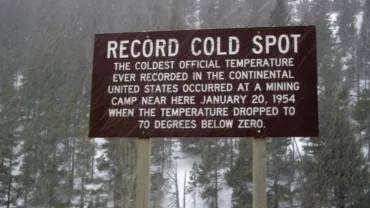
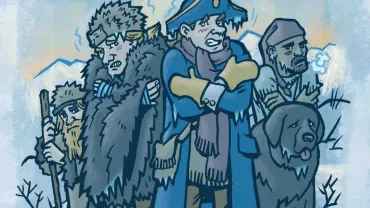
The Corps of Discovery did not enter present-day Montana until April 28, 1805, but journal entries made during the winter of 1804-1805 at Fort Mandan (North Dakota) chronicle the severity of conditions that existed then on the northern plains. They experienced a 13-inch snowfall on November 29, the coldest weather of their trip on December 17 (-45°F), and a ten-day period (January 5-14, 1805) during which overnight lows averaged -24°F.
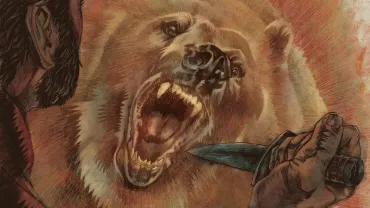
Cooke’s graphic description indicates that the bear’s claws literally scraped flesh from the bones of the shoulder and thigh. George C. Yount’s narrative strongly suggests that another wound perforated the windpipe, which spurted a “red bubble every time Hugh breathed.”
Call him what you will—Bigfoot, Sasquatch, or Imoiitapi, the Blackfeet name meaning “hairy man”—this being has held an important place in Native culture for centuries.
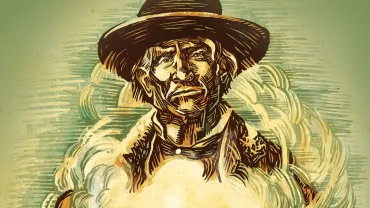
Like Colter before him, the more seasoned trappers did not believe him. For the “greenhorns,” new to the wonders of the American West, he laid it on thick. Believed or not, he surely would have had a captive audience around the fire.