
A Decade in the Making: Montana Heritage Center Opens December 2
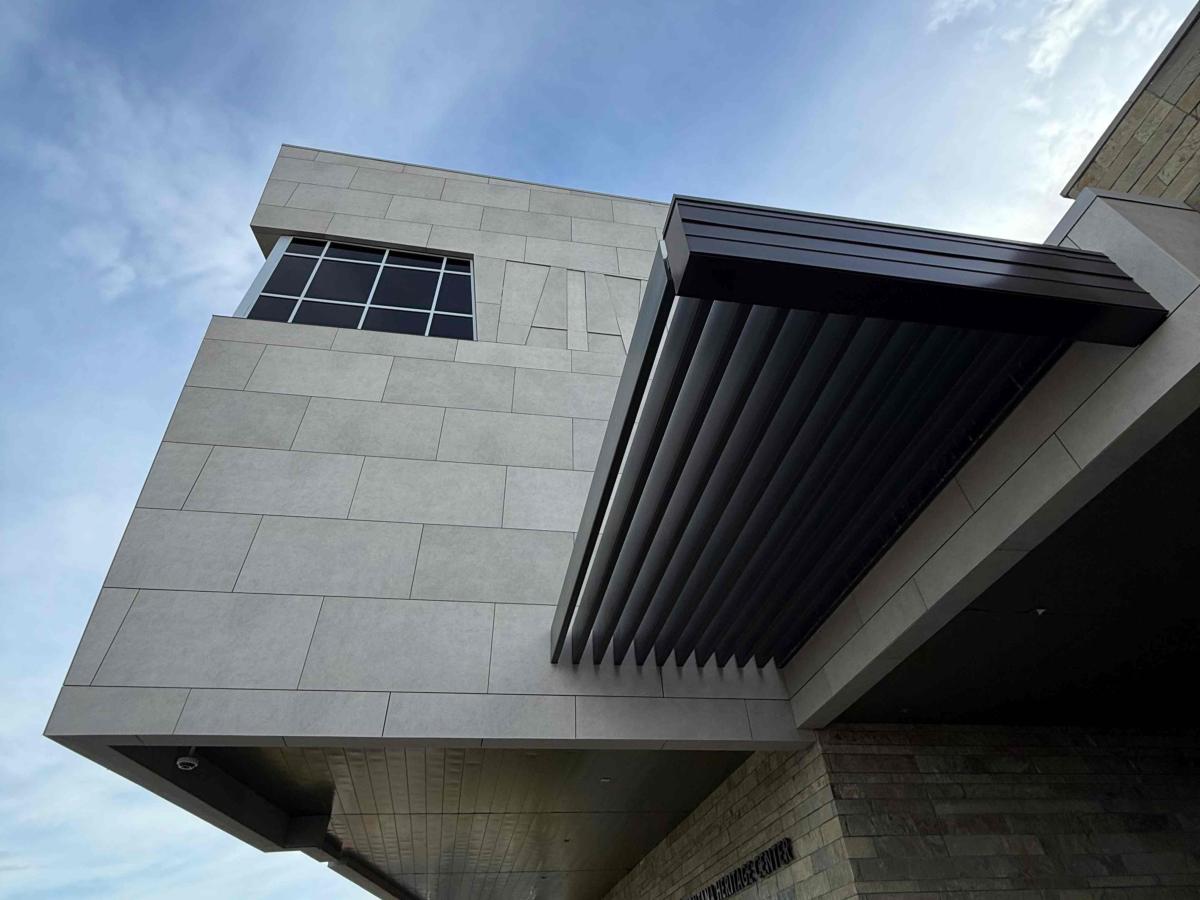
I’m not an architect by trade, so my vocabulary in describing the nearly finished Montana Heritage Center in Helena in architectural terms might be somewhat limiting. What I can say, however, as I stood with other media at the building’s side entrance for our tour to begin, is that the part of the building that jutted out over our heads like a massive rock ledge—would make a great canopy if you happened to get caught in one of those fast-moving Montana rainstorms. Words like “Brutalist” and “angular” and “chiseled” come to mind. Though maybe an analogy is better: If a supervillain, let’s say, were to give up their life of villainy and retire to Helena, Montana for the quiet life of reflection and redemption—their high-tech lair might resemble something like the new Montana Heritage Center: Part fortress and natural rock overhang chiseled with laser precision, as though out of a mountainside, but a structure with a terrace and rows of high windows to create the sense, maybe, that you’re standing on the prow of some enormous, legendary ship.
Once inside the Montana Heritage Center’s expansive new lobby, it’s immediately apparent that an immense amount of time, money, effort, and coordination went into this ambitious, decade-plus project. Visitors will immediately notice the floor with its river inlay, and no doubt many will follow this tributary to see where it goes; overhead, the spectacular wood-ribbed ceiling—to carry our seafaring metaphor from earlier—might resemble the curved hull of a galleon. And arranged in a series of parabolic arcs along the ceiling are LED-lit panels that don’t seem to reveal very much at first, at least until you stand in a very specific spot in the lobby. Once you do, it’s like finding images in those Magic Eye books that made a generation of 1990s kids like myself temporarily cross-eyed—shift your perspective enough and you’ll eventually see the illusion.
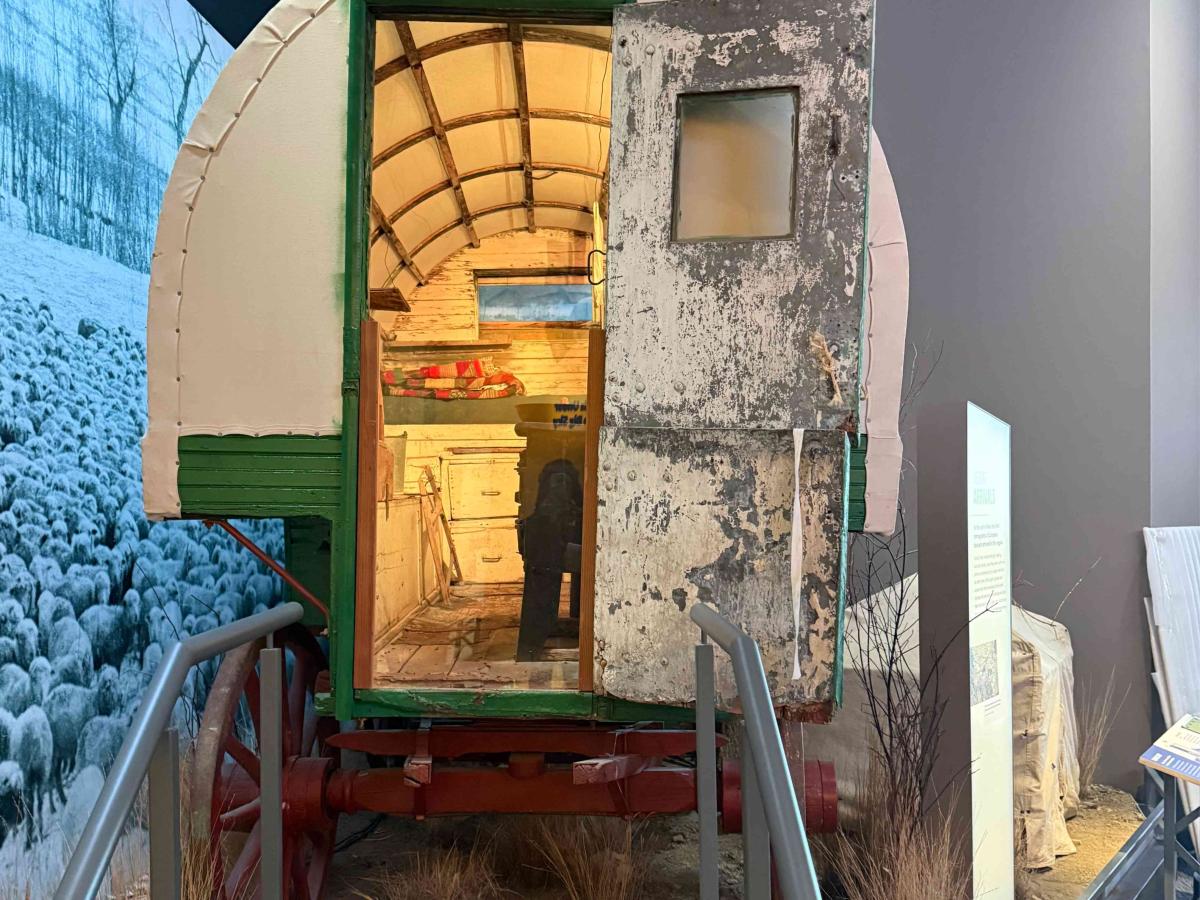
There’s your more typical museum fare: the prerequisite information desk, a glassed-in gift shop toward the back, but also less typical museum offerings like access to a nearby smudge room. To the right, a corridor that connects to the old part of the building, where you can still find the Charles M. Russell Gallery and Changing Gallery, both remodeled and expanded to accommodate even more work and artifacts. This side of the building also houses the Montana Historical Society’s library and archives, their outreach and education programs, administrative and historic preservation offices, and a publishing wing that produces books and a quarterly, Montana: The Magazine of Western History.
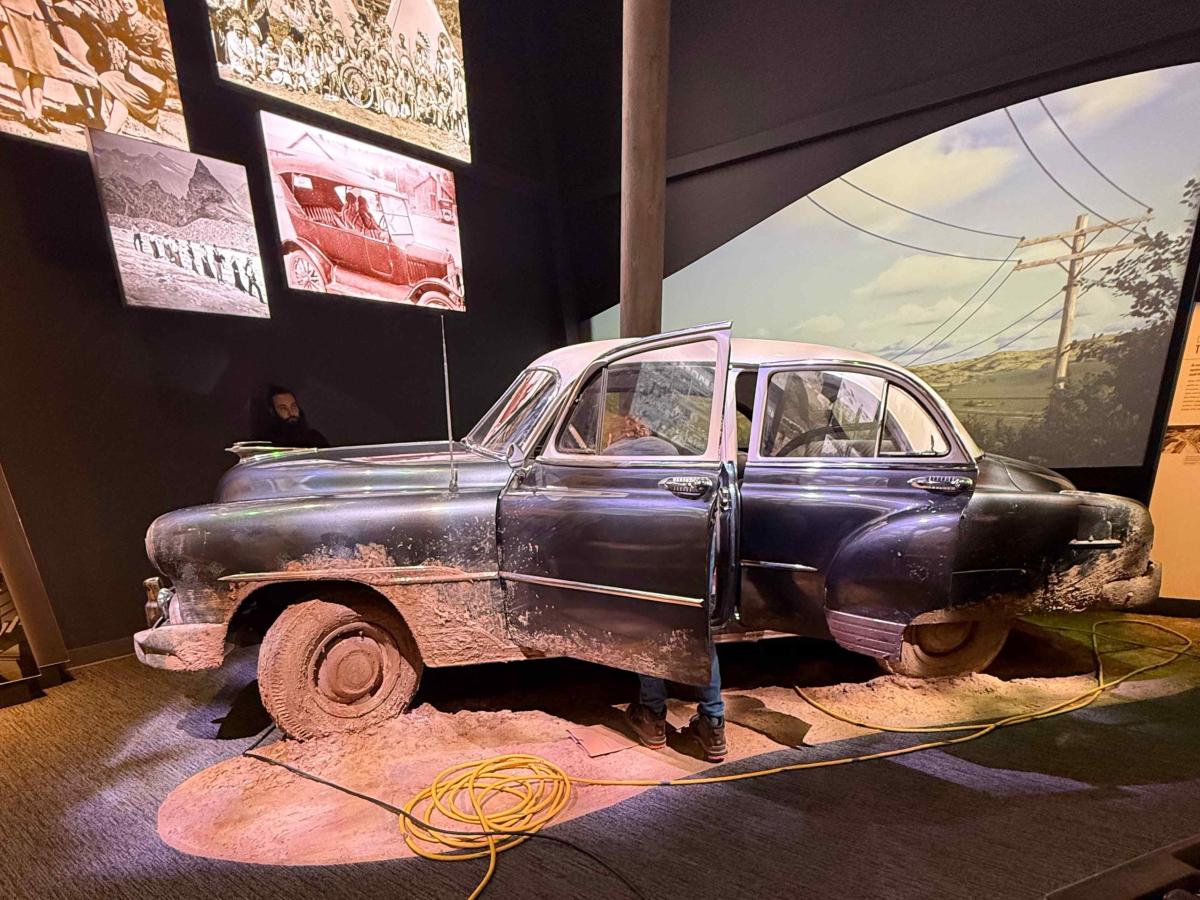
The attention of most visitors, however, likely will be drawn toward the left where the ambitious project’s centerpiece, the Dennis Washington Homeland Gallery, can be found. And it’s a showstopper. Billed as a journey through Montana’s history from the Ice Age until the modern era—represented in seven distinct time periods—it’s an experience that anyone with a passing interest in Montana needs to see for themselves. The level of interactivity—using archival footage, audio recordings, simulating the “experience” of the particular exhibit—reminded me of the best parts of my visit to the Smithsonian, the Air & Space Museum, and the Holocaust Museum in Washington, D.C. twenty years ago. Interactive exhibits that make you feel like you’re an astronaut on Apollo 11, or one that forces you to confront history on the most visceral level, as in the Holocaust Museum, by having you enter and exit a railway car once used to transport human beings to places like Auschwitz and Treblinka. In the Homeland Gallery, there’s a headframe installation piece that sits atop the entrance to the underground mining experience, a platform you can stand on and pull a rope that simulates a harrowing descent down a mine shaft, the kind a typical Butte miner would make every day just to get to work; a replica facade of Fort Benton; an original Minerva Stagecoach, used for tours of Yellowstone Park once upon a time; and perhaps the most quintessential experience shared by all Montanans—an exhibit of a mid-century car stuck in winter sludge, a car you can climb into and try to get unstuck, and even fiddle with the radio to hear what’s playing while you’re doing it.
The Montana Heritage Center’s final price tag of $107 million—$60 million through private donors and grants; $41.5 million through the State Lodging Sales Tax (i.e., Montana accommodation or bed tax); and the rest, $5.5 million, through bonds—is nothing to sneeze at. More than 1300 donors contributed to this ambitious project, with major donations coming in from the Dennis and Phyllis Washington Foundation ($25 million), Norm Asbjornson ($10.4 million), and BNSF Railway ($5 million). But what’s our state’s history worth, really? That’s something that doesn’t come with a sticker price. It’s to the credit of the thousands of donors, to the center’s architects and designers, to the decade-plus work of the Montana Historical Society, its directors, curators, librarians, archivists, and historians, among countless others involved, who made realizing this vision possible for everyone to experience and enjoy.
Exhibits and galleries at the Montana Heritage Center will be free and open to the public year-round, seven days a week, except on Christmas and Thanksgiving. The ribbon-cutting ceremony is at 3pm on Tuesday, December 2, with speeches by Molly Kruckenberg, MTHS director; Governor Gianforte; Dennis Washington; Norm Asbjornson; and Tim Fox, president of the MTHS Board of Trustees.




Leave a Comment Here